


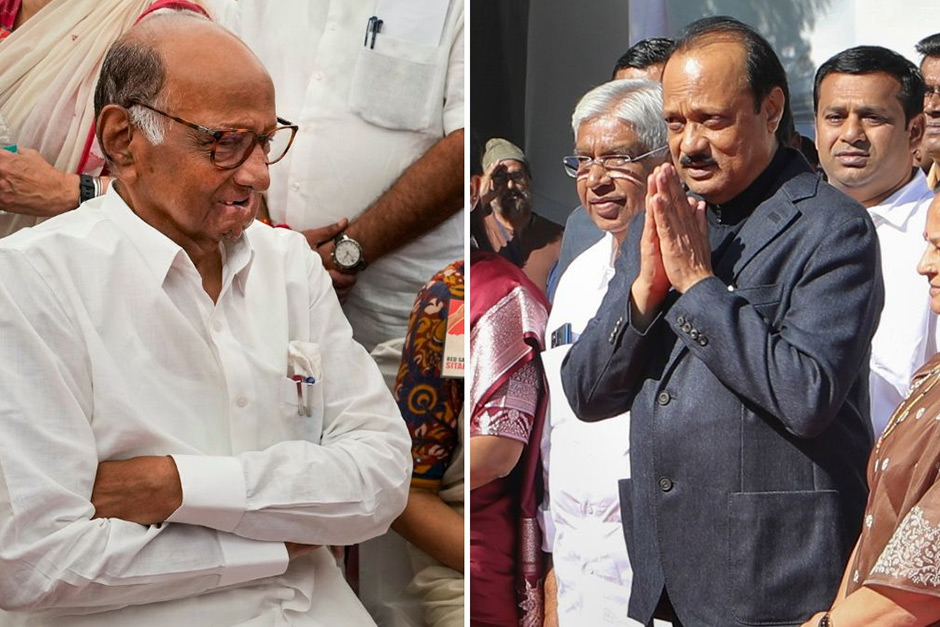
Maharashtra’s political landscape, perennially dynamic, has once again been stirred by definitive statements from Deputy Chief Minister Ajit Pawar. Amidst fervent speculation surrounding potential realignments ahead of crucial civic body elections, Pawar has categorically ruled out any merger talks with the Nationalist Congress Party (NCP) faction led by his uncle, Sharad Pawar. He has also vehemently denied allegations of a pre-arranged “match-fixing” with the Bharatiya Janata Party (BJP) for the upcoming local polls, asserting his faction’s intent to contest robustly.
The statements come at a critical juncture as Maharashtra braces for elections to various municipal corporations, zilla parishads, and panchayat samitis. These local body polls are often seen as a significant barometer of public sentiment, setting the tone for subsequent Lok Sabha and Assembly elections. The ongoing power tussle within the NCP, which saw Ajit Pawar align with the BJP-Shiv Sena (Shinde faction) government, has added layers of complexity and intrigue to the state’s political narrative.
Ajit Pawar Rules Out Reunion with Sharad Faction
Addressing the media in Mumbai, Ajit Pawar left no room for ambiguity regarding the future of his relationship with his uncle’s faction. Dispelling persistent rumours of a potential rapprochement or a grand merger, Pawar asserted that the split within the NCP is final and irreversible. He reiterated that his faction is the “real” Nationalist Congress Party, a claim currently under review by the Election Commission of India and potentially the Supreme Court.
“There is no question of going back or holding any merger talks with them,” Ajit Pawar stated firmly. “We have moved forward, and our focus is entirely on strengthening our party and working for the development of Maharashtra alongside the Mahayuti government.” This declaration effectively puts to rest the hopes of many who believed the two Pawar factions might eventually reconcile, particularly given their shared political lineage and grassroots support in certain regions of the state. The upcoming civic polls will now serve as a direct contest between the two factions, each striving to establish its legitimacy and popular mandate.
The Deputy CM emphasized that his faction is committed to its current alliance, comprising the BJP and the Shiv Sena led by Chief Minister Eknath Shinde. This alliance, dubbed the Mahayuti, is gearing up to face the opposition Maha Vikas Aghadi (MVA) – consisting of Sharad Pawar’s NCP, the Shiv Sena (Uddhav Balasaheb Thackeray) faction, and the Congress – in a fierce electoral battle across urban and rural local bodies.
Vehement Denial of BJP “Match-Fixing” Allegations
In addition to ruling out a merger with the Sharad Pawar faction, Ajit Pawar also strongly refuted accusations from opposition leaders regarding a supposed “match-fixing” or pre-arranged understanding with the BJP for the civic body elections. Leaders from the MVA, particularly the Shiv Sena (UBT) and Congress, have often suggested that the Ajit Pawar-led NCP’s entry into the Mahayuti might be part of a larger strategy to dilute opposition votes and ensure an easy victory for the BJP and its allies.
“These allegations of match-fixing are baseless and politically motivated,” Ajit Pawar asserted, expressing his displeasure at the insinuations. “There is no question of any match-fixing or pre-arranged electoral understanding with the BJP for the upcoming civic body polls. Our party will contest these elections with full strength and dedication, striving to win on our own merit as part of the Mahayuti.” He stressed that all constituent parties of the Mahayuti would campaign unitedly, but the competition itself would be fair and democratic.
Such accusations are common in the highly competitive Indian political landscape, where alliances and defections are often scrutinized for hidden motives. However, Ajit Pawar’s unequivocal denial aims to project an image of a confident and independent political entity, actively participating in the democratic process rather than engaging in backroom deals. The denial also serves to galvanize his party workers, reassuring them that their efforts will be directed towards genuine electoral contests rather than choreographed outcomes.
The High Stakes of Maharashtra’s Local Elections
The civic body elections in Maharashtra are not merely about local governance; they are crucial tests of political strength, organizational prowess, and public perception. Major municipal corporations like the Brihanmumbai Municipal Corporation (BMC), Pune, Nashik, and Nagpur, along with numerous Zilla Parishads, command significant resources and wield considerable influence. Winning these bodies provides parties with direct access to local administration, patronage networks, and a platform to demonstrate their governance capabilities.
For the Ajit Pawar faction, a strong showing in these polls is vital to solidify its standing as a legitimate political force within the Mahayuti and to counter the narrative of being merely a splinter group. Similarly, Sharad Pawar’s faction needs to prove its enduring appeal and organizational strength despite the internal split. The MVA, on the other hand, views these elections as an opportunity to demonstrate unity and resilience against the ruling dispensation.
As the election dates draw closer, Maharashtra’s political temperature is set to rise further. With Ajit Pawar’s clear pronouncements, the stage is now set for a direct and uncompromised electoral showdown. The results of these civic polls will undoubtedly offer significant insights into the evolving political dynamics of the state, potentially influencing strategies for the more significant battles ahead.
The political drama continues to unfold, promising an engaging and fiercely contested electoral period for the people of Maharashtra. The citizens will ultimately cast their votes, deciding the fate of local governance and signaling their preferences in a deeply fragmented yet vibrant political arena.

