


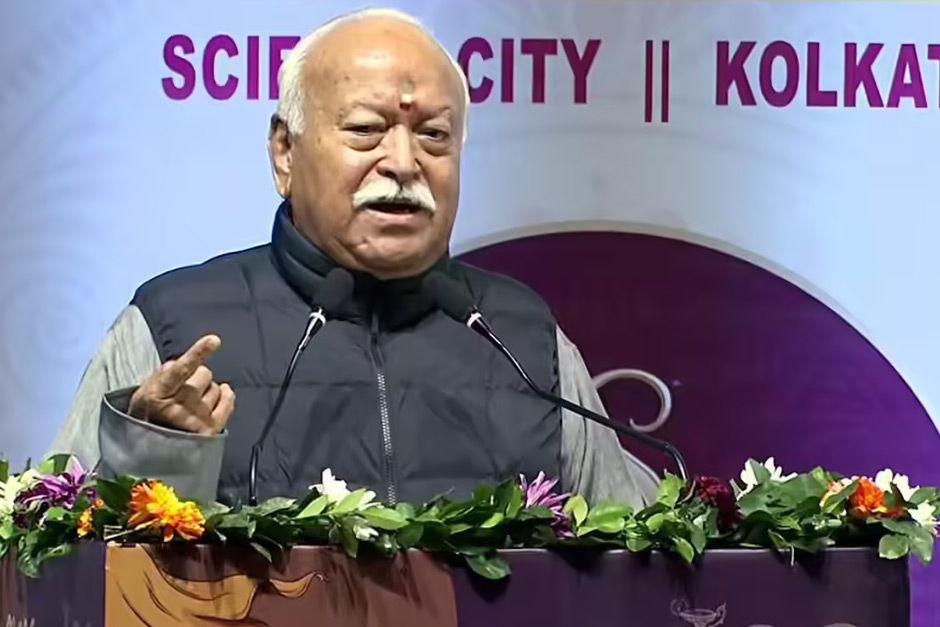
In a significant articulation that seeks to redefine public perception, Rashtriya Swayamsevak Sangh (RSS) Sarsanghchalak Mohan Bhagwat recently stated that viewing the RSS solely through the lens of the Bharatiya Janata Party (BJP) is a fundamental error. This assertion, delivered amidst ongoing political discourse in India, underscores the RSS’s consistent efforts to differentiate its broader cultural and national mission from the immediate political objectives of its most prominent ideological offshoot. For decades, the RSS and BJP have been inextricably linked in the popular imagination, prompting Bhagwat’s call for a nuanced understanding of the Sangh’s true identity and purpose.
Deciphering the Distinction: RSS Beyond the Political Arena
Mohan Bhagwat’s statement aims to unravel a complex knot of perception that has long tied the RSS directly to the BJP. While the ideological foundation of the BJP is undeniably rooted in the RSS’s philosophy, Bhagwat emphasised that the Sangh’s scope and methodology extend far beyond electoral politics. The RSS positions itself as a socio-cultural organisation dedicated to the holistic development of the nation through character building and social cohesion, rather than a political party’s backroom strategist or ideological parent.
During his address, Bhagwat reportedly stated, “Looking at the RSS through the BJP lens is a big mistake. The RSS is an organisation that works for character building and nation-building through social and cultural means. Our aim is to unite society, not to engage in politics directly.” This clear distinction highlights the RSS’s self-professed role as a purveyor of cultural nationalism and civic duty, focusing on ground-level social transformation rather than the power dynamics of government. For the RSS, the BJP is one of many organisations (parivar affiliates) that may draw inspiration from its ethos, but it does not represent the entirety or the ultimate objective of the Sangh’s vast network.
The Historical Knot: Perception Versus Reality
The challenge for the RSS in establishing this clear distinction lies in its own historical trajectory and the public figures it has produced. Since its inception in 1925, the RSS has fostered a leadership pool from which many prominent political leaders, including several Prime Ministers, have emerged to helm the BJP and its predecessor, the Bharatiya Jana Sangh. This deep interconnectedness, where individuals often transition seamlessly from RSS ‘pracharaks’ (full-time workers) to political roles, has naturally led to the widespread belief that the BJP is merely the political wing of the RSS.
However, the RSS maintains that while it provides a values framework and a pool of dedicated volunteers committed to national service, it does not dictate the BJP’s day-to-day policy decisions or electoral strategies. Its influence, according to Sangh leaders, is more advisory and ideological, focusing on upholding what it perceives as national interest and cultural values. The RSS’s core mission, the establishment of a Hindu Rashtra (Hindu Nation), is envisioned as a cultural and civilisational project achieved through societal awakening and collective action, not solely through legislative means or political power.
Strategic Articulation: Why Now?
Bhagwat’s reiteration of this distinction takes on particular significance in the current Indian political landscape. With the BJP having secured significant electoral victories and maintaining a dominant position at the Centre and in several states, the RSS’s association with the ruling party is stronger than ever in the public eye. This proximity, while offering influence, also brings with it the baggage of political criticism and accountability that the RSS might prefer to distance itself from.
By emphasising its unique identity, the RSS might be attempting several strategic objectives. Firstly, it could be an effort to broaden its appeal beyond the politically polarised segments of society, positioning itself as a more inclusive cultural movement. Secondly, it might aim to reaffirm its moral and ideological authority, ensuring that its core message of nation-building and character development is not overshadowed by the transient nature of electoral politics. Lastly, it may be an internal signal to its own cadres and the larger Sangh Parivar that while political engagement is one avenue, the fundamental work of cultural consolidation and social service remains paramount and independent.
Mohan Bhagwat’s statement serves as a crucial reminder for observers and commentators alike to engage with the Rashtriya Swayamsevak Sangh not merely as a political adjunct, but as a complex socio-cultural organisation with its own distinct agenda and methods. While the intertwining of the RSS and BJP is undeniable and historically significant, understanding the former requires looking beyond immediate political affiliations to appreciate its long-term vision of cultural revitalisation and national identity.

