


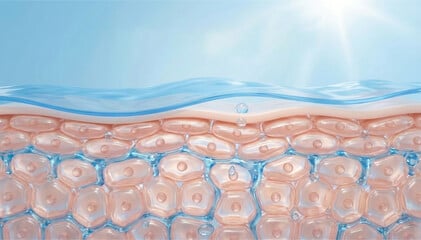
The quest for healthy, radiant skin is a timeless pursuit, and in today’s dynamic Indian beauty landscape, consumers are increasingly sophisticated, seeking not just promises but scientifically-backed results. Two ingredients consistently lauded for their efficacy are Retinol and Niacinamide. However, harnessing their full potential has always been a challenge due to the skin’s natural barrier. Enter liposomal technology – a groundbreaking delivery system poised to revolutionize how these potent actives interact with our skin, making them more effective and less irritating.
Overcoming the Skin Barrier: The Liposomal Advantage
Our skin is an incredible organ, designed primarily to protect us from the outside world. This protective function, while vital, also makes it notoriously difficult for topical ingredients to penetrate deep enough to exert their full benefits. Many active compounds simply sit on the surface, or their efficacy is significantly diminished before they reach their target cells.
This is where liposomes emerge as a game-changer. Imagine microscopic spherical vesicles, composed of phospholipid bilayers – the same material that forms our cell membranes. These tiny carriers can encapsulate active ingredients like Retinol and Niacinamide, shielding them from degradation and facilitating their journey through the skin’s formidable outer layers. When applied, liposomes can fuse with skin cells or release their contents in a controlled, sustained manner, ensuring a more targeted and efficient delivery.
For the discerning Indian consumer, often battling environmental stressors, pollution, and strong sun exposure, efficient ingredient delivery means tangible improvements. Better penetration translates to enhanced anti-aging effects, improved skin texture, reduced hyperpigmentation, and a stronger skin barrier – concerns highly prevalent across the subcontinent.
Retinol and Niacinamide: Potency Unleashed
Retinol, a derivative of Vitamin A, is a gold-standard ingredient renowned for its ability to accelerate cell turnover, stimulate collagen production, and diminish the appearance of fine lines, wrinkles, and acne. Despite its undeniable benefits, Retinol often comes with a caveat: its notorious instability when exposed to light and air, and its tendency to cause irritation, redness, and peeling, especially for those new to the ingredient or with sensitive skin. This has historically been a barrier for many potential users in India, particularly given varying skin types and sensitivities.
Niacinamide, or Vitamin B3, is another powerhouse ingredient known for its multitasking prowess. It strengthens the skin barrier, reduces inflammation and redness, minimizes pore appearance, regulates oil production, and can even help improve uneven skin tone and hyperpigmentation – issues that resonate deeply within the Indian demographic. While generally well-tolerated, ensuring its optimal delivery can further amplify its benefits, especially when targeting deeper skin concerns.
Liposomal encapsulation addresses Retinol’s Achilles’ heel directly. By protecting Retinol within its lipid shell, liposomes dramatically improve its stability, preserving its potency from formulation to application. More importantly, they enable a
controlled and sustained release
of the active ingredient into the skin. This slow-drip approach significantly minimizes the common side effects of irritation and redness, making Retinol more accessible and tolerable for a wider range of skin types, including sensitive Indian skin.
For Niacinamide, while not as prone to instability or irritation as Retinol, liposomal delivery can still offer significant advantages. It can potentially enhance deeper and more uniform penetration, allowing the ingredient to work more effectively on issues like stubborn pigmentation or to fortify the skin barrier from within. This translates to more profound and lasting improvements in skin health and appearance.
The Future of Skincare in India
The integration of liposomal technology with hero ingredients like Retinol and Niacinamide marks a significant leap forward in cosmetic science. It’s not just about adding an ingredient; it’s about ensuring that ingredient works optimally, safely, and effectively for the consumer. As the Indian skincare market continues its rapid growth, driven by informed consumers who demand tangible results, technologies like liposomal delivery will become increasingly pivotal.
The demand for effective yet gentle skincare solutions is particularly high in India, given the diverse climatic conditions and prevalent skin concerns. Products leveraging advanced delivery systems offer a promising pathway to address these needs with greater precision.
“The adoption of liposomal technology in Indian skincare is a game-changer. It means consumers no longer have to choose between potency and comfort. They can achieve superior results with less irritation, making advanced ingredients accessible to a broader audience,”
says Dr. Priya Sharma, a renowned dermatologist based in Mumbai, highlighting the transformative potential of this innovation.
In essence, liposomal Retinol and Niacinamide formulations are not just new products; they represent a paradigm shift. They promise a future where skincare is not only more effective but also more user-friendly, allowing individuals across India to achieve their desired skin health goals with greater confidence and satisfaction.

