


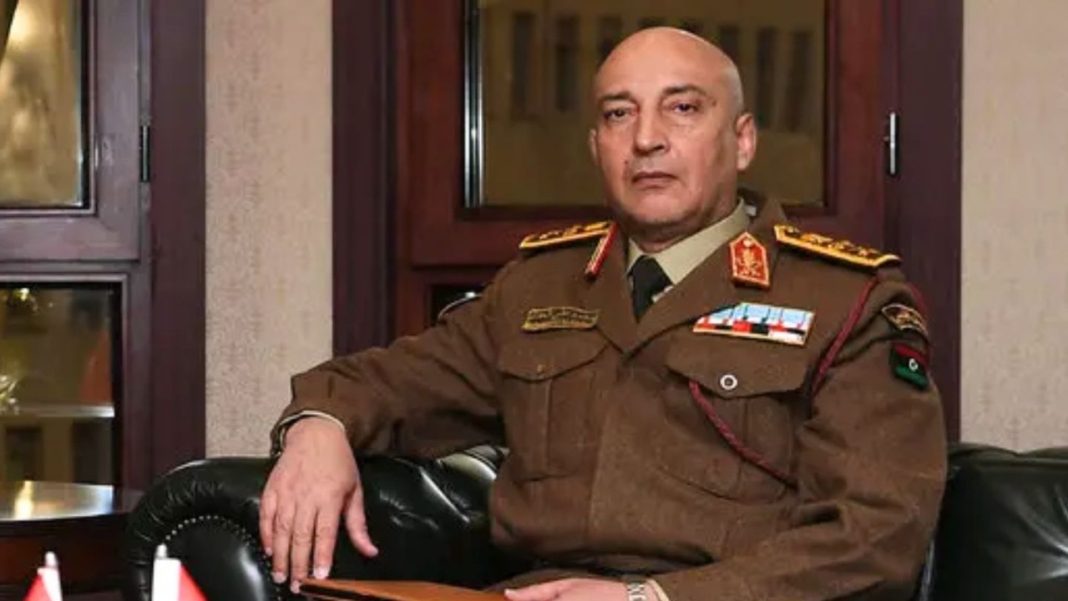
A profound tragedy unfolded in the early hours today as a private jet, carrying Libya’s Army Chief and seven other individuals, crashed shortly after takeoff from Ankara, Turkey. The incident, which occurred near Ankara Esenboğa Airport, has sent shockwaves through the diplomatic and security corridors of both nations and beyond. Authorities have launched an immediate investigation into the cause of the fatal accident, which has claimed all lives on board.
The Tragic Incident and Immediate Aftermath
According to initial reports, the private jet, believed to be en route to Tripoli, Libya, experienced critical difficulties just minutes after departing Ankara Esenboğa Airport. The aircraft reportedly lost altitude rapidly before crashing into an uninhabited area, bursting into flames upon impact. Emergency services, including fire brigades and medical teams, were dispatched immediately to the scene, but tragically, there were no survivors. The immediate impact site has been secured as forensic teams begin the grim task of identifying the victims and gathering evidence.
Among the deceased is Libya’s incumbent Army Chief, whose visit to Ankara was understood to be part of ongoing bilateral discussions between Libya’s interim government and Turkish officials, focusing on security cooperation and regional stability. The identities of the other seven individuals on board are yet to be officially released, but it is understood they included high-ranking military officials and support staff accompanying the Army Chief.
Turkish aviation authorities and Libya’s diplomatic mission in Ankara have confirmed the incident, expressing profound sorrow. A joint investigative team, comprising Turkish and Libyan experts, has been established to ascertain the exact cause of the crash. While mechanical failure and adverse weather conditions are often initial considerations in such incidents, officials have refrained from speculation, emphasizing that a thorough investigation is paramount.
Libya’s Fragile Stability and Regional Implications
The death of Libya’s Army Chief comes at a particularly sensitive time for the North African nation, which has been grappling with political fragmentation, intermittent conflict, and efforts to establish a lasting peace and unified government following years of civil strife. The Army Chief played a pivotal role in the country’s security architecture, tasked with unifying disparate armed factions under a single national command and working towards rebuilding the Libyan armed forces.
Turkey has maintained a significant strategic presence and influence in Libya, supporting the internationally recognized governments in Tripoli against rival factions. The regular high-level visits between Ankara and Tripoli underscore the deep engagement in military training, security assistance, and diplomatic efforts aimed at stabilizing Libya. This tragic loss could potentially complicate these ongoing efforts, at least in the short term, as leadership transitions occur amidst an already delicate political landscape.
For India, a stable and peaceful Libya is of significant interest. As a major global economy, India closely monitors developments in oil-rich regions, including North Africa, due to their direct impact on global energy markets and the broader geopolitical environment. The presence of Indian expatriates in the wider Middle East and North Africa also means that regional stability is a humanitarian and economic concern. Any event that could potentially destabilize Libya further, such as the sudden loss of a key military leader, is watched with careful attention by New Delhi, which advocates for peaceful, Libyan-led resolutions to the country’s challenges.
“This is a devastating blow, not just to the families of the victims, but to Libya’s ongoing efforts towards peace and security,” stated a spokesperson for Libya’s interim government. “We urge patience as the investigation unfolds, and we remain committed to upholding the vision of a stable and unified Libya that the Army Chief so valiantly served.”
The Path Forward: Investigations and Unity
As the black boxes are recovered and analysed, the international community, including India, will be closely following the findings of the Ankara crash investigation. The focus will undoubtedly be on understanding what led to this catastrophic event and what measures can be taken to prevent future tragedies. Beyond the technical aspects, the incident casts a long shadow over Libya’s internal dynamics, necessitating swift and decisive action from its political leadership to ensure continuity and prevent any power vacuums from emerging.
The global community’s role will be crucial in offering support to Libya during this challenging period. While the immediate priority remains the investigation and dignified handling of the deceased, the long-term impact on Libya’s security sector and its journey towards national reconciliation cannot be understated. This incident serves as a stark reminder of the inherent risks faced by leaders working in complex geopolitical environments and the enduring fragility of peace in conflict-affected regions.
The eyes of the world, including India, will now be on how Libya navigates this unexpected leadership vacuum and continues its arduous path towards stability and sovereignty, while Ankara extends its full cooperation to unravel the mystery behind this tragic aviation disaster.

