


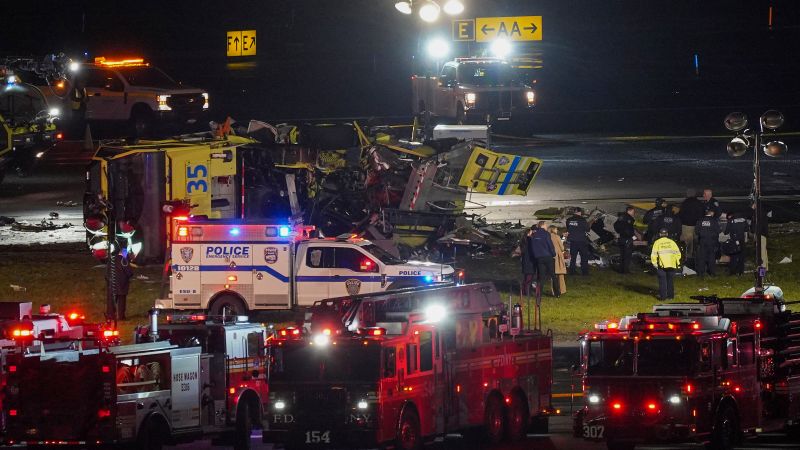
Travelers across the nation woke up to another gut punch today, as LaGuardia Airport, a vital hub for millions, was forced to close following a deadly collision. This devastating incident has not only brought air traffic in and out of one of New York City’s busiest airports to a grinding halt but has also intensified the already significant travel chaos plaguing the country. With a partial shutdown already straining resources and causing widespread disruptions, the closure of LaGuardia creates a truly unprecedented logistical nightmare for airlines and passengers alike.
The Tragic Collision and Immediate Aftermath
Details surrounding the collision remain fluid, but what is clear is the profound impact of the incident. Early reports indicate a deadly collision occurred on the airport grounds, leading to immediate safety protocols being enacted and, subsequently, the full closure of all runways and terminals. While authorities have launched a full investigation, the immediate priority shifted to emergency response and ensuring the safety of all personnel and passengers.
The closure of any major airport is a massive undertaking, but LaGuardia’s position as a gateway to the tri-state area means its sudden shutdown sends shockwaves across the entire East Coast air traffic network. Flights destined for LaGuardia are being diverted to other airports, including Newark Liberty International and John F. Kennedy International, further congesting already busy airspaces and facilities. Departures from LaGuardia have been canceled indefinitely, leaving thousands of passengers stranded and scrambling for alternative travel arrangements.
When Disruption Meets Disaster: A Compounding Crisis
This tragic incident couldn’t have come at a worse time. The travel industry was already reeling from the effects of a partial shutdown, which has reportedly led to staffing shortages in critical areas like air traffic control and security screening. Passengers have been experiencing longer lines, increased delays, and general uncertainty for weeks. This pre-existing fragility in the system has made it incredibly vulnerable to any additional stressor, and the LaGuardia closure is far more than just a stressor—it’s a catastrophic blow.
The ripple effect is immense. Airlines are struggling to re-route flights, re-assign crews, and manage a rapidly escalating backlog of passengers. Travelers who had connections through LaGuardia are finding themselves stuck hundreds, if not thousands, of miles from their final destinations. The frustration is palpable, and the human element of this crisis is deeply felt. “This is just unbelievable. We were already bracing for delays with everything else going on, but now this? It feels like the entire system is collapsing around us,” one visibly frustrated passenger lamented, trying to rebook a connection from Newark.
The logistical challenges are staggering. Not only do diverted flights consume valuable gate space and air traffic control capacity at neighboring airports, but the sheer volume of rebooked tickets and disrupted travel plans is placing an enormous burden on customer service departments already stretched thin by the ongoing shutdown.
Navigating the Uncharted Waters
The convergence of a tragic, localized incident with widespread systemic issues creates a travel landscape that is truly unprecedented. The focus for now is on ensuring safety, conducting a thorough investigation into the collision, and slowly working towards reopening LaGuardia. However, even once the airport is operational again, the residual effects of this closure—combined with the lingering impact of the partial shutdown—will be felt for days, if not weeks.
For travelers, patience has become an essential commodity. Airlines are urging passengers to check flight statuses frequently, consider flexible travel options, and prepare for significant delays. The path to recovery will be a long and complex one, requiring coordination across multiple agencies and the unwavering resilience of travelers and airline personnel alike. This period undoubtedly marks one of the most challenging chapters in modern air travel history.

