


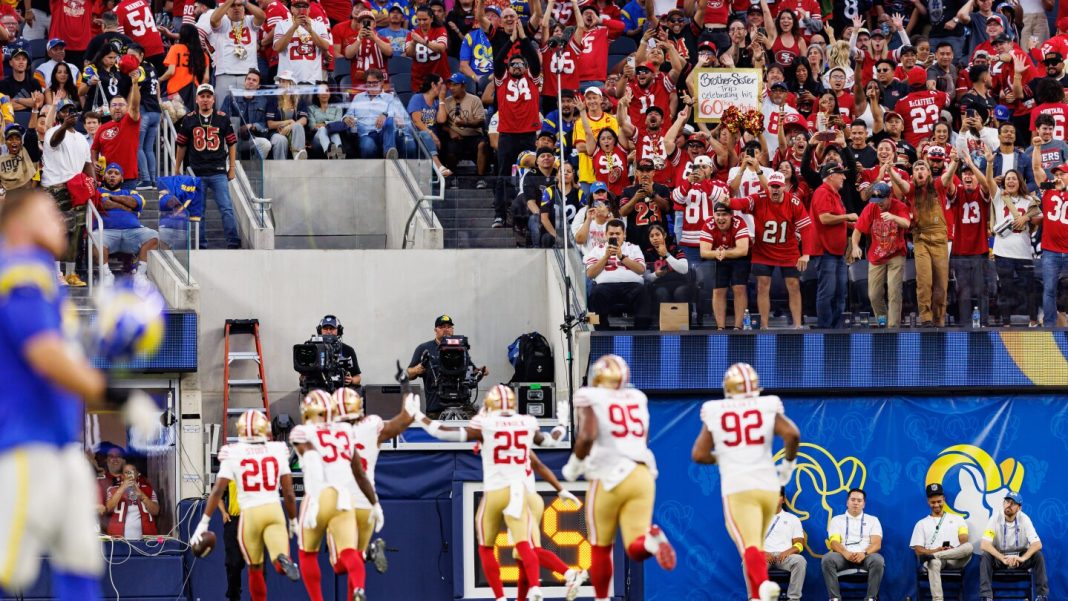
Imagine packing your bags, crossing an ocean, and setting up shop on another continent… just to avoid playing a rival at ‘home.’ Sounds wild, right? Well, that’s essentially the bombshell Kyle Shanahan dropped recently, revealing a truly fascinating tidbit about the dynamic between the San Francisco 49ers and the Los Angeles Rams.
The Land Down Under, Or Just Anywhere Else?
The 49ers head coach, known for his straight talk, casually mentioned that the Rams had at one point explored the possibility of playing their ‘home’ game against the Niners in Australia. Let that sink in for a moment. Not London, not Mexico City, but Australia. It’s a move that, on the surface, seems bizarre for any team. Why would you willingly give up home-field advantage – the familiar turf, the roaring crowd, the shorter travel – for a trip to the other side of the world?
The logistics alone are staggering: moving an entire NFL operation, players, staff, and equipment halfway across the globe for a single regular-season game. It implies a perceived problem so significant, so deeply impactful, that such an extreme measure was even on the table. And for anyone who’s paid even casual attention to the NFC West rivalry, the underlying reason is as clear as the southern sky.
The Red Sea in SoFi: An Uncomfortable Truth
For anyone who’s ever watched a 49ers-Rams game in Los Angeles, the answer becomes glaringly obvious. When the 49ers come to town, SoFi Stadium, the gleaming home of the Rams, often transforms into a sea of scarlet and gold. It’s not just a few visiting fans; it’s a legitimate takeover. Chants of ‘Let’s Go Niners!’ routinely drown out any attempts by the home crowd to rally their team. This isn’t just an inconvenience; it’s a significant psychological blow, and arguably a real factor in game dynamics.
The phenomenon isn’t new, but it has intensified. The 49ers boast one of the most passionate and widespread fan bases in the NFL, many of whom reside in Southern California or are willing to travel. These fans consistently show up in droves, turning what should be a comfortable home game for the Rams into something that feels remarkably like an away fixture. As one long-time NFL observer recently put it, “When your own stadium feels like an away game against a division rival, you start looking for extreme solutions. Moving to Australia, while logistically insane, speaks volumes about the perceived problem.” It’s a testament to fan loyalty, and perhaps a stark reminder of the challenge of building a new fanbase in a crowded sports market.
Beyond the Rivalry: A Global Game and Fan Power
This rumored desire to play in Australia isn’t just a quirky anecdote; it highlights several fascinating facets of modern sports. Firstly, it underscores the intensity of the 49ers-Rams rivalry, specifically the unique imbalance in fan presence at ‘home’ games in LA. It’s a testament to the passionate, widespread fanbase of the 49ers and perhaps a challenge for the Rams to cultivate a stronger local following. It also showcases the power of the fan base – enough to make a team consider such an extraordinary move.
Secondly, it briefly opens a window to the NFL’s global ambitions. While the primary driver here was likely avoiding the ‘home-away’ phenomenon, the idea itself shows how far the league is willing to think outside the box to expand its reach. Imagine the buzz, the international attention, and the new fan base a regular season game in Australia would generate, even if born from desperate measures. It reminds us that professional sports are not just about what happens on the field, but also about business, brand, and the ever-expanding global marketplace.
Ultimately, the Rams never did pack their bags for Sydney or Melbourne, and the games continue to be played in Inglewood, much to the delight (or dismay) of fans. But Shanahan’s revelation serves as a powerful, albeit humorous, reminder of the unique pressures and passionate loyalties that define professional sports. It’s a story not just about football strategy, but about fan power, rivalries that transcend state lines, and the lengths a team might consider going to just to feel like they’re truly playing at home.

