


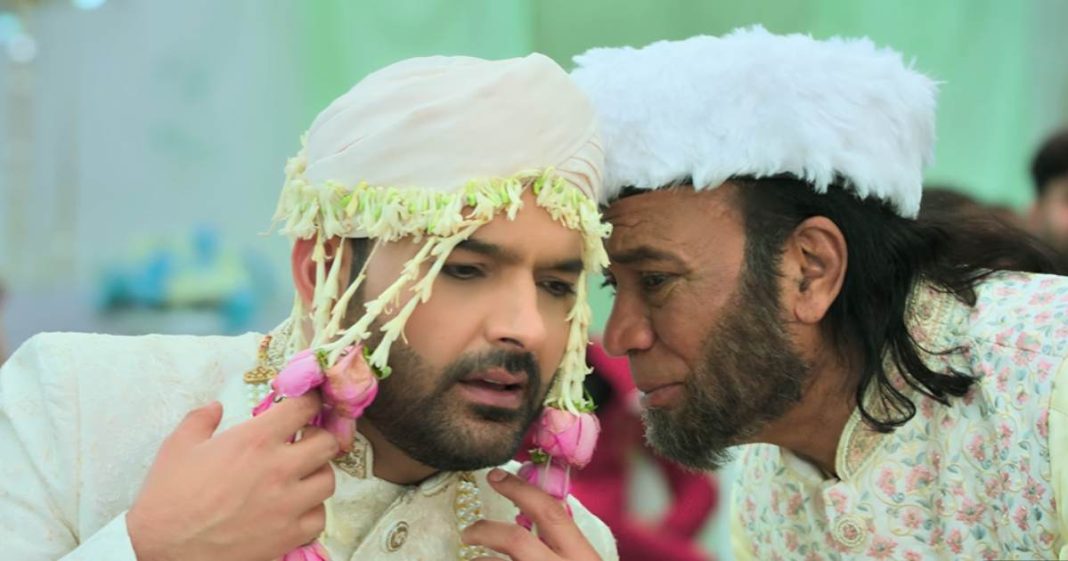
The much-anticipated sequel, Kis Kisko Pyaar Karoon 2, has opened to an unequivocally disappointing reception at the Indian box office, according to early trend reports for its opening day. Starring a new ensemble cast and attempting to build upon the moderate success of its 2015 predecessor, the film appears to have faltered significantly right out of the gate. Initial estimates suggest a catastrophic performance, with the film earning over 75% less than the first installment on its opening day.
For a film carrying the legacy of a relatively successful original, this dismal start raises serious questions about audience connect, marketing strategy, and the inherent draw of the franchise without its original lead. The early figures paint a grim picture, indicating a challenging road ahead for the comedy.
The Dismal Opening – A Stark Contrast
Early trade analyses reveal that Kis Kisko Pyaar Karoon 2 has managed to rake in an estimated ₹2.25 crore nett on its inaugural day. This figure is a stark and worrying contrast to the 2015 original, which, propelled by Kapil Sharma’s widespread popularity, had registered an impressive ₹10.15 crore nett on its opening Friday. The difference signifies a staggering drop of nearly 78%, underscoring a complete lack of resonance with the audience in its current iteration.
Industry observers had noted a subdued buzz leading up to the sequel’s release. The absence of Kapil Sharma, whose comedic timing and fan base were central to the first film’s appeal, appears to be a critical factor. The sequel, featuring a relatively lesser-known cast and a story that struggled to generate pre-release excitement, faced an uphill battle from the outset. Occupancy rates across major circuits, including Mumbai, Delhi NCR, and Punjab, remained exceptionally low throughout the day, failing to pick up even during evening shows which typically see a surge in footfalls for comedies.
Multiplex chains reported minimal ticket sales, while single-screen cinemas, often a strong indicator for mass-appeal comedies, also saw tepid responses. This widespread underperformance suggests that neither the brand recall nor the new talent could sufficiently pull audiences into theatres. The film’s early box office performance is not just disappointing; it’s an urgent signal to filmmakers about the challenges of reviving franchises without their core appeal.
The Predecessor’s Unforeseen Triumph
To fully grasp the magnitude of Kis Kisko Pyaar Karoon 2‘s underperformance, it’s crucial to recall the context of its predecessor. The 2015 film, directed by Abbas-Mustan, marked the much-hyped Bollywood debut of television superstar Kapil Sharma. Despite mixed critical reviews, the film leveraged Sharma’s immense popularity from his television show, “Comedy Nights with Kapil,” to secure a remarkable opening. His appeal transcended urban and rural demographics, creating a unique pull that translated directly into box office numbers.
The first Kis Kisko Pyaar Karoon went on to collect over ₹50 crore nett lifetime, establishing itself as a sleeper hit and a financially viable venture. It demonstrated the power of a popular personality, even in a non-traditional film role, to drive initial collections. This success was not necessarily attributed to a groundbreaking script but rather to the sheer star power and audience goodwill Kapil Sharma commanded at the time. The sequel, by contrast, attempted to recreate this formula without its primary ingredient, resulting in a significantly diluted impact.
Film trade analyst Girish Johar commented on the situation, stating, “The first film worked primarily on Kapil Sharma’s inimitable star power and connect with the masses. Without that unique selling proposition, a sequel needed a much stronger script, fresh comedic elements, and a robust marketing push to even come close to those numbers. Simply carrying forward the title isn’t enough in today’s competitive landscape.” His observation underscores the challenges faced by the sequel in a post-pandemic box office environment where only strong content or undeniable star power guarantees an audience.
Uphill Battle for Survival
With such a devastating opening day, Kis Kisko Pyaar Karoon 2 now faces an incredibly steep uphill battle. The early trend indicates a lack of positive word-of-mouth, which is critical for films to sustain themselves beyond the initial release day. A significant jump in collections over the weekend seems highly improbable, especially with competing releases vying for audience attention.
The film’s chances of recovery now rest on an unforeseen miraculous turnaround, something rarely witnessed in such situations. The long-term implications for the franchise are severe; this performance suggests that attempts to revive it without a compelling reason or the original star power might be commercially unviable. For the Indian film industry, this serves as another reminder that brand recognition alone is insufficient; content, star power, and effective marketing must align to draw audiences to theatres, especially for a sequel hoping to capitalize on past successes.
Ultimately, Kis Kisko Pyaar Karoon 2‘s opening day figures are a harsh lesson in relying on a title without adequately understanding the original’s success drivers. The journey ahead for the film looks exceptionally challenging, with its box office prospects appearing increasingly bleak.

