


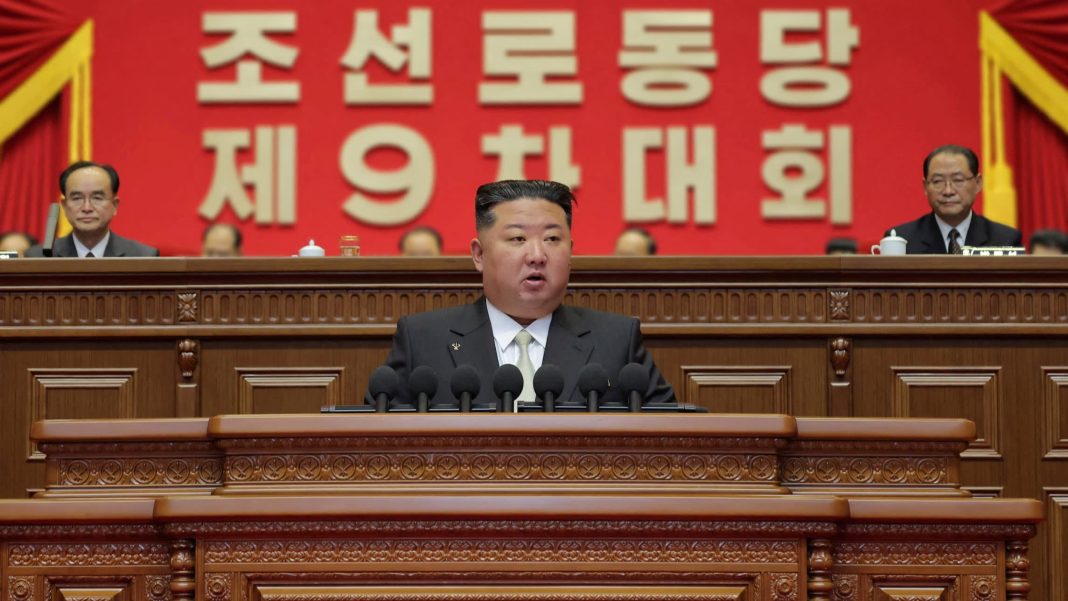
In a world saturated with constant news cycles and instant updates, the occasional, meticulously orchestrated event from a reclusive nation can still cut through the noise. North Korea’s rare Workers’ Party Congress recently concluded, and while the outside world might view such gatherings with a degree of skepticism, make no mistake: for Kim Jong Un, this was a resounding political triumph. Far from a mere ceremonial rubber stamp, the congress served as a carefully choreographed stage for the leader to solidify his power, reset national priorities, and project an image of unshakeable authority both at home and abroad.
Consolidating the Dynasty’s Grip
The significance of a Workers’ Party Congress in North Korea cannot be overstated. These aren’t annual press conferences; they are momentous occasions designed to affirm the party line and, crucially, the leadership’s absolute legitimacy. This congress, only the second under Kim Jong Un’s rule and just the eighth in the nation’s entire history, provided the perfect platform for him to refresh his mandate. We saw a slew of personnel changes, including the elevation of loyalists and the subtle sidelining of figures deemed less effective or sufficiently aligned with his vision. This isn’t just about shuffling chairs; it’s about tightening the inner circle and ensuring that every lever of power is firmly under his control, projecting an image of unwavering unity and purpose.
More than just reshuffles, the congress reinforced Kim’s unique position within the ruling dynasty. It highlighted his direct lineage and the continuation of the “Juche” ideology, North Korea’s self-reliance philosophy, but now infused with his personal stamp. It was a powerful message to any internal dissenters or external observers that the path forward is Kim Jong Un’s path, and deviation will not be tolerated. As one seasoned North Korea watcher, Dr. Evelyn Cho of the Asia Policy Institute, noted, “These congresses are less about debate and more about declaration. They are meticulously designed spectacles to re-legitimize the leader and present a united front, leaving no room for doubt about who is truly in charge.”
Charting a Future, Defined by Kim
Beyond the internal power dynamics, the congress was also about setting the national agenda for the coming years. Kim Jong Un unveiled a new five-year economic plan, acknowledging past failures (a rare admission) but framing it as a renewed commitment to self-sufficiency in the face of persistent international sanctions. This wasn’t a retreat; it was a defiant declaration of independence, emphasizing domestic innovation and resourcefulness. The economic challenges facing North Korea are immense, yet the congress framed these not as insurmountable obstacles, but as opportunities for national resilience under strong leadership.
Crucially, the military posture remained central. The congress reaffirmed North Korea’s commitment to strengthening its defense capabilities, including its nuclear deterrent. This wasn’t a surprise, but its prominent placement within the core declarations underscored that despite economic hardships, the strategic priority remains unwavering. It’s a dual message: internally, it’s about national pride and security; externally, it’s a clear signal to the world that North Korea will continue to pursue its own path, with its strategic assets as non-negotiable elements of its sovereignty.
The Message Received
What we witnessed at this rare congress was Kim Jong Un consolidating his generational shift. He has transitioned from inheriting power to definitively owning and shaping it. The “big win” wasn’t just about getting resolutions passed; it was about the profound symbolic weight of the event itself—a grand reaffirmation of his sole leadership, the direction of the party, and the destiny of the nation. It was a powerful, human performance designed to reinforce loyalty, quash dissent, and project a unified, resilient North Korea under his unchallenged command. The world watches, but in Pyongyang, the message was delivered with unwavering clarity: Kim Jong Un is firmly at the helm, charting his own course.
*

