


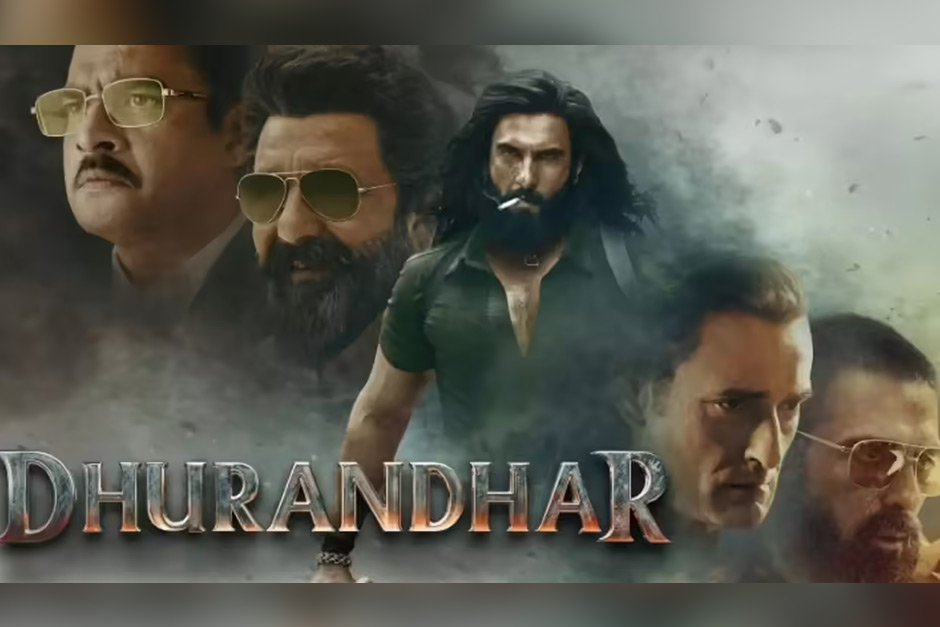
The cinematic landscape in Jammu & Kashmir has long been a subject of keen observation, often reflecting the region’s complex socio-political dynamics. Recently, a film titled Dhurandhar has stirred conversations, not just for its content but for its unexpected commercial success in the Valley. Amidst discussions about its perceived ideological leanings, Jammu & Kashmir Chief Minister Omar Abdullah offered a pragmatic perspective that has resonated across media circles, highlighting the nuanced relationship between entertainment, audience reception, and political messaging in a sensitive region.
Dhurandhar: Beyond the Propaganda Label
Dhurandhar, an action-drama film reportedly portraying themes of patriotism and national security from a particular viewpoint, has been met with mixed reactions since its release. While critics and political commentators in some quarters have quickly branded it a “propaganda movie” due to its narrative slant and portrayal of certain events, the film appears to be charting a different course at the box office, particularly in Kashmir. This divergence between critical labels and popular reception offers a fascinating study into the contemporary Indian film audience.
The film’s storyline, which allegedly aligns with certain nationalistic narratives, has fuelled debates about the increasing trend of ideologically driven cinema. Historically, Bollywood has often been a mirror to society, but recent years have seen a surge in films that openly embrace or subtly propagate specific political ideologies. Dhurandhar, in this context, fits a pattern that some argue blurs the lines between entertainment and state-sponsored messaging. Yet, its performance in Kashmir suggests that the audience’s motivations for viewing might be more diverse than simply endorsing its underlying political message.
CM Omar Abdullah’s Insight: Entertainment Trumps Ideology?
Chief Minister Omar Abdullah, known for his forthright opinions, articulated a view that cuts through the political noise and focuses on the fundamental aspect of cinema: entertainment. Addressing the film’s success, he stated,
“Kashmir audience is quite happy to be entertained by ‘Dhurandhar’ even if it’s a propaganda movie. It’s doing a roaring business at box office.”
This statement is significant for several reasons. Firstly, Abdullah does not shy away from acknowledging the film’s controversial tag, implicitly accepting that it might indeed carry a propaganda element as perceived by many. Secondly, and more importantly, he underscores that despite this perception, the Kashmiri audience is actively choosing to watch and enjoy it.
Abdullah’s remarks suggest a nuanced understanding of audience behavior. It posits that for the average cine-goer, the primary draw remains the intrinsic value of entertainment—the desire to escape, engage with a story, and experience the collective joy of cinema. The political undertones, while perhaps recognized, may not necessarily dictate the viewing choice or diminish the enjoyment for a significant portion of the audience. This perspective offers a refreshingly pragmatic take, moving beyond the binary of ‘good’ or ‘bad’ cinema based purely on political alignment, and instead focusing on the commercial and social reality of film consumption.
The Kashmiri Audience: A Complex Tapestry of Choice
The roaring business Dhurandhar is doing in Kashmir, as highlighted by the Chief Minister, prompts a deeper look into the audience itself. What drives Kashmiri viewers to theatres for a film that could be seen as contentious? One major factor is simply the availability of entertainment. After years of limited cinematic options and fluctuating access to public spaces, the sheer novelty of a big-screen experience, especially with a film that has generated buzz, can be a powerful draw.
Furthermore, the audience in Kashmir, like anywhere else, is not monolithic. It comprises individuals with diverse opinions, needs, and desires. Some might be genuinely curious about the film’s portrayal of events relevant to their region, even if they disagree with its premise. Others might simply be seeking a distraction, an action-packed spectacle, or a shared experience with family and friends. The human desire for escapism and storytelling, irrespective of the political subtext, often remains a powerful motivator. Abdullah’s statement indirectly validates this complexity, suggesting that the audience’s engagement with art is multifaceted and cannot be pigeonholed solely by political labels.
Conclusion: The Enduring Power of Entertainment
Omar Abdullah’s candid observation about Dhurandhar’s success in Kashmir throws light on an important aspect of contemporary Indian cinema: the enduring power of entertainment to transcend critical and political labels. While the debate over “propaganda films” continues to rage, the commercial viability and audience acceptance of movies like Dhurandhar, even in sensitive regions, suggest that viewers often prioritize the cinematic experience itself. This duality—where a film can be both criticized for its messaging and celebrated at the box office—underscores the intricate relationship between art, audience, and politics in a vibrant democracy like India. It’s a testament to the fact that while narratives can be manipulated, the audience’s hunger for stories and their right to choose their entertainment remains a powerful, often unpredictable, force.

