


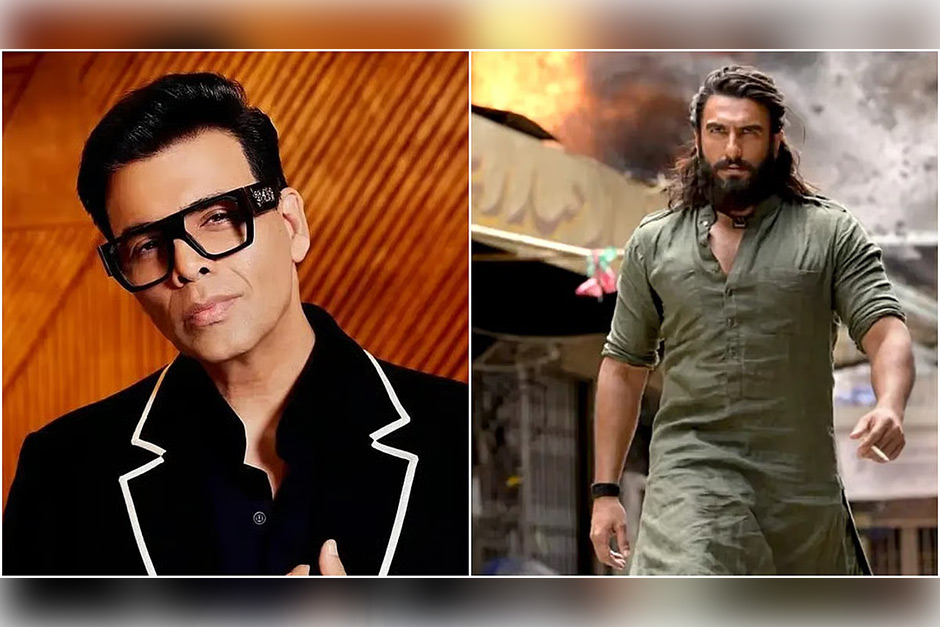
The Indian cinematic landscape continues to be reshaped by blockbusters that not only shatter box office records but also ignite fervent public discourse. One such phenomenon is Dhurandhar, a film that has recently crossed the monumental ₹1,300 crore mark globally, solidifying its place as one of the highest-grossing Indian films of all time. Amidst its unprecedented commercial success, the film has also been at the center of extensive discussions regarding its political undertones and societal commentary. Adding a significant voice to this ongoing conversation, prominent filmmaker and producer Karan Johar recently addressed the ‘Dhurandhar’ politics, stating unequivocally, “I wasn’t offended,” a remark that has garnered considerable attention within the film fraternity and beyond.
Dhurandhar’s Unprecedented Box Office Triumph
Dhurandhar’s journey to ₹1,300 crore is a testament to its compelling narrative and widespread appeal, captivating audiences across diverse demographics in India and internationally. From its initial release, the film demonstrated remarkable staying power, consistently drawing viewers to cinemas despite an increasingly competitive market. Its success isn’t merely a numerical feat; it reflects a powerful connection with the audience, resonating with themes that have struck a chord deep within the national consciousness. Analysts attribute this monumental achievement to a blend of strong storytelling, powerful performances, and a production quality that rivals global standards.
The film’s unprecedented run has invigorated the Indian film industry, setting new benchmarks for commercial viability and proving that content-driven cinema, when executed with conviction, can achieve extraordinary success. This triumph is particularly significant in a post-pandemic era, where audience habits were perceived to have shifted irrevocably. Dhurandhar has not only brought audiences back to theatres but has also spurred renewed optimism and confidence in the power of the big screen experience.
The Political Undercurrents and Public Discourse
Beyond its financial prowess, Dhurandhar has carved out a unique space in public discourse due to its perceived engagement with contemporary political and social dynamics. While the film presents itself as a work of fiction, many viewers and critics have interpreted its narrative as an allegorical commentary on power structures, governance, and societal inequalities prevalent in India. This has led to widespread debates across various platforms, from social media to primetime television, with individuals dissecting its characters, plot points, and dialogues for hidden meanings and political leanings.
The ‘Dhurandhar politics’ refers to the film’s bold portrayal of complex issues, often sparking discussions on corruption, ideological divides, and the struggles of the common person against formidable systems. Some have lauded the film for its courage to tackle sensitive subjects, while others have expressed differing views on its portrayal, leading to a spectrum of opinions that underline the vibrant, often polarized, nature of political discourse in the country. This interpretative engagement underscores the growing expectation for mainstream cinema to not just entertain but also provoke thought and contribute to national conversations.
Karan Johar’s Stance: Navigating Critique and Commentary
In this charged atmosphere of analysis and debate, Karan Johar’s recent statement offers a crucial perspective. Johar, a filmmaker whose own body of work has often been scrutinized for its portrayal of modern Indian society and its cultural fabric, chose to weigh in on the discussions surrounding Dhurandhar’s political aspects. His remark, coming from a figure known for his influence and pulse on popular culture, carries significant weight.
Speaking at a recent industry event, Johar was asked about the film’s political commentary and if he found any aspect of it controversial or offensive. His candid response was, “I wasn’t offended. I believe cinema has the power to reflect, question, and sometimes even provoke. When a film resonates this strongly, it’s because it’s touching upon something real, something that people are discussing or feeling. As an industry, we must support diverse voices and perspectives, even if they challenge us.”
This statement is particularly noteworthy as it highlights a nuanced understanding of artistic expression and its role in a democratic society. Johar’s willingness to embrace, rather than shy away from, potentially provocative cinematic content signals a maturing perspective within the mainstream film industry. It suggests an acceptance that films, especially those with such monumental reach, inevitably become catalysts for broader societal dialogue, and that differing viewpoints are an inherent part of that process. His comment reinforces the idea that true art, by its very nature, might not always seek to please but rather to engage, inform, and stimulate introspection, without necessarily intending to cause offense.
Conclusion
The journey of Dhurandhar, from a record-breaking box office phenomenon to a cultural touchstone sparking intense political and social commentary, exemplifies the multifaceted impact of cinema. Karan Johar’s measured response to its ‘politics’ — “I wasn’t offended” — not only adds another layer to the ongoing discussion but also underscores the evolving role of filmmakers and the film industry in navigating public opinion. As Dhurandhar continues its impressive run, its legacy will undoubtedly be remembered not just for its unparalleled commercial success, but also for its significant contribution to the national discourse and its role in challenging the boundaries of cinematic expression in India.

