


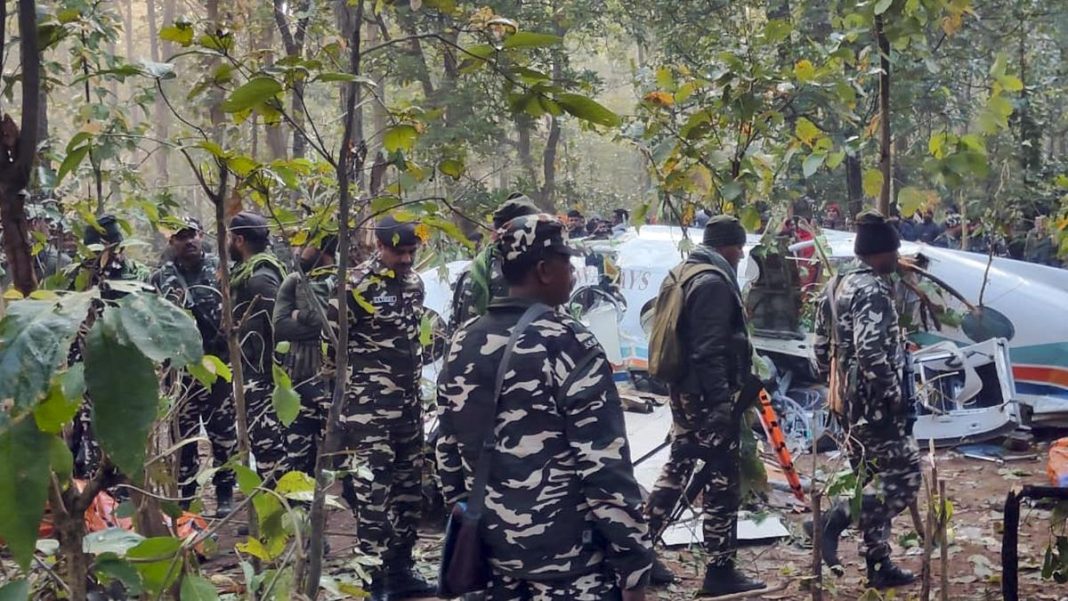
The quest for urgent medical care took a tragic turn recently in Jharkhand, casting a somber shadow over the critical role of air ambulances in India’s healthcare landscape. An air ambulance, carrying seven individuals, crashed in a remote area of the state, resulting in the immediate fatality of everyone on board. The incident has sent shockwaves across the nation, prompting an immediate investigation into the circumstances that led to this devastating loss of life, including a patient, medical personnel, and the flight crew.
The tragedy underscores the inherent risks involved in emergency medical air transport, especially over challenging terrains and under potentially adverse weather conditions. As the nation mourns the victims, including those dedicated to saving lives, questions are being raised about air safety protocols and the operational challenges faced by critical care air services in India.
The Fateful Flight and Its Devastating End
The ill-fated King Air C90 twin-engine air ambulance had reportedly departed from Ranchi, the capital of Jharkhand, en route to Delhi. The flight was carrying a critically ill patient who required advanced medical intervention not available at local facilities. On board were the patient, a family member, two doctors, a paramedic, and two pilots. The aircraft lost contact with air traffic control shortly after takeoff and was later confirmed to have crashed in a dense forest area near the Gumla district, roughly 100 kilometers from Ranchi.
Local villagers were reportedly the first to discover the wreckage, alerting authorities to the grim scene. The impact site was described as extensive, with debris scattered over a wide area, indicating a high-speed crash. Rescue teams, including district administration officials, police, and disaster management personnel, were immediately dispatched to the remote location. However, due to the challenging terrain and the severity of the crash, reaching the site proved difficult. Upon arrival, it was confirmed that there were no survivors. The identities of all seven individuals on board were tragically confirmed, deepening the sense of loss across the state and beyond.
The air ambulance service plays a crucial role in bridging geographical distances, especially for patients in India’s Tier 2 and Tier 3 cities and rural areas who require specialized treatment in metropolitan hospitals. This incident brings to the forefront the bravery of the medical and aviation professionals who undertake these high-stakes missions daily.
Preliminary Investigations and Unanswered Questions
Following the crash, the Directorate General of Civil Aviation (DGCA), India’s primary aviation regulatory body, launched a comprehensive investigation. A team of experts was dispatched to the crash site to gather evidence, including flight recorders (commonly known as ‘black boxes’), wreckage fragments, and eyewitness accounts. Preliminary inquiries are expected to focus on several key aspects, including meteorological conditions at the time of the flight, the aircraft’s maintenance history, and the actions of the flight crew.
Jharkhand, known for its undulating terrain and often unpredictable weather patterns, especially during the monsoon season, presents unique challenges for aviation. Investigators will meticulously analyze radar data, air traffic control communications, and post-mortem examinations of the aircraft’s engines and systems to determine if technical malfunction played a role. Human factors, including pilot fatigue or sudden incapacitation, will also be considered as part of the exhaustive investigation process.
A senior official from the Gumla district administration, speaking to local media, expressed profound grief over the incident. “This is a heartbreaking tragedy for our state and for the families involved. Our priority now is to provide all necessary support to the investigation teams and ensure that the exact cause of this unfortunate accident is determined. We owe it to the victims and their families to understand what went wrong and prevent such incidents in the future,” he stated, highlighting the gravity of the situation.
Ensuring Aviation Safety in Emergency Services
The Jharkhand air ambulance crash serves as a stark reminder of the complexities and inherent risks associated with emergency medical air transport. While such services are indispensable for saving lives, especially in a vast and diverse country like India, they must operate under the strictest safety protocols. The incident will undoubtedly prompt a deeper review of existing regulations, operational procedures, and maintenance standards for air ambulance fleets across the country.
Ensuring the airworthiness of aircraft, rigorous training for pilots and medical staff, and robust communication systems are paramount. The findings from the DGCA’s investigation will be critical in shaping future policy and enhancing safety measures for air ambulance operations. The ultimate goal is to minimize risks while continuing to provide this life-saving service to those in dire need.
As the nation mourns the lives lost in this tragic accident, the incident underscores the courage and dedication of all those involved in medical aviation. It is a poignant moment to reflect on the sacrifices made by individuals who work tirelessly to bring hope and healing, even in the most challenging circumstances.

