


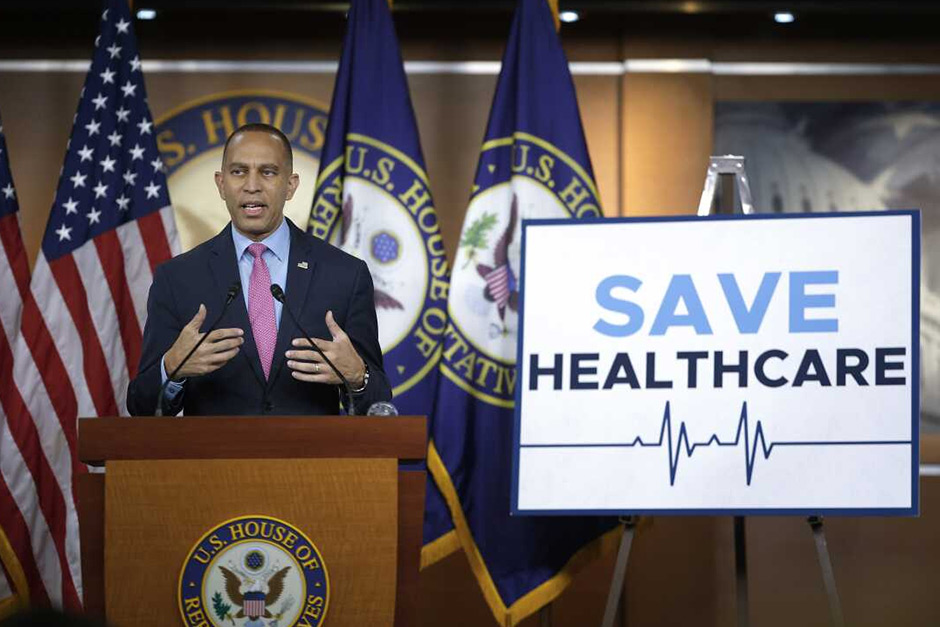
In the often-theatrical arena of Washington politics, some accusations hit differently. When House Minority Leader Hakeem Jeffries recently asserted that Speaker Johnson "killed" Donald Trump’s healthcare plan, it wasn’t just a routine jab across the aisle; it was a spotlight on a long-simmering internal Republican struggle and the persistent quagmire of healthcare reform. Jeffries’ claim isn’t merely about current events; it pulls at threads woven deep into the fabric of conservative policy ambitions and the ongoing battle for the future of American healthcare.
The Elusive Ghost of "Repeal and Replace"
For over a decade, the Republican Party has rallied behind the mantra of "repeal and replace" the Affordable Care Act (ACA). Yet, despite multiple attempts, even with unified control of Congress and the White House during the Trump administration, a comprehensive, viable replacement plan never fully materialized. This wasn’t for lack of trying, but rather due to deep-seated divisions within the GOP itself. Conservatives often pushed for more drastic deregulation and market-based solutions, while moderates worried about coverage losses and public backlash.
Jeffries’ accusation leverages this historical context. By suggesting Speaker Johnson is responsible for the demise of Trump’s plan, he’s pointing to the continuous inability of Republican leadership to forge consensus on one of their most prominent policy promises. It implies that the internal fractures are so significant that even a party leader can be seen as an impediment to their own side’s agenda, rather than external opposition.
Internal Rifts and Strategic Blame
The accusation from Jeffries isn’t just about healthcare policy; it’s a shrewd political maneuver. By laying blame at Johnson’s feet, the Democratic leader highlights what he perceives as a fundamental weakness within the Republican Party: its inability to deliver on a core promise. This narrative frames Republicans as fractured and ineffective, especially on an issue as vital and emotionally charged as healthcare.
It also subtly deflects from the fact that Trump himself struggled immensely to unify his party around any specific healthcare alternative. When a Democratic leader blames a Republican Speaker for failing to advance a Republican president’s agenda, it speaks volumes about the perceived leadership challenges and ideological chasms within the GOP. It’s a way of saying, "Even when you had the chance, you couldn’t get it done, and your own people are to blame."
As one veteran Capitol Hill observer put it, &qoute;This isn’t just about healthcare policy; it’s about political positioning. Jeffries knows that by highlighting Republican infighting on a core issue like healthcare, he weakens their perceived unity and offers a clear contrast for voters. Whether Johnson literally killed a plan is less important than the narrative that Republicans can’t get their act together on healthcare.&qoute; Such a statement underscores the strategic nature of Jeffries’ remarks, designed to resonate with an electorate often frustrated by political gridlock.
Beyond the Blame Game: What It Means for Healthcare
Ultimately, Jeffries’ sharp comment underscores a persistent truth: healthcare remains an incredibly potent political weapon. For Democrats, the narrative of Republicans failing to offer a viable alternative to the ACA, while simultaneously threatening its existence, is a powerful motivator for their base. For Republicans, the struggle to articulate a unified, popular vision for healthcare reform continues to be a significant challenge, exposing philosophical divides and strategic weaknesses.
Whether Speaker Johnson individually "killed" a specific Trump healthcare plan is debatable, given the broader historical context of GOP struggles. What is undeniable is that Jeffries’ accusation serves as a stark reminder of the Republican Party’s ongoing difficulty in uniting behind a coherent, marketable healthcare vision. It highlights the deep fissures within the party and ensures that healthcare will remain a central, contentious battleground in the political landscape for the foreseeable future.
*

