


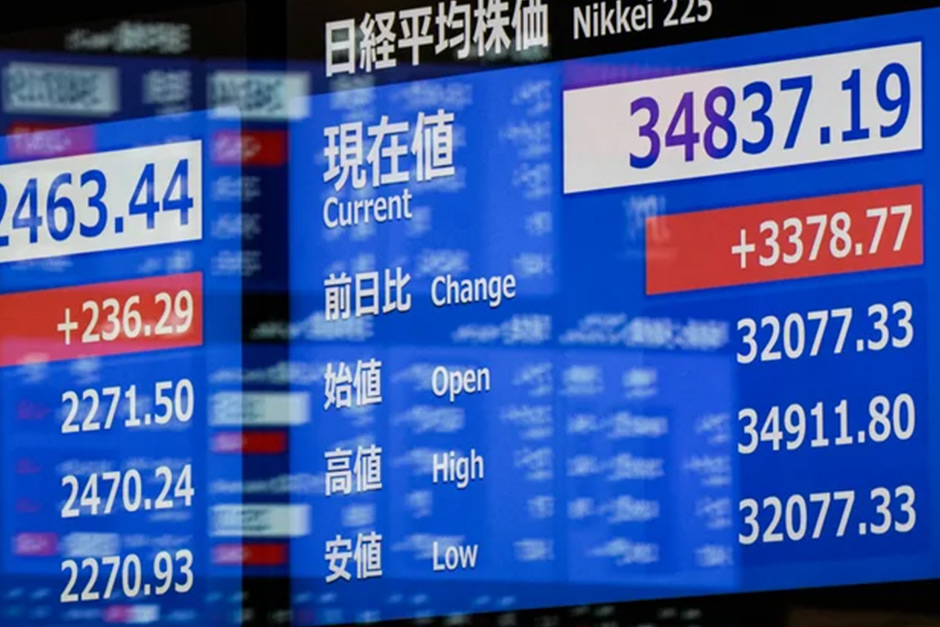
Japan’s financial markets are currently experiencing an extraordinary surge, captivating global investors and analysts alike. After years of navigating deflationary pressures and subdued growth, the Land of the Rising Sun is now witnessing a remarkable resurgence. Its equity markets are soaring to multi-decade highs, driven by renewed corporate vigor and an improving economic outlook. Perhaps more intriguing, demand for Japanese government bonds (JGBs) remains robust, painting a complex yet compelling picture of a market in flux and transition.
The Nikkei’s Resurgence: A New Dawn for Japanese Equities
The headline-grabbing story is undoubtedly the spectacular performance of Japanese stocks. The Nikkei 225 average, a barometer for the nation’s equity health, has been on an impressive upward trajectory, shattering previous records. This isn’t merely a speculative bubble; it’s underpinned by fundamental shifts and growing confidence. A key driver has been the yen’s depreciation, which significantly boosts the profitability of Japan’s export-oriented giants, making their goods more competitive globally and inflating their repatriated earnings.
Beyond currency dynamics, a concerted effort towards corporate governance reforms has also played a crucial role. Japanese companies are increasingly focusing on shareholder returns, optimizing balance sheets, and divesting non-core assets. This commitment to efficiency and transparency is making them more attractive to international institutional investors who had long overlooked the market. Furthermore, the return of inflation, albeit modest, has shifted domestic investment patterns, encouraging a move from traditional savings into more growth-oriented assets like stocks.
The Bond Market Paradox: Steady Hands Amidst Volatility
While surging stocks often signal a risk-on environment, the concurrent demand for Japanese government bonds presents a fascinating paradox. In an era where many major central banks have aggressively tightened monetary policy, pushing bond yields higher globally, JGBs continue to be
A significant factor is the Bank of Japan’s (BoJ) continued, albeit subtly shifting, accommodative monetary policy, including its yield curve control framework. Even as it has gradually allowed for greater flexibility, the BoJ’s presence provides a perceived floor for the bond market, offering a sense of stability. Domestically, Japanese institutions and households, often prioritizing capital preservation and predictable returns, remain significant buyers. Moreover, in an uncertain global landscape, the sheer depth and liquidity of the JGB market, combined with Japan’s strong credit rating, can position it as a safe-haven asset, drawing demand even from international investors seeking refuge from more volatile markets.
Unpacking the Momentum: What’s Fueling the Fire?
The current market exuberance isn’t just a flash in the pan; it’s the culmination of several powerful trends converging. The BoJ’s patient approach to exiting its ultra-loose policy, contrasting with the more aggressive stance of its Western counterparts, offers a relatively benign monetary backdrop. This, combined with improving corporate fundamentals and a genuine effort to address long-standing economic challenges, is creating a positive feedback loop.
There’s also a noticeable shift in sentiment. For years, narratives around Japan focused on stagnation and an aging population. Now, the discourse is changing to one of resilience, innovation, and strategic re-evaluation. “It’s a fascinating confluence of factors,” notes financial strategist Hiroki Tanaka. “You have genuine corporate reforms attracting foreign capital, a central bank still charting its own course, and a domestic re-evaluation of assets. It’s a powerful narrative shift for a market long overlooked.” This renewed optimism is drawing global capital back to a market that many believe still holds significant untapped potential.
As Japanese stocks continue their ascent and its bond market maintains its allure, the global financial community is watching closely. This period marks a potential turning point for Japan, signaling a vibrant new chapter for its economy and markets. While no market move is without its risks, the current momentum suggests a fundamental re-rating is underway, making Japan an indispensable market to monitor for investors worldwide.

