


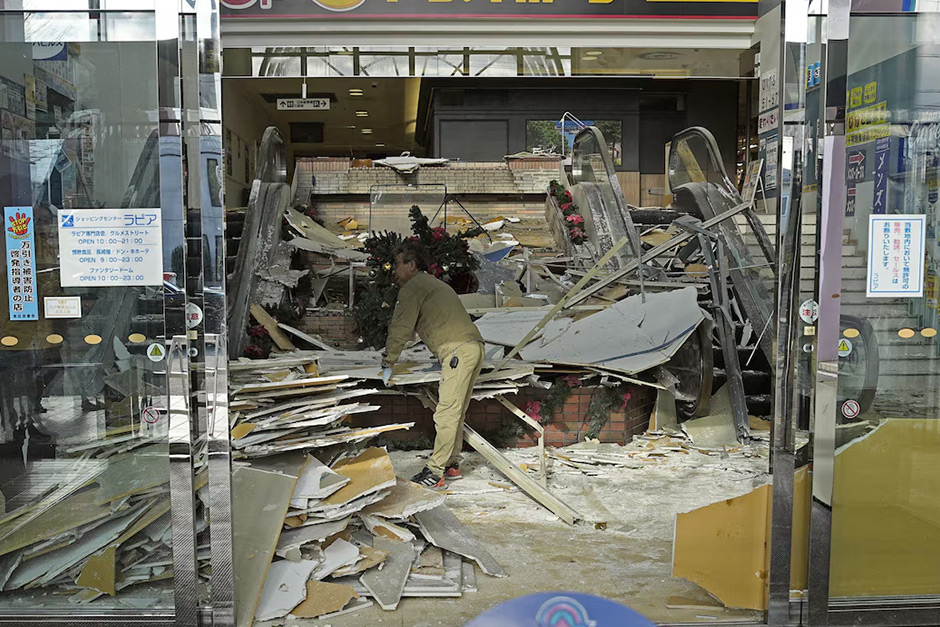
A powerful 7.5 magnitude earthquake rattled Japan’s Noto Peninsula on Monday, January 1, 2024, at approximately 4:10 PM local time, sending shockwaves across the region and triggering immediate fears of a devastating tsunami. While initial warnings of large waves prompted widespread evacuations, the Japan Meteorological Agency (JMA) later downgraded and eventually lifted the tsunami advisories, bringing a collective sigh of relief. The quake, centred near the Ishikawa prefecture, has left 23 people injured, caused significant infrastructure damage, and led to power outages affecting tens of thousands of homes.
For a nation frequently tested by seismic activity, this New Year’s Day quake served as a stark reminder of Japan’s precarious position on the Pacific Ring of Fire. The initial hours were fraught with uncertainty as authorities urged residents in coastal areas to seek higher ground, drawing parallels to past catastrophic events. As the dust settles and the full extent of the damage is assessed, the focus now shifts to recovery and reinforcing the lessons learned from this latest tremor.
Immediate Impact and the Tsunami Scare
The magnitude 7.5 earthquake struck with considerable force, causing buildings to sway violently across the Ishikawa prefecture and surrounding areas. Reports quickly emerged of collapsed houses, landslides blocking roads, and structural damage to older buildings, particularly in the hardest-hit Wajima and Suzu cities. The Japanese government’s Fire and Disaster Management Agency confirmed at least 23 injuries across Ishikawa, Niigata, and Fukui prefectures, with several in serious condition. Tragically, a fire broke out in Wajima, consuming multiple structures and complicating rescue efforts amidst power outages and disrupted communications.
Perhaps the most immediate and terrifying consequence was the issuance of a major tsunami warning. The JMA initially warned of waves potentially reaching up to five metres along the Noto Peninsula and nearby coastlines. This led to urgent evacuation orders for hundreds of thousands of residents, particularly in low-lying coastal areas. Footage circulated of smaller tsunami waves, around 1.2 metres high, hitting Wajima port, generating immense concern. Thankfully, these warnings were progressively downgraded. By Tuesday morning, all tsunami advisories had been lifted, though authorities cautioned about continued aftershocks and the risk of landslides.
Infrastructure Challenges and Japan’s Resilience
The earthquake severely impacted critical infrastructure. Power utility Hokuriku Electric Power reported that over 30,000 households in Ishikawa prefecture were without electricity in the immediate aftermath, complicating rescue operations and the daily lives of residents. Several highways were closed due to damage and the risk of landslides, hampering the movement of emergency vehicles and aid. Reports from Japan’s public broadcaster NHK also highlighted concerns about water supply disruptions in several communities.
Despite the significant challenges, Japan’s renowned disaster preparedness mechanisms were swiftly activated. Prime Minister Fumio Kishida urged residents to remain vigilant for aftershocks and called for maximum effort in rescue operations. The self-defence forces were mobilised to assist with search and rescue, damage assessment, and aid distribution. The relatively low number of reported injuries, given the earthquake’s intensity, speaks volumes about the country’s stringent building codes and advanced early warning systems. These systems provide crucial seconds or minutes for people to take cover, a factor that has undoubtedly saved lives.
Globally, nations, including India, watched the developments closely, recognising Japan’s exceptional ability to withstand and recover from natural calamities. “The speed with which emergency services mobilised and the public responded to safety advisories truly underscores Japan’s unparalleled readiness for seismic events,” noted a disaster management expert, highlighting the nation’s robust protocols and the disciplined response of its citizens.
For an Indian context, observing Japan’s approach to disaster management offers valuable insights into building resilience against similar geological threats. While India faces its own set of natural challenges, particularly in Himalayan regions, Japan’s continuous investment in earthquake-resistant infrastructure, public awareness campaigns, and sophisticated early warning technologies provides a benchmark for effective mitigation strategies.
Looking Ahead: Recovery and Aftershocks
As recovery efforts get underway, the focus remains on ensuring the safety of all residents, particularly in isolated areas. Authorities have continued to warn about the potential for further significant aftershocks throughout the week, urging people to avoid damaged buildings and remain alert. The coming days will see extensive damage assessments, restoration of utilities, and the challenging task of clearing debris and reopening vital transportation routes.
The New Year’s Day earthquake in Japan serves as a powerful reminder of nature’s unpredictable force. While the immediate threat of a major tsunami has receded, the affected regions now face a prolonged period of recovery. Japan’s resilience, honed by centuries of facing seismic challenges, will undoubtedly be central to overcoming the aftermath of this latest natural disaster.
Stay tuned to TrendLyric.com for further updates on this developing story.

