


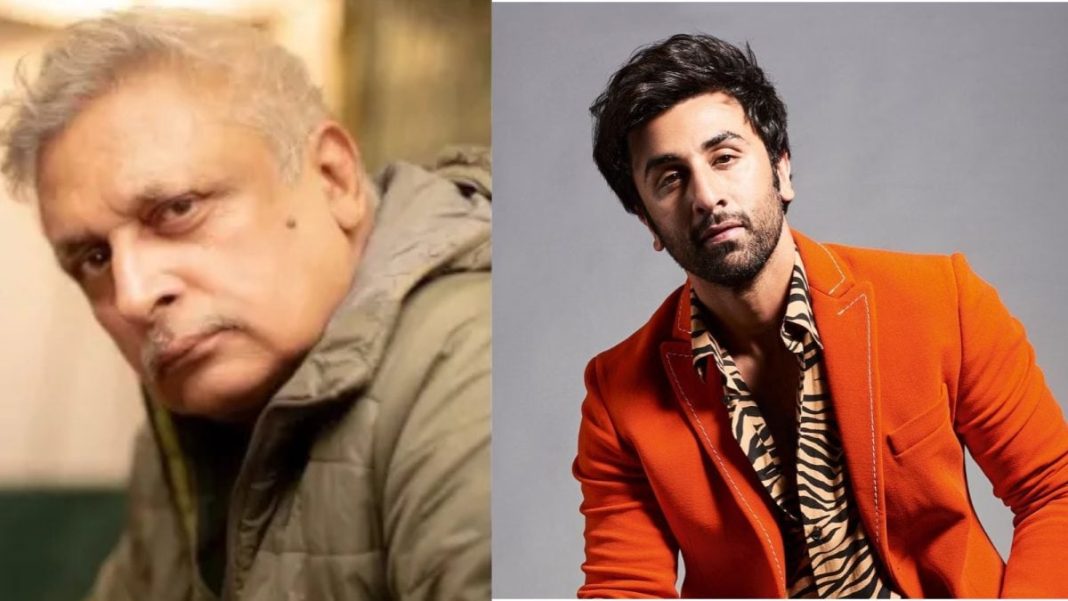
In the often-heated world of Indian cinema, a recent statement by veteran actor, writer, and lyricist Piyush Mishra has ignited a fresh wave of discussion, placing one of Bollywood’s most prominent stars, Ranbir Kapoor, squarely in the spotlight. Mishra’s critique, particularly his scathing remarks about Kapoor not carrying his family’s illustrious legacy, has resonated across social media and media platforms, prompting a re-evaluation of artistic choices, familial expectations, and the evolving landscape of Indian storytelling.
The Incendiary Remarks and Their Context
Piyush Mishra, known for his distinctive voice, powerful performances, and sharp socio-political commentary, did not mince words when discussing Ranbir Kapoor. During a recent interaction, Mishra reportedly expressed his strong disapproval of Ranbir’s choices, particularly his portrayal in recent films. He was quoted saying,
‘Itna nanga, besharam aadmi hai woh… He doesn’t carry their legacy.’
This pointed criticism was widely interpreted as a direct jab at Ranbir’s perceived artistic trajectory, especially in light of the commercially successful yet morally scrutinised film, Animal.
Mishra’s comments stem from a perceived disconnect between Ranbir’s on-screen persona in films like Animal and the traditional image associated with the Kapoor family. The film, directed by Sandeep Reddy Vanga, has been a box-office phenomenon but has also sparked intense debate for its depiction of hyper-masculinity, violence, and its problematic portrayal of female characters. For a senior artist like Mishra, whose own work often reflects a deep understanding of human values and societal norms, such portrayals might be seen as a significant departure from the artistic integrity he values.
Ranbir Kapoor and the Weight of a Legacy
The Kapoor family holds an unparalleled position in Indian cinema, a dynasty that has shaped Bollywood for generations. From the pioneering vision of Prithviraj Kapoor to the legendary showmanship of Raj Kapoor, the nuanced acting of Shashi Kapoor, and the evergreen charm of Rishi Kapoor, the family has contributed immensely to every facet of filmmaking. Each generation has been expected to uphold certain artistic standards and a commitment to quality storytelling.
Ranbir Kapoor, as the scion of this illustrious lineage, has always carried the immense weight of these expectations. Early in his career, he carved a niche for himself with a mix of commercial blockbusters and critically acclaimed performances in films like Wake Up Sid, Rockstar, Barfi!, and Sanju. He has often been praised for his versatility and willingness to take on unconventional roles, seemingly balancing commercial viability with artistic ambition. However, films like Animal have brought his choices under a different kind of scrutiny, raising questions about the responsibility that comes with inheriting such a significant legacy. Mishra’s comments seem to echo a sentiment held by some purists and older generations within the industry: that while artistic freedom is paramount, it should ideally align with a certain cultural ethos or responsible storytelling.
The Broader Debate: Art, Responsibility, and Public Perception
Piyush Mishra’s remarks transcend a mere personal opinion; they tap into a larger, ongoing debate within Bollywood and among its audience. This discussion centers on the boundaries of artistic freedom versus social responsibility, especially when films explore controversial themes or characters. With the rise of diverse content consumption and heightened social consciousness, the portrayal of gender, violence, and morality in cinema is constantly being re-evaluated.
For many, the critique of Ranbir Kapoor’s role in Animal isn’t just about the character itself but about the message it implicitly or explicitly conveys to a mass audience. As a superstar and a member of Bollywood’s most respected family, Ranbir’s choices invariably carry significant weight and influence. While some argue that an actor’s job is simply to embody a character, others believe that actors, especially those from revered families, have an inherent responsibility to choose roles that align with a certain standard of ethical representation or at least encourage thoughtful discourse rather than condone problematic behaviour.
This debate ultimately forces us to ponder whether an actor’s personal legacy is forever intertwined with their family’s historical contributions, or if each artist has the right to forge their own path, even if it diverges sharply from the established norms. While Ranbir Kapoor continues to enjoy immense success and fan following, the comments from a respected figure like Piyush Mishra serve as a powerful reminder of the complex interplay between artistic expression, industry expectations, and the enduring power of a family name in Indian cinema.
The conversation around Ranbir Kapoor’s legacy, stirred by Piyush Mishra’s candid remarks, is far from over. It underscores the perpetual tension between tradition and modernity, and the personal and professional choices that define a celebrity’s journey in the public eye.

