


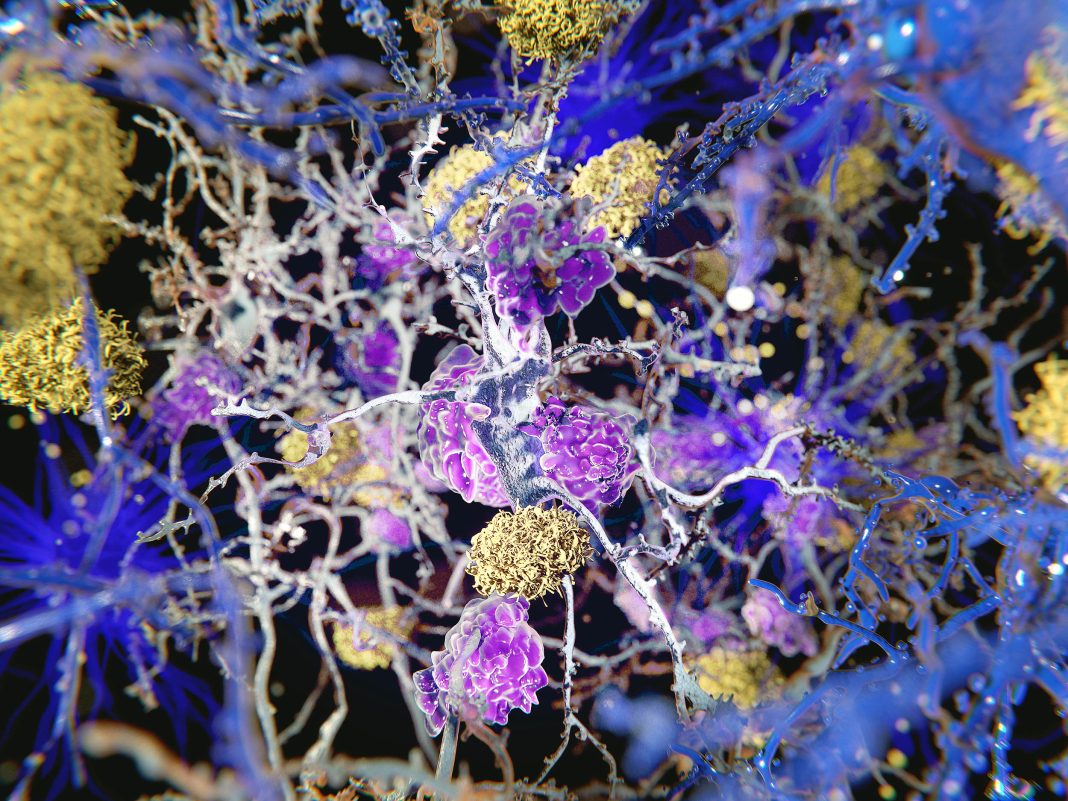
For decades, when we thought about Alzheimer’s disease, our minds immediately pictured a battle raging exclusively within the brain. Rogue proteins, amyloid plaques, and tau tangles were the villains, relentlessly attacking neurons and stealing precious memories. The prevailing wisdom positioned Alzheimer’s as a strictly neurological disorder, an internal meltdown confined to our grey matter. But what if we’ve been looking at the wrong starting line?
Recent groundbreaking research is painting a radically different picture, suggesting that the seeds of Alzheimer’s might not be sown in the brain at all, but rather in a less suspected culprit: chronic inflammation throughout the body. This isn’t just a minor tweak to our understanding; it’s a seismic shift that could redefine how we prevent, detect, and ultimately treat this devastating condition.
The Paradigm Shift: From Brain-Centric to Body-Wide
The traditional view of Alzheimer’s has been intensely focused on brain pathology. Scientists have tirelessly studied the mechanisms by which amyloid beta and tau proteins accumulate, forming toxic clumps that disrupt neural communication. Yet, despite decades of research and countless clinical trials targeting these brain-specific proteins, a truly effective treatment has remained elusive. This persistent challenge has led many to question whether we’re missing a fundamental piece of the puzzle.
Enter the burgeoning field of neuroimmunology, which is increasingly highlighting the powerful, two-way conversation between our immune system and our brain. What if the brain’s internal inflammation, often seen as a consequence of amyloid accumulation, is actually ignited by inflammatory processes originating far outside its boundaries?
When Your Body Whispers, Your Brain Listens
Imagine your body as a complex ecosystem. When parts of it are in a constant state of low-grade inflammation – perhaps due to an unhealthy diet, chronic infections, poor gut health, or persistent stress – it creates a systemic inflammatory environment. This isn’t the acute, beneficial inflammation that helps heal a cut; it’s a chronic, smoldering fire that can slowly damage tissues over time.
Researchers are now exploring how these inflammatory signals, whether from a “leaky gut” allowing bacterial products into the bloodstream or from inflamed adipose tissue, can cross the blood-brain barrier. Once inside the brain’s delicate environment, these peripheral inflammatory molecules can activate microglia – the brain’s own immune cells – sending them into an overdrive state. This prolonged activation can then initiate the very processes we associate with Alzheimer’s: the improper folding of proteins, the accumulation of plaques and tangles, and ultimately, neurodegeneration.
As Dr. Anya Sharma, a leading researcher in neuroinflammation, aptly puts it, “This new evidence compels us to widen our lens. If systemic inflammation is indeed a primary instigator, then addressing the health of the entire body, not just the brain, becomes paramount in the fight against Alzheimer’s.” This isn’t to say that brain pathology is unimportant, but rather that its roots might be nourished by a much broader biological landscape.
Hope on the Horizon: A New Path Forward
This shift in understanding holds immense promise. If Alzheimer’s truly begins with body inflammation, it opens up entirely new avenues for prevention and treatment. Instead of solely focusing on late-stage brain interventions, we could potentially identify at-risk individuals decades earlier by monitoring systemic inflammatory markers. Lifestyle interventions – such as anti-inflammatory diets, regular exercise, stress reduction, and gut microbiome optimization – could take on a far more significant role in delaying or even preventing the disease’s onset.
Furthermore, therapeutic strategies could move beyond just clearing plaques and tangles to include managing chronic inflammation throughout the body. Imagine a future where a simple blood test for inflammatory markers could be an early warning system, prompting proactive steps to safeguard cognitive health long before any memory issues arise. This evolving understanding offers a powerful beacon of hope, reminding us that the journey to unraveling complex diseases often requires us to look in unexpected places.
The brain is undeniably central to Alzheimer’s, but its story might just begin with a whisper from the rest of the body. Paying attention to that whisper could be our greatest advantage yet.

