


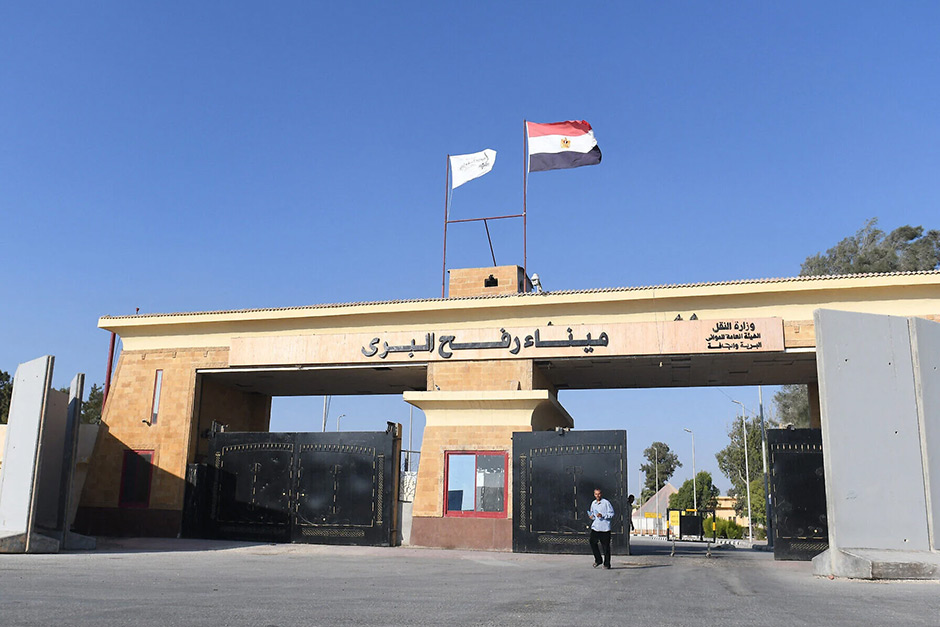
The vital Rafah border crossing, connecting the Gaza Strip with Egypt, has reopened, a significant development following Israel’s agreement to facilitate its operation. This reopening marks a crucial moment for the region, as the crossing serves as a primary gateway for humanitarian aid and the movement of people in and out of Gaza. Its status has long been a focal point of regional and international discussions, reflecting the complex humanitarian and geopolitical landscape of the area.
The Indispensable Lifeline
For the residents of Gaza, the Rafah crossing is more than just a point on a map; it is an indispensable lifeline. Unlike other crossings into Gaza, which are primarily controlled by Israel, Rafah offers the only direct passage to an Arab state. This makes it critical for the entry of essential humanitarian supplies, including food, medicine, and fuel, particularly during periods of increased need. Beyond goods, the crossing is vital for individuals seeking medical treatment abroad, pursuing educational opportunities, or visiting family members in Egypt and beyond. Its closure has historically led to severe humanitarian challenges, exacerbating shortages and isolating Gaza’s population from the outside world.
The ability for humanitarian organizations to deliver aid effectively hinges on the consistent and reliable operation of Rafah. When open, it allows for a more robust flow of assistance, offering a critical pathway to alleviate suffering and address urgent needs within Gaza. The implications of its operation extend beyond immediate relief, touching upon the broader stability and well-being of a densely populated territory facing ongoing challenges.
Navigating Complexities: The Path to Reopening
The decision to reopen the Rafah crossing is rarely straightforward, involving a delicate balance of security concerns, humanitarian imperatives, and diplomatic efforts among multiple parties. While the crossing itself is physically located between Gaza and Egypt and is operated by authorities on both sides, Israel’s security considerations and its broader influence over Gaza’s borders play a significant role in its functionality, particularly concerning the passage of goods and individuals. International pressure, alongside ongoing humanitarian appeals, often contribute to the conditions that lead to such agreements.
The current reopening underscores a renewed effort to facilitate aid delivery and provide an outlet for those in need of passage. “This reopening isn’t just a logistical change; it represents a critical moment for countless families,” observed a humanitarian aid coordinator familiar with the region. “Every hour it stays open can literally save lives and offer hope to those who feel increasingly cut off.” Such sentiments highlight the profound human impact behind policy decisions concerning this vital transit point.
Looking Forward
The reopening of the Rafah border crossing is a development with immediate and tangible benefits, promising to ease some of the immense pressures faced by Gaza’s population. It facilitates the flow of urgently needed aid and provides a crucial outlet for personal movement. While its sustained operation remains subject to the prevailing regional dynamics, this step represents a significant, albeit often temporary, relief. It serves as a reminder of the intricate interplay between security, humanitarian access, and international diplomacy in one of the world’s most sensitive regions.

