


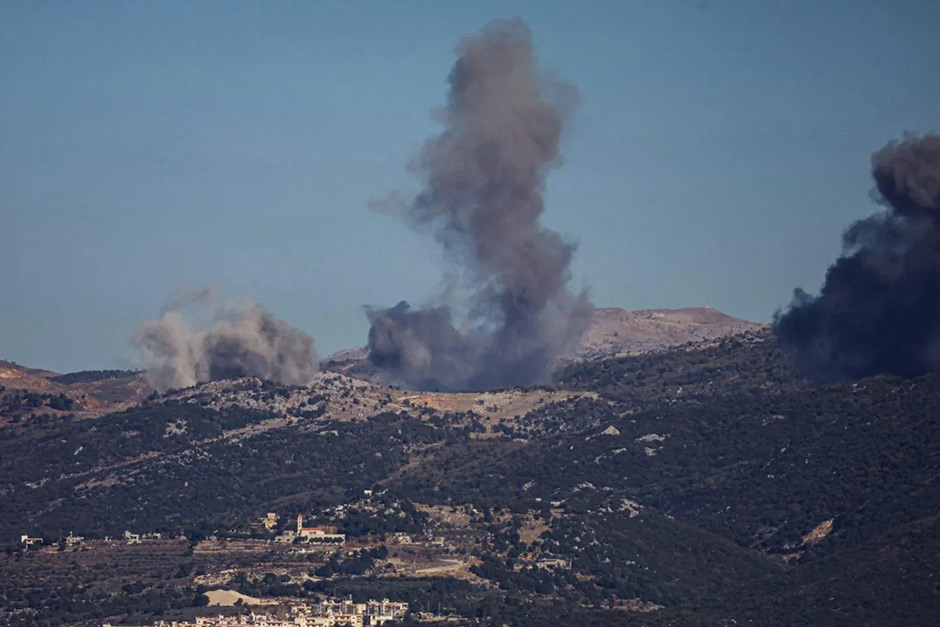
The already volatile Middle East has witnessed a fresh surge of military activity, with Israel launching a series of intense airstrikes deep into Lebanese territory. These strikes come amidst a period of heightened regional tension and what appears to be a looming deadline – real or perceived – for the disarmament of Hezbollah, the powerful Iran-backed Shiite militia that operates prominently in Lebanon. The escalating exchanges raise serious concerns across the international community, including India, about the potential for a wider, destabilising conflict.
Escalating Tensions and the Disarmament Imperative
Recent days have seen the Israeli military target a variety of sites in southern Lebanon, which they claim are linked to Hezbollah’s operational infrastructure. Reports indicate strikes hitting command centers, weapons depots, and rocket launching sites, significantly deeper than previous limited engagements. Israel’s stated objective is to degrade Hezbollah’s capabilities and prevent it from posing a direct threat to its northern borders. The backdrop to these actions is a long-standing demand for Hezbollah’s disarmament, enshrined in United Nations Security Council Resolution 1701 (2006), which called for a weapons-free zone south of the Litani River and the full implementation of the resolution’s provisions.
For years, this resolution has remained largely unfulfilled, with Hezbollah maintaining and even expanding its arsenal, effectively operating as a state within a state in southern Lebanon. This ongoing reality is a primary source of Israeli frustration and security concern. The current intense airstrikes signal a possible shift in Israeli strategy, perhaps indicating a more aggressive approach to enforce what they see as a critical security imperative before the situation escalates further or becomes untenable.
Hezbollah’s Grip and Lebanon’s Precarious Position
Hezbollah’s power transcends its military might; it is also a significant political force within Lebanon, holding seats in parliament and providing extensive social services. This deeply entrenched position makes any attempt at forceful disarmament incredibly complex and fraught with peril for Lebanon itself. The country is already grappling with a severe economic crisis and political paralysis, leaving it ill-equipped to withstand the fallout of a full-blown conflict. International observers and Lebanese politicians alike are caught between the demand for sovereignty and the reality of Hezbollah’s effective control over significant portions of the country.
The international community faces a profound dilemma: how to enforce UN resolutions without further destabilising an already fragile state. As one geopolitical analyst recently noted, “The disarmament of Hezbollah is not merely a military challenge; it is a profound political and social undertaking that requires a unified international approach and genuine Lebanese consensus, neither of which currently exist.” This sentiment underscores the difficulty of the situation, where a military solution alone risks humanitarian catastrophe and regional conflagration.
India’s Stance and Regional Stability
For India, a nation deeply invested in global peace and stability, these developments are a cause for significant concern. India maintains strong diplomatic ties with both Israel and Lebanon, and its traditional foreign policy advocates for de-escalation, dialogue, and respect for international law. The potential for a wider conflict in the Middle East has direct implications for India’s strategic interests, including the safety of its large diaspora in the region, energy security, and the stability of global trade routes.
New Delhi has consistently called for the peaceful resolution of disputes and adherence to UN resolutions. India’s past contributions to UNIFIL (United Nations Interim Force in Lebanon) underscore its commitment to maintaining peace in the region. Any major conflict would undoubtedly trigger calls from India for immediate cessation of hostilities and renewed diplomatic efforts to prevent a spiral of violence that would have far-reaching consequences well beyond the immediate combatants.
As the deadline, implied or explicit, draws closer for Hezbollah’s disarmament, the situation remains incredibly tense. The international community, including India, watches with bated breath, hoping that diplomacy and a commitment to stability can prevail over the drums of war that are once again beating loudly in the Levant.
*

