


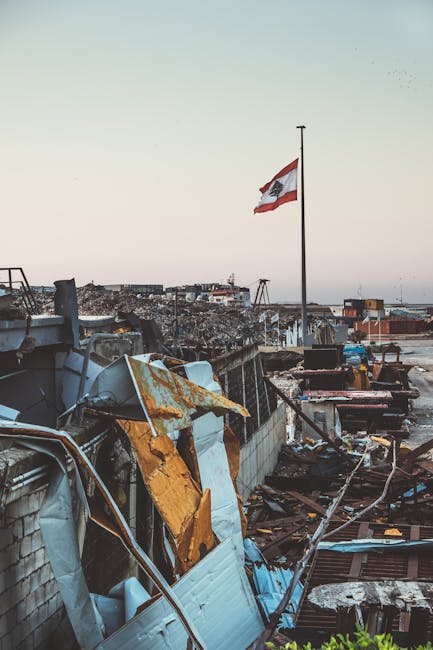
The dust had barely settled from a fragile whisper of de-escalation when Beirut was once again plunged into the familiar, agonizing reality of conflict. What was hoped to be a period of tentative calm, a fragile understanding perhaps, was brutally shattered by a wave of strikes that claimed dozens of lives. The message, delivered not through diplomatic channels but through the stark violence on the ground, was chillingly clear: any purported truce between Israel and Iran does not extend to Lebanon, a nation often caught in the cruel crosscurrents of regional power plays.
The Selective Truce and Its Grim Geography
Many had hoped that recent quiet diplomatic overtures, often whispered as a fragile truce between Israel and Iran, might offer a glimmer of reprieve across the broader Middle East. These were the discussions that hinted at an easing of tensions, a recognition of shared strategic interests, or at least a mutual desire to avoid direct confrontation. But the stark reality, delivered in a rain of devastating strikes on Beirut, screams a different truth: these understandings are selectively applied, their boundaries grimly drawn.
The official clarification from Israel, stating that its de-escalation agreements with Iran specifically exclude Lebanon, pulls back the curtain on a complex, often indirect battleground. It underscores the grim reality that even when major players seek common ground, their proxy conflicts and the strategic importance of various territories mean that peace remains a patchwork, highly conditional affair. For the people of Beirut, this clarification isn’t a diplomatic nuance; it’s a matter of life and death, a sudden and violent reminder that their city remains a focal point in a struggle far larger than its own borders.
Lebanon’s Enduring Anguish: A Proxy Arena
Lebanon, a nation already staggering under layers of internal crisis and economic despair, has historically found itself at the brutal crossroads of regional power struggles. It’s a tragic recurring theme: a country with immense potential continually undermined by external forces and the presence of heavily armed non-state actors operating within its borders. The recent events once again highlight Lebanon’s unenviable position as a proxy arena, where the strategic calculations of distant powers manifest as immediate, devastating violence for its citizens.
The human cost is immeasurable. Beyond the tragic loss of life, there is the psychological toll on a population that has endured successive cycles of destruction. Infrastructure, already fragile, is further damaged. The prospect of stability, vital for any nation’s recovery, is pushed further out of reach. “It’s always us, isn’t it?” lamented a resident of Beirut, their voice heavy with a weary resignation. “They talk of truces, of agreements, but for us, the bombs just keep falling. Our homes, our lives, our dreams – they’re all just collateral damage in a game played far above our heads.” Their words encapsulate the profound sense of helplessness and frustration felt by many, witnessing their country repeatedly bear the brunt of geopolitical maneuvers.
The Broader Regional Implications
This tragic escalation in Beirut doesn’t merely impact Lebanon; it sends a tremor through the entire region. It serves as a stark reminder that even the most carefully negotiated truces or de-escalation agreements between major powers can leave significant gaps, particularly where proxy groups and contested territories are involved. The notion of a comprehensive, lasting peace in the Middle East remains incredibly elusive when such clear caveats are so violently demonstrated. The actions clarify that strategic objectives in Lebanon, particularly concerning groups like Hezbollah, are considered distinct and separable from broader understandings with Iran. This differentiation, while perhaps strategically logical for the parties involved, means continued volatility for those living in the shadow of these complex power dynamics.
The smoke over Beirut serves as a stark reminder: even when major powers find a temporary detente, the intricate web of regional proxies means the fight often simply shifts, leaving ordinary people to pay the ultimate price. True peace remains a distant hope as long as these “clarifications” are delivered through the brutal language of bombs and casualties.

