


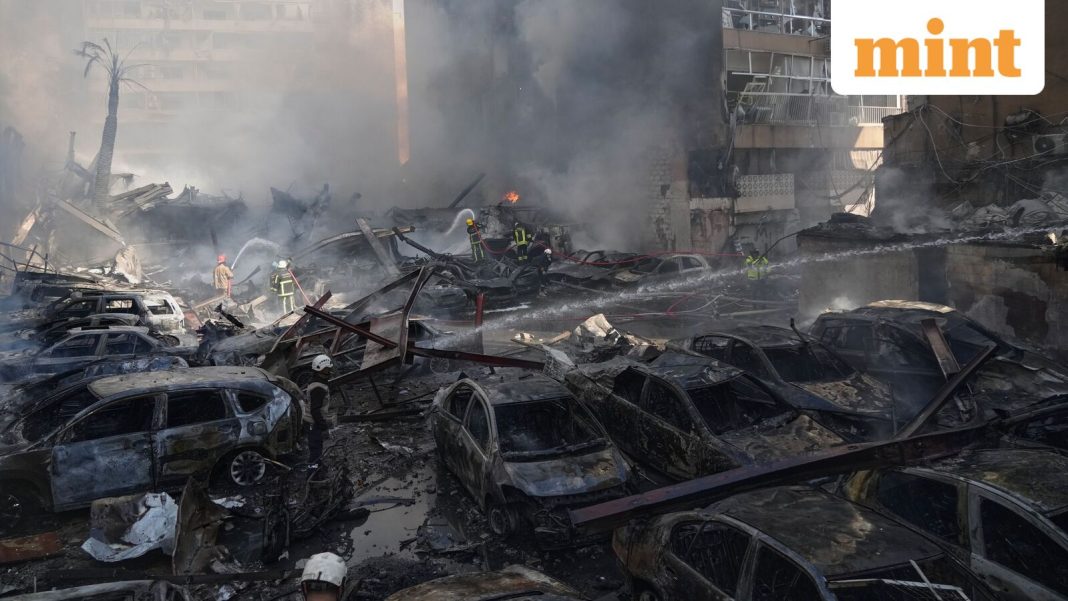
The Middle East, a region perpetually on edge, finds itself grappling with another dangerous escalation. Recent reports indicate intensified Israeli military operations targeting sites within Lebanon, leading to a swift and stern response from Iran. These unfolding events have reverberated far beyond the immediate conflict zones, with critical global implications – most notably, fresh threats to the vital Strait of Hormuz. For India, a nation heavily reliant on the stability of international trade routes and global energy flows, these developments carry significant economic and strategic weight.
The intricate web of regional rivalries and security concerns means that an offensive in one part of the Middle East can trigger a chain reaction affecting global energy markets and supply chains. As the situation evolves, international observers, including India, are closely monitoring the potential for a wider conflagration and its far-reaching consequences.
Escalation in Lebanon: Israel’s Strategic Objectives
Israel’s recent military offensive in southern Lebanon is reportedly a response to escalating threats and cross-border aggressions attributed to Hezbollah, an Iran-backed Shiite militant group. Israeli officials assert that these operations are aimed at dismantling Hezbollah’s military infrastructure, preventing missile attacks, and securing its northern border communities, which have faced relentless bombardment in recent months. The intensified aerial assaults and targeted strikes represent a significant escalation from previous skirmishes, signaling a more assertive stance from Jerusalem.
The impact on Lebanese civilians, however, has been severe, with reports of displacement and humanitarian concerns mounting. The international community has called for restraint, emphasizing the need to protect civilian lives and infrastructure. From India’s perspective, stability in the Levant is crucial, as any prolonged conflict could further destabilize the broader region, affecting Indian diaspora populations and complicating diplomatic efforts.
The Strait of Hormuz: A Critical Chokepoint Under Renewed Threat
Perhaps the most alarming development for the global economy, and particularly for energy-importing nations like India, is the renewed threat to the Strait of Hormuz. Following Israel’s offensive in Lebanon, Iran has reportedly signaled its intent to respond, with some official and semi-official sources alluding to potential measures affecting maritime traffic through the Strait. This narrow waterway, situated between the Persian Gulf and the Gulf of Oman, is arguably the world’s most important oil transit chokepoint, through which approximately one-fifth of the world’s total petroleum consumption, and a significant portion of India’s crude oil imports, pass daily.
Iran’s strategic leverage over the Strait of Hormuz has historically been a tool to exert pressure on global powers in times of heightened tensions. Any disruption, whether partial or complete closure, would inevitably send crude oil prices soaring globally, directly impacting India’s import bill and potentially fueling domestic inflation. India sources over 80% of its oil requirements through imports, making the Strait of Hormuz an indispensable artery for its energy security and economic stability. A prolonged closure would necessitate costly and time-consuming rerouting of cargo, severely disrupting supply chains.
Iran’s Response and Regional Geopolitics
Iran’s response to Israel’s offensive in Lebanon is multi-faceted, reflecting its complex geopolitical strategy. Beyond the implied threats to the Strait of Hormuz, Tehran has vocally condemned Israel’s actions, reiterating its support for Hezbollah and warning of severe consequences for regional stability. This stance is consistent with Iran’s broader policy of supporting a ‘Resistance Axis’ against perceived Israeli and Western influence in the Middle East.
The current tit-for-tat escalation underscores the deep-seated rivalries and proxy conflicts that characterize the region. The interplay between Israel, Iran, Lebanon, and various non-state actors creates a highly volatile environment where miscalculation could have catastrophic results. The international community is urging all parties to exercise maximum restraint and de-escalate tensions through diplomatic channels.
As Dr. Alistair Cook, a prominent energy security analyst, recently remarked, “The Strait of Hormuz isn’t just a shipping lane; it’s the economic jugular of the global energy market. Any perceived threat there, especially when linked to wider regional conflict, sends immediate shockwaves through economies from Mumbai to Manhattan. The stakes for energy consumers, particularly in rapidly developing nations like India, could not be higher.”
Conclusion: The Path Ahead for Regional Stability
The escalating conflict between Israel and Lebanon, coupled with Iran’s assertive response and renewed threats to the Strait of Hormuz, paints a grim picture for regional stability. For India, the implications are immediate and substantial, primarily in the realms of energy security and trade. The intricate dance of diplomacy and deterrence in the Middle East demands careful navigation from all stakeholders.
As these live updates unfold, the international community remains vigilant, hopeful for a diplomatic resolution that prevents a wider regional conflict and safeguards critical global trade routes. The imperative for de-escalation has never been clearer, not just for the immediate parties involved, but for the economic well-being and stability of nations worldwide, including India.

