


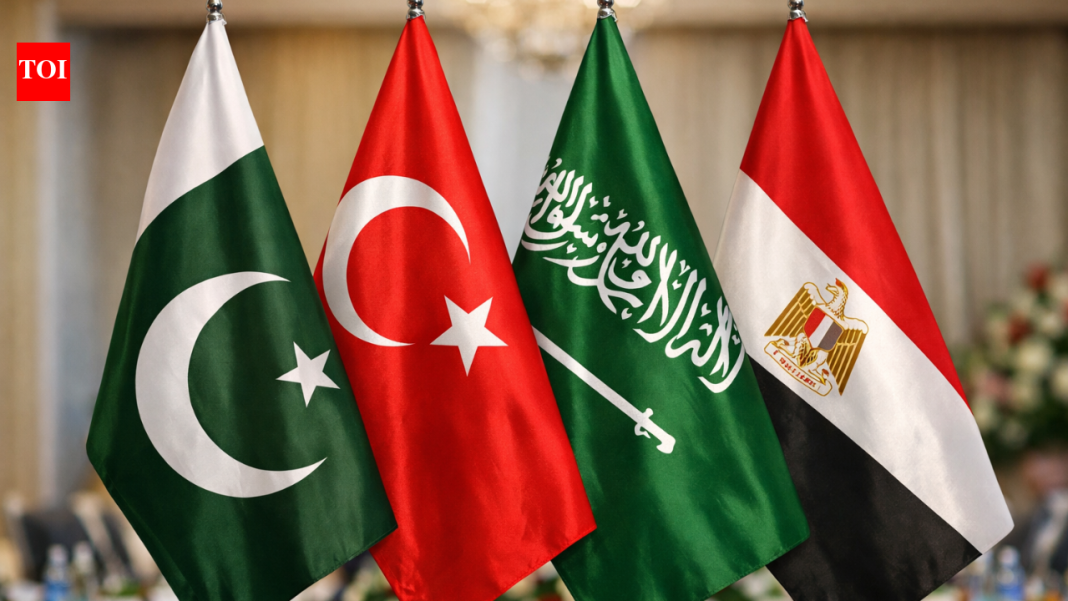
The geopolitical landscape of West Asia is once again a focal point of intense speculation and strategic maneuvering. In a series of high-profile diplomatic engagements, Pakistan is set to host senior delegations from Turkey, Saudi Arabia, and Egypt. This flurry of activity, occurring amidst heightened regional tensions, particularly those involving Iran, has sparked a fresh wave of discussions about the potential formation of a new security architecture – a grouping that some analysts are already dubbing an ‘Islamic NATO’. For India, a crucial stakeholder in regional stability and a significant economic partner to many of these nations, these developments warrant careful observation and strategic foresight.
A Confluence of Strategic Interests
The visits to Islamabad by high-ranking officials, including anticipated meetings with Turkish President Recep Tayyip Erdoğan, Saudi Crown Prince Mohammed bin Salman, and Egyptian President Abdel Fattah el-Sisi or his foreign minister, signal a concerted effort towards greater cooperation among these four nations. While the stated agenda for these meetings often revolves around economic collaboration, counter-terrorism initiatives, and enhancing bilateral ties, the timing and composition of the delegations suggest a broader strategic dialogue is underway.
Historically, Saudi Arabia has spearheaded the Islamic Military Counter Terrorism Coalition (IMCTC), a 41-nation alliance that has struggled to achieve a cohesive operational identity since its inception. Turkey, under President Erdoğan, has increasingly sought to project its influence across the Muslim world, often positioning itself as a leader in pan-Islamic affairs. Egypt, a traditional heavyweight in the Arab world, seeks stability and economic opportunities, often aligning with Saudi Arabian interests on regional security matters. Pakistan, a nuclear-armed Muslim-majority nation with a large standing army, possesses significant strategic value and has historically maintained close ties with both Saudi Arabia and Turkey, alongside an intricate relationship with Iran.
These visits, therefore, are not merely about strengthening individual bilateral relations. They appear to be laying the groundwork for a more robust, coordinated front that could potentially reshape power dynamics in West Asia and beyond. The very notion of an ‘Islamic NATO’ suggests a security pact designed to address shared threats, which in this volatile region, often translate to perceived challenges from state and non-state actors alike.
Regional Dynamics and the Iran Factor
The backdrop to these diplomatic overtures is a region simmering with long-standing rivalries and proxy conflicts. The elephant in the room is undoubtedly Iran. The Islamic Republic’s nuclear program, its extensive network of proxy groups from Yemen to Lebanon, and its assertive regional foreign policy have placed it at loggerheads with Saudi Arabia, Israel, and the United States, among others. While direct military confrontation between Iran and the Gulf states has been largely avoided, the ‘cold war’ of influence and proxy engagement continues unabated, escalating tensions and creating an environment ripe for new alliances.
From Saudi Arabia’s perspective, a closer alignment with Turkey, Egypt, and Pakistan could serve as a bulwark against Iranian expansionism and provide a more credible regional security framework than existing ones. Turkey, while maintaining complex relations with Iran, also harbors ambitions of regional leadership that sometimes clash with Iranian interests. Egypt, ever cautious about regional instability, would likely welcome any move that promises greater collective security. Pakistan, deeply reliant on Saudi economic support and strategically located, finds itself navigating a delicate balance between its historical allies and its western neighbor, Iran.
This alignment, if it solidifies into a formal or informal security grouping, would send a powerful message to Tehran. As Dr. Rohan Mukherjee, an associate professor of international relations, commented recently, “Such a coalition, even if not explicitly anti-Iran, would inevitably be perceived by Tehran as a Sunni-majority bloc designed to curtail its influence. The long-term implications for regional stability, and the potential for a new arms race, are significant and concerning.”
Implications for India’s Strategic Calculus
For India, the prospect of an ‘Islamic NATO’ holds complex implications. New Delhi maintains strong and crucial relationships with all parties involved. India’s energy security is deeply intertwined with Saudi Arabia and other Gulf nations, which also host millions of Indian expatriates. At the same time, India has cultivated strategic ties with Iran, exemplified by the Chabahar Port project, which offers a vital gateway to Afghanistan and Central Asia, bypassing Pakistan.
Any formalization of a Sunni-majority security alliance, particularly one perceived as directed against Iran, could complicate India’s carefully balanced foreign policy. While India prioritizes its own security and economic interests, it also advocates for regional stability and multilateral cooperation. A more entrenched division in West Asia could lead to increased volatility, impacting everything from energy prices to maritime security – issues of direct relevance to India.
India would likely observe these developments closely, continuing to engage bilaterally with all partners, emphasizing its commitment to peace and non-interference. Its focus would remain on safeguarding its economic and strategic interests, ensuring the security of its diaspora, and promoting pathways for de-escalation rather than confrontation in an already volatile neighborhood.
The diplomatic dance currently playing out in Islamabad is more than just a series of bilateral meetings. It signifies a potentially pivotal moment in West Asian geopolitics, hinting at the emergence of a new power configuration. While an ‘Islamic NATO’ may still be a speculative term, the convergence of these influential nations amidst regional tensions suggests a clear intent to forge a more coordinated stance on security and influence. The world, and particularly India, will be watching closely as these dynamics unfold.

