


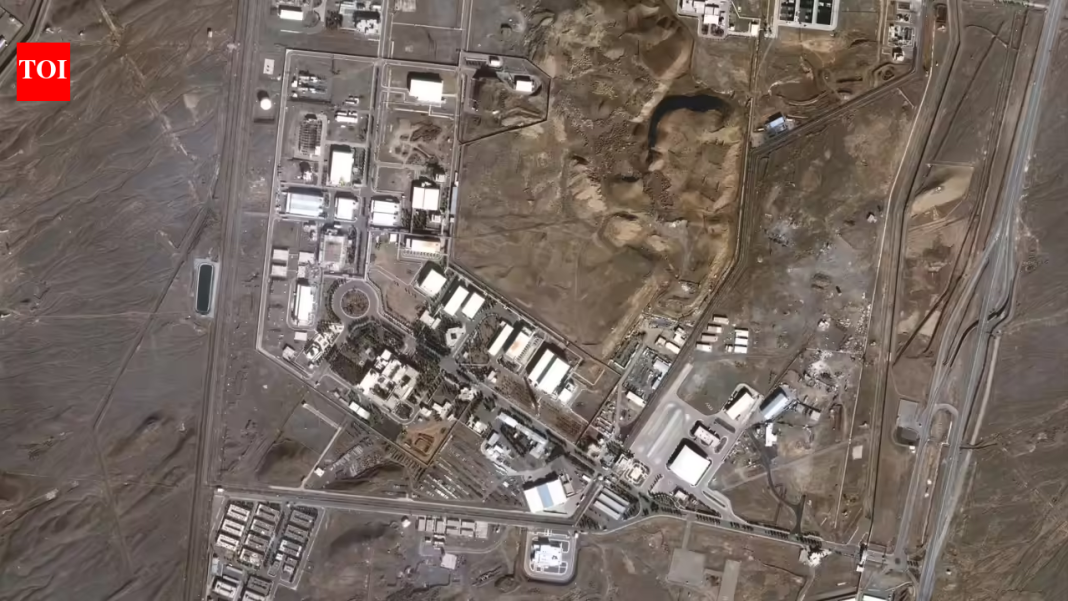
The Middle East, a region perpetually at the cusp of significant geopolitical shifts, once again finds itself under intense scrutiny following a major incident at Iran’s primary nuclear enrichment facility. On April 11th, 2021, an incident at the Natanz nuclear site, which Iranian officials quickly labelled an act of “nuclear terrorism,” caused a power outage, disrupting operations. This development has not only stoked existing tensions between Iran and its regional adversaries but has also drawn the attention of international bodies, including the International Atomic Energy Agency (IAEA), which has flagged potential radiation risks. For a country like India, with deep strategic and economic ties to the region, these events carry significant implications, underscoring the delicate balance of power and the constant need for diplomatic engagement.
The Natanz Incident: Sabotage and Tehran’s Fiery Response
The incident at Natanz, initially reported as an electrical grid failure, was swiftly reclassified by Iranian authorities as an act of sabotage. Ali Akbar Salehi, the then head of the Atomic Energy Organization of Iran (AEOI), described it as an attack against “Iran’s nuclear industrial development.” While Iran stopped short of directly naming the culprit in its initial statements, its officials, including Foreign Minister Javad Zarif, pointed fingers at Israel, vowing “revenge” and asserting that the act would only strengthen Iran’s resolve to advance its nuclear program. Media reports from Israel, often citing intelligence sources, subtly confirmed the country’s involvement, framing it as a successful operation to set back Iran’s enrichment capabilities.
The timing of the incident was particularly sensitive, occurring just a day after Tehran announced the activation of advanced IR-6 centrifuges at Natanz and amidst ongoing negotiations in Vienna aimed at reviving the 2015 nuclear deal (Joint Comprehensive Plan of Action – JCPOA). Iran’s immediate response was resolute: rather than deterring its nuclear ambitions, Tehran declared it would rebuild the damaged facility with greater vigour and accelerate its uranium enrichment to 60% purity, a significant step closer to weapons-grade levels. This move, while condemned by Western powers, was presented by Iran as a legitimate response to an act of aggression, further complicating diplomatic efforts to restore the nuclear accord.
IAEA’s Radiation Concerns and Global Ramifications
Following the incident, the International Atomic Energy Agency (IAEA), which maintains continuous monitoring at Natanz as part of its safeguards agreement, confirmed it was aware of the reports of an incident but initially offered few details. However, the agency’s subsequent statements hinted at deeper concerns. Director-General Rafael Grossi indicated that the IAEA was monitoring the situation closely, particularly regarding the potential for radiation release, a critical safety and environmental hazard. Any disruption at a nuclear facility carries inherent risks, and an act of sabotage raises questions not only about proliferation but also about the safety protocols and environmental impact of such attacks. While no immediate radiation leaks were reported publicly, the long-term integrity of the site and the potential for residual contamination remain a serious concern for nuclear safety advocates globally.
The Natanz incident serves as a stark reminder of the fragile state of security in the Middle East and the potentially far-reaching consequences of such clandestine operations. It exacerbates an already tense standoff, raising fears of a wider regional conflict that could draw in global powers. For nations like India, deeply invested in regional stability, these developments are a cause for significant concern.
As Dr. Kavita Sharma, an Indian foreign policy analyst, noted, “The Natanz incident is not just an Iranian problem; it’s a global security challenge. India, with its extensive energy needs and a significant diaspora in the Middle East, watches these escalations with apprehension. Any instability impacts our economic interests, trade routes, and the safety of our citizens abroad. A diplomatic solution to the nuclear impasse and de-escalation of regional tensions remains paramount for regional peace and for India’s strategic imperatives.”
India’s Stake in a Stable Middle East
India maintains a delicate but crucial balancing act in the Middle East, fostering strong ties with both Iran and its adversaries. The stability of the Persian Gulf region is paramount for India’s energy security, as a significant portion of its crude oil imports traverses these waters. Any disruption, whether from direct conflict or indirect destabilization, can lead to volatile oil prices, impacting India’s economy. Furthermore, India’s trade relations, including the strategic Chabahar Port project with Iran, and the welfare of millions of Indian expatriates working in the Gulf states, are directly tied to regional tranquility.
The Natanz incident underscores the urgent need for restraint and renewed efforts towards dialogue. While Iran vows to rebuild and enhance its nuclear capabilities, the international community, including India, continues to advocate for a peaceful resolution that upholds non-proliferation principles while addressing Iran’s legitimate security concerns. The path forward remains fraught with challenges, but the imperative for diplomacy to prevent further escalation is clearer than ever.

