


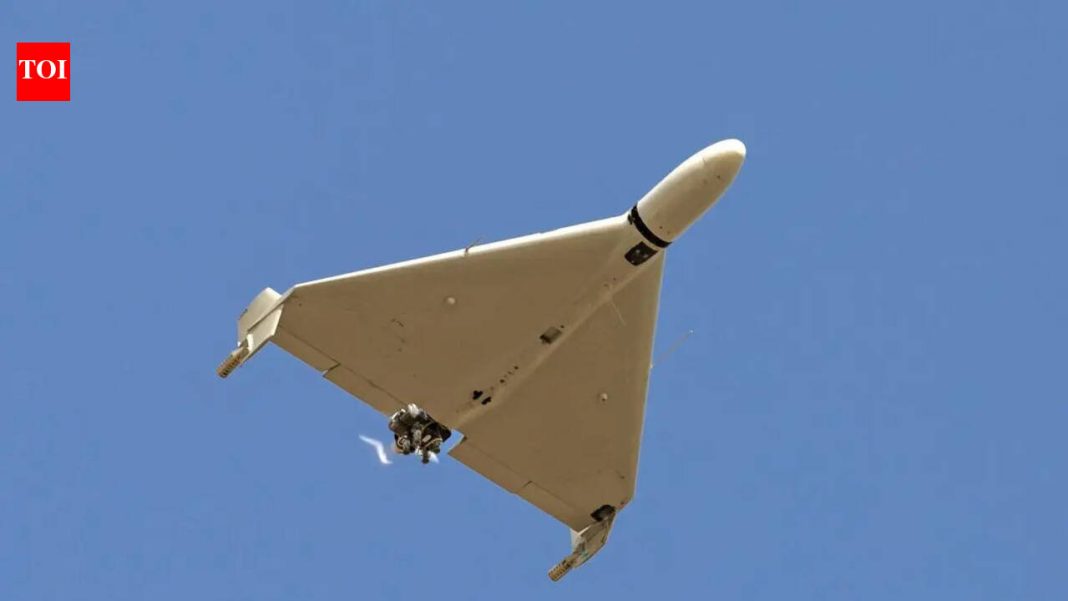
Modern warfare is undergoing a profound transformation, and at the heart of this shift lies an unexpected, yet potent, weapon: Iran’s inexpensive drones. Once the exclusive domain of technologically advanced nations, aerial combat capabilities are now being democratised, allowing non-state actors and smaller militaries to challenge established powers. These unmanned aerial vehicles (UAVs), often built with readily available commercial components, are reshaping the geopolitical landscape of the Middle East and beyond, presenting both a tactical challenge and a strategic quandary for global powers, including India.
The Rise of Asymmetric Power: Iran’s Drone Arsenal
Iran has demonstrably emerged as a significant player in drone technology, not through cutting-edge sophistication, but through sheer effectiveness and affordability. Its arsenal, particularly the Shahed series – including the ubiquitous Shahed-136 kamikaze drone – represents a new paradigm in asymmetric warfare. These drones are not designed to outmaneuver advanced fighter jets; instead, they are built for saturation attacks, to overwhelm sophisticated air defence systems through sheer numbers and low radar cross-sections. Their relatively low production cost means they can be manufactured and deployed in large quantities, making them an accessible tool for Iran’s proxy forces across the region, from Hezbollah in Lebanon to Houthi rebels in Yemen and various militias in Iraq and Syria.
The operational simplicity of these drones, often guided by GPS, allows for easy training and deployment, further widening their proliferation. While lacking the precision of more advanced systems, their ability to carry impactful payloads – whether explosive or for surveillance – makes them a credible threat to critical infrastructure, military bases, and even shipping lanes. This accessibility effectively grants previously disadvantaged groups a form of aerial power, fundamentally altering the traditional balance of military strength in volatile regions.
Reshaping Regional Dynamics: From Yemen to Ukraine
The impact of Iran’s drone strategy is most visibly felt across the Middle East. The 2019 attacks on Saudi Arabia’s Abqaiq and Khurais oil facilities, attributed to Houthi rebels using Iranian-designed drones and cruise missiles, served as a stark demonstration of this new threat. These strikes, causing significant disruption to global oil supplies, showcased how a relatively unsophisticated weapon system could bypass advanced air defences and inflict considerable economic damage on a major power.
Beyond the Gulf, these drones have become a staple in conflicts across the Levant. Hezbollah’s growing drone capabilities pose a complex challenge to Israel, while Iraqi militias have frequently used them against US and coalition forces. The conflict in Ukraine has further underscored their global relevance, with Russia deploying what are widely believed to be Iranian Shahed-136 drones (rebranded as Geran-2) to target Ukrainian infrastructure. This widespread use demonstrates that these drones are not merely a regional nuisance but a formidable new instrument of warfare capable of influencing major international conflicts.
The proliferation of such technology compels nations, including India, to re-evaluate their defence doctrines. The traditional focus on expensive, high-tech air defence systems now faces the challenge of identifying and intercepting swarms of cheap, slow-moving drones. This necessitates a shift towards layered defences, incorporating both sophisticated radar systems and cost-effective counter-UAV measures.
A Shifting Paradigm: Implications for Global Security
The rise of Iran’s cheap drones signals a fundamental shift in military strategy, moving away from overwhelming technological superiority towards asymmetric advantage. For nations like India, deeply invested in regional stability due to critical energy imports and a large expatriate population in the Middle East, these developments are a matter of serious concern. The potential for escalation, the disruption of trade routes, and the broader destabilisation of the region have direct economic and security implications for the subcontinent.
The challenge extends beyond immediate military threats. It compels defence strategists worldwide to reconsider what constitutes effective deterrence and how to defend against readily available, yet potent, technology. As one prominent geopolitical analyst recently observed, “The Iranian drone programme has democratised aerial warfare in a way few could have predicted, forcing even the most advanced militaries to rethink their vulnerabilities and defence strategies against what was once considered a minor threat.” The future of warfare will increasingly involve contending with these low-cost, high-impact weapons, demanding innovative solutions and international cooperation to mitigate their disruptive potential.
In conclusion, Iran’s cheap drones have irreversibly altered the landscape of modern conflict. Their widespread deployment by state and non-state actors has not only challenged conventional military superiority but has also introduced new complexities to regional and global security. As these technologies continue to evolve and proliferate, understanding their implications and developing robust counter-measures will be paramount for maintaining peace and stability in an increasingly volatile world.

