


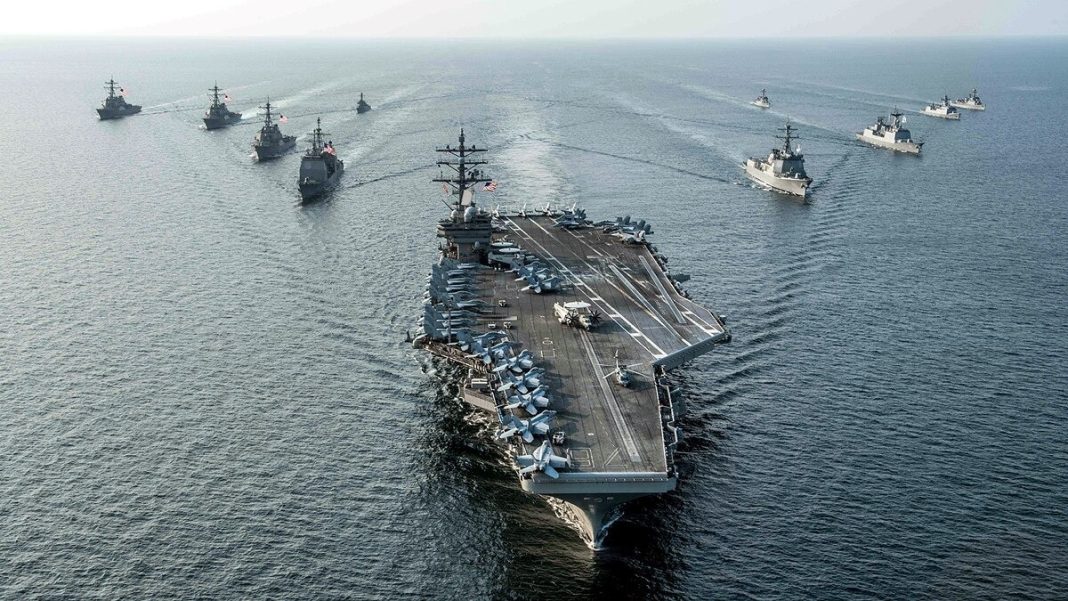
The Middle East remains a geopolitical tinderbox, and recent developments involving Iran and the United States signal a dangerous escalation of tensions. As a nuclear-powered U.S. aircraft carrier strike group moves into closer proximity to Iranian waters, Tehran has issued a stark warning of a “regret-inducing” response, underscoring the delicate balance of power in one of the world’s most critical regions. This latest standoff comes amidst an already volatile environment, exacerbated by the ongoing conflict in Gaza and its ripple effects across the Red Sea and the wider Persian Gulf.
Escalating Military Posturing and Iran’s Warning
The U.S. Navy’s USS Dwight D. Eisenhower Carrier Strike Group (CSG), a formidable naval force comprising an aircraft carrier, guided-missile cruiser, and several destroyers, has reportedly repositioned to areas that Iran considers a direct threat. While the U.S. routinely deploys naval assets to the region to maintain maritime security, deter aggression, and support its allies, the current timing and Iran’s fiery rhetoric suggest a heightened state of alert. The Pentagon has maintained that these deployments are defensive in nature, aimed at protecting international shipping and U.S. interests, particularly in light of recent attacks on commercial vessels in the Red Sea by Houthi rebels in Yemen, a group largely backed by Iran.
Tehran, however, views these maneuvers as provocative. Iranian military commanders have been unequivocal in their warnings. “Any aggressive move or miscalculation by enemy forces in the region will be met with a decisive and regret-inducing response,” stated a senior Iranian military official, reflecting a long-standing policy of defending its territorial integrity and strategic interests. This veiled threat is particularly concerning given Iran’s strategic positioning along the Strait of Hormuz, a narrow waterway through which a significant portion of the world’s oil supply passes. Past threats by Iran to close the strait in response to perceived aggressions highlight the potential for global economic disruption.
The proximity of such powerful naval assets raises the specter of miscalculation, a scenario often feared by international observers. The complex web of alliances and proxy groups in the region means that even a minor incident could rapidly spiral out of control, drawing in multiple state and non-state actors.
Geopolitical Ripple Effects and India’s Strategic Interests
The escalating tensions between Iran and the United States carry significant ramifications that extend far beyond the immediate geographical confines of the Persian Gulf, impacting global trade, energy markets, and regional stability. For India, a major global player with deep economic and strategic ties to the Middle East, these developments are a cause for considerable concern.
India is one of the world’s largest importers of crude oil, with a substantial portion sourced from the Gulf region. Any disruption to maritime traffic through the Strait of Hormuz or instability in the broader Middle East could lead to a sharp increase in global oil prices, directly impacting India’s energy security and inflationary pressures on its economy. Furthermore, India’s robust trade with Gulf nations, which relies heavily on sea lanes through the region, faces potential disruption. The Red Sea, often referred to as a critical artery for East-West trade, has already seen attacks on shipping, necessitating rerouting and increasing freight costs – a burden ultimately borne by consumers and businesses, including those in India.
Beyond economics, India has a large diaspora of over 8 million citizens living and working across the Gulf Cooperation Council (GCC) countries. The safety and well-being of this community are paramount for New Delhi. Any military confrontation or widespread instability in the region would pose significant challenges for their security and potential repatriation efforts. India also maintains complex diplomatic relationships, balancing its historical ties with Iran (including its investment in the Chabahar Port, vital for connecting to Afghanistan and Central Asia) with strong strategic partnerships with the United States, Saudi Arabia, and the UAE. This necessitates a careful, calibrated diplomatic approach, advocating for de-escalation and peaceful resolution without alienating key partners.
New Delhi’s stance has consistently been one of promoting dialogue and stability, emphasizing the need for all parties to exercise restraint and avoid actions that could further destabilize an already fragile region. India’s pursuit of strategic autonomy means it seeks to navigate these complex geopolitical waters while safeguarding its own national interests, often by engaging in multilateral diplomacy and bilateral engagements with all stakeholders.
Navigating the Path Forward
The current standoff serves as a potent reminder of the fragility of peace in the Middle East. With the USS Dwight D. Eisenhower CSG maintaining its presence and Iran remaining defiant, the potential for an unintended spark remains dangerously high. The international community, including India, watches with bated breath, hoping that diplomacy and prudence will prevail over brinkmanship.
For TrendLyric.com readers, understanding these intricate dynamics is crucial. The stability of the Persian Gulf affects not just regional powers but resonates globally, influencing everything from fuel prices at the pump to the broader trajectory of international relations. The coming weeks will be critical in determining whether tensions can be diffused or if the region is poised for another chapter of intensified conflict.

