


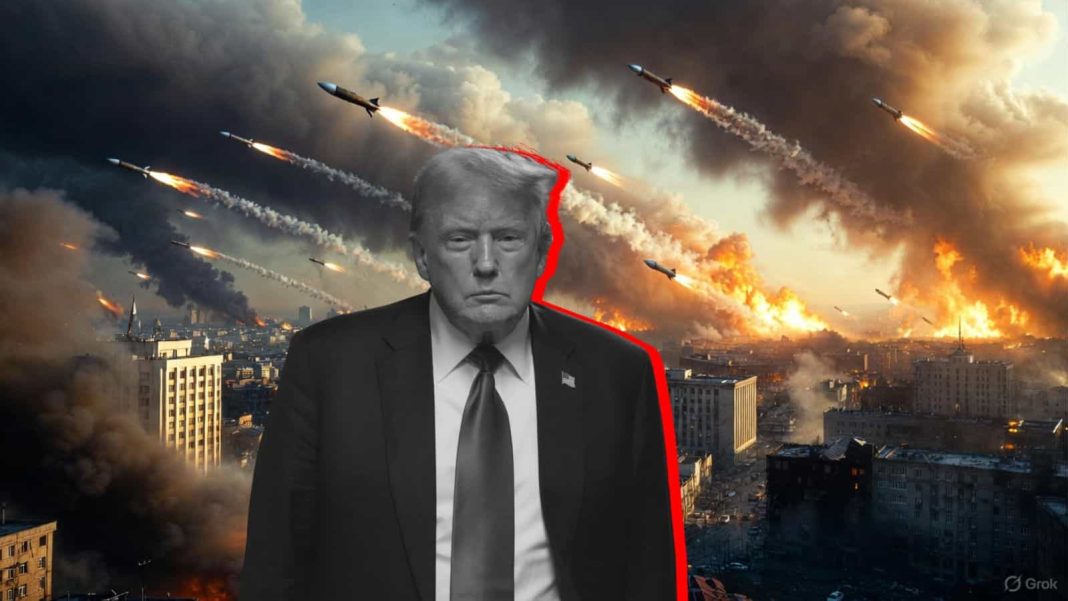
The landscape of international diplomacy often operates on intricate protocols, strategic calculations, and multilateral engagements. However, former US President Donald Trump has consistently challenged these norms, frequently employing a highly personal and often intuitive approach to foreign policy. His recent statement regarding the potential end of the “Iran war” is a stark reminder of this distinctive style, sending ripples across global capitals, not least in New Delhi. For nations like India, deeply invested in the stability of the Persian Gulf, understanding the nuances of such pronouncements is crucial, as they can significantly impact geopolitical alignments, energy security, and regional peace.
Trump’s Intuitive Diplomacy and the ‘Bones’ Remark
Donald Trump’s declaration that he would end the “Iran war” when he “feels it in my bones” encapsulates his unique brand of leadership. This assertion, far from the measured language typically expected from diplomatic circles, underscores his belief in personal intuition as a guiding principle for major geopolitical decisions. In a world accustomed to policy frameworks, think-tank analyses, and diplomatic overtures, such a statement introduces a significant element of unpredictability. Trump notably stated: ‘I will end the Iran war… I will know when it’s time because I will feel it in my bones.’
The phrase itself suggests a departure from traditional foreign policy mechanisms, where decisions are often the culmination of extensive intelligence reports, expert consultations, and carefully calibrated strategies. Trump’s “gut feeling” approach has previously manifested in various policy shifts, from trade negotiations to alliances. For allies and adversaries alike, this means interpreting not just official statements, but also the underlying personal convictions of a leader known for his unorthodoxy. The implications of ending such a complex conflict, one that has profound regional and global ramifications, based on an internal sense rather than clear strategic indicators, adds layers of uncertainty to an already volatile situation. It compels observers to consider the potential for rapid and unexpected shifts in one of the world’s most critical regions.
The Protracted US-Iran Impasse: A Volatile Standoff
While the term “Iran war” might conjure images of conventional military conflict, the reality of US-Iran tensions is a multifaceted, protracted standoff characterized by economic warfare, proxy conflicts, cyber skirmishes, and periodic military provocations. The roots of this deep-seated antagonism trace back decades, but the current heightened state emerged largely after the US withdrawal from the Joint Comprehensive Plan of Action (JCPOA) in 2018 under the Trump administration. This move reinstated stringent sanctions on Iran, severely impacting its economy, particularly its oil exports, and escalating the rhetoric between Washington and Tehran.
The Strait of Hormuz, a critical choke point for global oil shipments, remains a constant flashpoint. Incidents involving tankers and naval vessels have frequently underscored the fragility of peace in the Persian Gulf. Furthermore, both nations are entangled in regional power struggles, supporting opposing factions in conflicts across the Middle East, from Yemen to Syria. This complex web of overt and covert hostilities, economic pressure, and geopolitical rivalry creates a constant potential for miscalculation and rapid escalation, making any statement about its resolution, however unconventional, a matter of intense global scrutiny. The absence of direct military engagement should not mask the profound and continuous state of tension.
India’s Delicate Balancing Act in a Volatile Region
For India, the stability of the Persian Gulf and the broader dynamics of US-Iran relations are not merely abstract foreign policy concerns; they are issues with profound implications for its economic security and strategic interests. India is one of the world’s largest importers of crude oil, with a significant portion of its energy needs met by Gulf nations, including, historically, Iran. Any escalation or prolonged instability in the region directly impacts global oil prices, potentially fueling domestic inflation and hampering economic growth in India.
Beyond energy, the Gulf hosts a massive Indian diaspora, numbering over nine million. Their safety, welfare, and remittances – a vital source of foreign exchange – are inextricably linked to regional peace. An “Iran war,” in any form, poses an immediate threat to this large expatriate community, necessitating careful contingency planning by New Delhi. Strategically, India has invested significantly in the Chabahar Port project in Iran, envisioning it as a crucial gateway for trade with Afghanistan and Central Asia, bypassing Pakistan. The viability and operational effectiveness of Chabahar are directly tied to Iran’s stability and its international standing. While navigating its strategic partnership with the United States, India has also maintained historical and cultural ties with Iran, often walking a tightrope to balance these relationships amidst evolving sanctions regimes and geopolitical pressures. Trump’s personal declaration, therefore, adds another layer of complexity to India’s foreign policy calculus, compelling New Delhi to monitor developments closely and prepare for potential shifts in the regional power equation.
Donald Trump’s assertion about ending the “Iran war” based on a deeply personal intuition highlights a potential future where geopolitical outcomes could hinge on individual conviction as much as established policy. For the international community, particularly nations like India with significant stakes in Persian Gulf stability, such pronouncements underscore the enduring unpredictability of US foreign policy under certain leadership styles. As the world grapples with persistent tensions between Washington and Tehran, all eyes will remain fixed on any sign of a shift, whether born from strategic repositioning or a leader’s instinctive decree. The echoes of such statements resonate far beyond Washington, impacting the intricate balance of power and prosperity across continents.

