


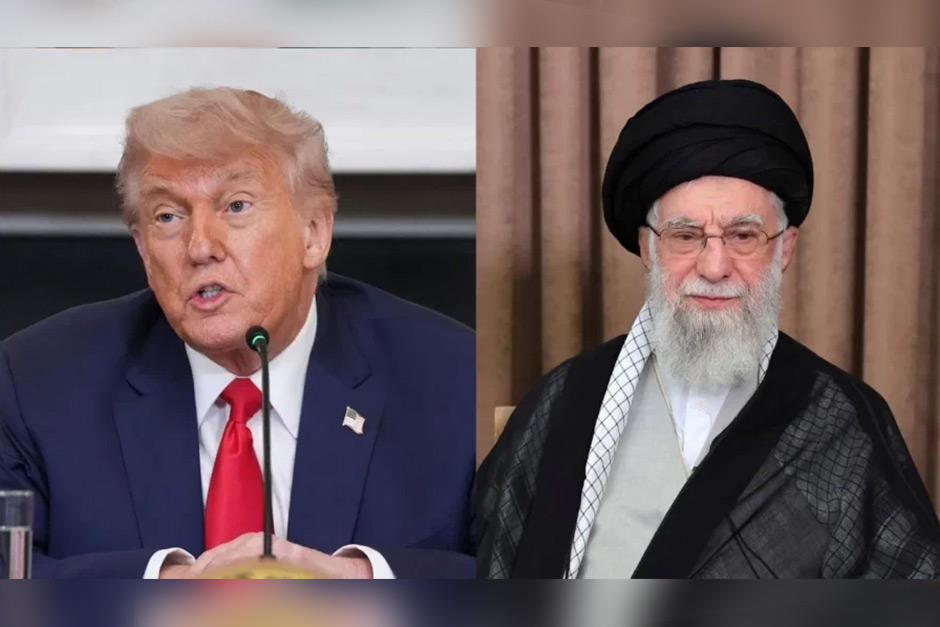
Geopolitical observers worldwide are closely watching the escalating tensions between Iran and the United States, a perennial flashpoint that consistently threatens to destabilise the volatile Middle East. The latest alarming development comes directly from Iran’s Supreme Leader, Ayatollah Ali Khamenei, who issued a stark warning that any US military action against the Islamic Republic would inevitably ignite a “regional war.” This declaration underscores the precarious balance of power and the immense stakes involved in a standoff that has profound implications far beyond the immediate protagonists.
Khamenei’s Warning: A Line in the Sand
Ayatollah Khamenei’s unequivocal statement serves as a potent reminder of Iran’s resolve and its capacity to retaliate in the event of an attack. His warning, delivered amid heightened rhetoric and military posturing from both sides, signals that Iran views any direct US military intervention as a trigger for a much broader conflict. Such a conflict, as suggested by Khamenei, would not be contained to Iranian borders but would draw in various regional actors and proxies, potentially engulfing the entire Persian Gulf.
The context for this warning is crucial. Relations between Tehran and Washington have been fraught since the US unilateral withdrawal from the 2015 Iran nuclear deal, formally known as the Joint Comprehensive Plan of Action (JCPOA), in 2018. The subsequent re-imposition and tightening of crippling sanctions by the US, aimed at exerting “maximum pressure” on Iran, have severely impacted its economy, particularly its vital oil exports. Iran, in response, has gradually reduced its commitments under the nuclear deal, enriching uranium to higher levels and taking steps that bring it closer to weapons-grade material, though it maintains its nuclear programme is purely for peaceful purposes.
This cycle of pressure and counter-pressure has seen numerous close calls, including drone shoot-downs, tanker attacks in the Strait of Hormuz, and tit-for-tat strikes between Iranian-backed groups and US forces in Iraq and Syria. The latest warning from Khamenei can be interpreted as an attempt to deter further escalation by clearly outlining the catastrophic consequences of military adventurism, echoing a long-held Iranian defensive posture. As Ayatollah Ali Khamenei recently declared, “Any US attack would spark a regional war.”
The Roots of Escalation: Sanctions, Nuclear Ambitions, and Proxy Conflicts
The current state of high alert is not merely a product of recent exchanges but stems from decades of mistrust and ideological differences, exacerbated by specific policy decisions. The US argues its sanctions are necessary to curb Iran’s alleged nuclear weapons ambitions, its ballistic missile programme, and its support for regional proxy groups that Washington designates as terrorist organisations. Iran, conversely, views US sanctions as economic warfare designed to destabilise its government and undermine its sovereignty.
Beyond the nuclear dossier, Iran’s regional foreign policy plays a significant role in its strained relationship with the US and its allies. Tehran maintains a complex network of influence across the Middle East, supporting groups like Hezbollah in Lebanon, Houthi rebels in Yemen, and various Shiite militias in Iraq and Syria. These alliances are viewed by the US and its regional partners, particularly Saudi Arabia and Israel, as destabilising and a direct threat to their interests. The proxy conflicts in Yemen and Syria, where Iran and US-backed forces often find themselves on opposing sides, serve as constant reminders of the intertwined and explosive nature of regional geopolitics.
The absence of direct diplomatic channels capable of resolving these deep-seated grievances further compounds the risk. Each side interprets the other’s actions through a lens of suspicion, leading to miscalculation and a dangerous escalation spiral. The lack of a clear off-ramp from the “maximum pressure” campaign leaves little room for de-escalation, pushing both nations closer to a perilous confrontation.
Potential Repercussions and the Global Outlook
Should Khamenei’s warning materialise into a full-blown regional conflict, the implications would be catastrophic. The immediate impact would be felt across the Middle East, where vital shipping lanes like the Strait of Hormuz, crucial for global oil supplies, could be disrupted. This would inevitably lead to a surge in global energy prices, significantly affecting economies worldwide, including major energy importers like India.
Beyond economics, a regional war could trigger an unprecedented humanitarian crisis, displace millions, and further empower extremist groups thriving on instability. It would force various international powers – China, Russia, and European nations – to navigate an even more complex diplomatic landscape, potentially hardening existing geopolitical fault lines. For India, a stable and peaceful Gulf region is paramount, given its extensive trade ties, energy security needs, and the significant Indian diaspora residing there. Any major conflict would directly threaten these vital interests, necessitating careful diplomatic engagement and contingency planning.
The current standoff demands a renewed emphasis on diplomacy and de-escalation. The international community largely agrees that a military confrontation is in no one’s interest. Finding a pathway back to dialogue, perhaps involving third-party mediators, remains the most viable option to avert a catastrophic regional war and ensure stability in a region vital to global peace and prosperity.

