


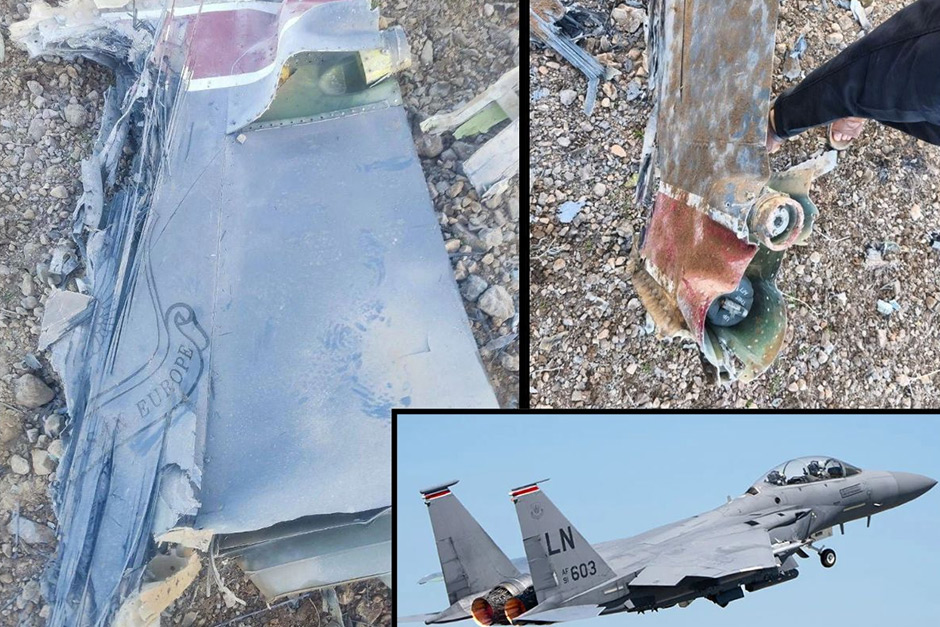
Tensions in the already volatile Middle East have once again escalated dramatically following claims by Iran’s Revolutionary Guard Corps (IRGC) that it successfully shot down two US military jets over the Persian Gulf. While Iranian state media quickly disseminated the news, citing alleged violations of Iranian airspace, the United States military has vehemently denied the claims, asserting that no US aircraft were downed and that their operations adhere strictly to international airspace regulations. This incident, regardless of its precise truth, underscores the razor-thin margin for error in one of the world’s most sensitive geopolitical regions and carries significant implications for global stability, particularly for energy-dependent nations like India.
Escalation in the Persian Gulf: Conflicting Accounts
According to statements released by the IRGC, the alleged incident occurred early Tuesday morning when two US F-18 fighter jets reportedly encroached upon Iranian airspace near the Strait of Hormuz. Iranian authorities claim their advanced surface-to-air missile systems engaged the intruding aircraft, resulting in their downing. Iranian state television broadcasted what it claimed were radar tracks and debris photographs, though these have not been independently verified.
Conversely, the Pentagon issued an immediate and categorical denial, stating that all US military aircraft operating in the region were accounted for and that no jets had been shot down or were missing. A spokesperson for US Central Command (CENTCOM) clarified that US forces conduct routine surveillance and deterrence patrols in international airspace and waters, always in full compliance with international law. They accused Iran of fabricating claims, possibly as a propaganda move or a deliberate act of provocation designed to test US resolve.
This stark divergence in narratives highlights the dangerous information warfare that often accompanies military posturing in the region. Both sides have a history of making claims disputed by the other, making independent verification challenging. The incident, true or fabricated, pushes the region closer to a direct military confrontation, a scenario that analysts warn could trigger widespread instability far beyond the Gulf’s shores.
India’s Delicate Balancing Act Amidst Regional Turmoil
For India, a major global player with significant stakes in the Gulf region, such escalations are a cause for grave concern. India’s economy is highly dependent on crude oil imports, with a substantial portion sourced from the Middle East. Any disruption to oil production or, critically, to the shipping lanes through the Strait of Hormuz – a vital global chokepoint – could send crude prices skyrocketing and cripple India’s energy security.
Beyond energy, the Gulf region is home to millions of Indian expatriates whose remittances are a crucial component of India’s economy. The safety and well-being of this vast diaspora are paramount for New Delhi. Furthermore, India maintains strong economic and strategic ties with both the United States and Iran, pursuing a long-standing policy of strategic autonomy that necessitates careful diplomatic navigation.
Dr. Rohan Sharma, a senior fellow at the Institute for Defence Studies and Analyses in New Delhi, commented, “Any direct military confrontation in the Persian Gulf is not just a regional crisis; it’s an economic shockwave for nations heavily reliant on global trade and energy. For India, maintaining stability and secure transit routes is paramount, and we urge all parties to exercise maximum restraint. Our diplomatic efforts will undoubtedly focus on de-escalation and protecting our interests without taking sides.” This sentiment reflects India’s broader foreign policy approach: advocating for dialogue and peaceful resolution while safeguarding its national interests.
Global Ramifications and the Path Ahead
The alleged downing of US jets, even if unconfirmed, has already sent ripples across global markets, with oil futures experiencing an immediate surge. The increased risk perception for shipping in the Persian Gulf could lead to higher insurance premiums and logistical challenges, impacting global supply chains. International bodies, including the United Nations, have called for immediate de-escalation and transparent investigations to ascertain the facts and prevent further misunderstandings.
Major global powers like China and the European Union have also expressed concern, urging both Washington and Tehran to exercise restraint. The incident underscores the fragility of peace in a region already grappling with proxy conflicts, internal strife, and the enduring shadow of the Iranian nuclear program. The possibility of miscalculation leading to a wider conflict remains a terrifying prospect.
As the international community watches with bated breath, the onus is on both the United States and Iran to demonstrate responsible statesmanship. Whether through diplomatic backchannels, multilateral discussions, or clear communication, finding a pathway to de-escalation is critical. The consequences of unchecked military posturing in the Persian Gulf are simply too dire for the region and the world to bear.

