


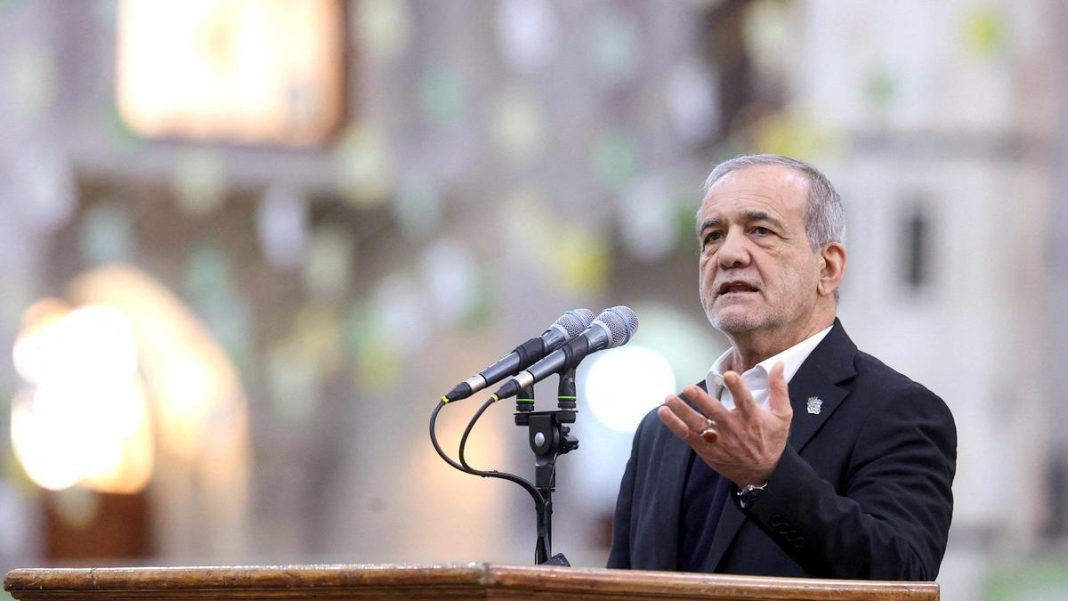
In the intricate geopolitical landscape of West Asia, a region perennially on edge, recent pronouncements from Tehran have offered a glimmer of diplomatic possibility amidst swirling tensions. Iran has indicated that “progress” is being made towards potential talks with the United States, a revelation that comes despite a backdrop of escalating regional attacks and heightened jitters across the Middle East. This delicate dance of diplomacy against a violent rhythm underscores the complex nature of international relations and the persistent, if often indirect, pursuit of de-escalation.
The Thorny Path to Dialogue
For years, relations between Iran and the United States have been characterized by deep mistrust, sanctions, and proxy conflicts. The 2015 Joint Comprehensive Plan of Action (JCPOA), a landmark nuclear deal, offered a brief respite before the U.S. withdrawal in 2018 plunged the relationship back into a freeze. Now, signals from Tehran suggest a cautious thaw. Iranian officials have reportedly indicated that indirect discussions, facilitated by intermediaries, are making headway. While details remain scarce, these overtures reportedly revolve around mechanisms to alleviate economic pressures on Iran and de-escalate regional flashpoints, potentially paving the way for a more formal dialogue.
This reported progress, however, is not occurring in a vacuum. The region has been gripped by a series of concerning incidents. Strikes in Syria attributed to Israel, drone attacks in Iraq, and ongoing skirmishes involving Houthi rebels in the Red Sea — a crucial global shipping lane — have kept the geopolitical temperature alarmingly high. These “attack jitters” create a volatile environment, where miscalculation or escalation could easily derail nascent diplomatic efforts. The challenge for both Washington and Tehran, and indeed the international community, is to navigate this perilous terrain, ensuring that the momentum towards dialogue, however fragile, is not overshadowed by the immediate crises.
India’s Stake in West Asian Stability
For India, the stability of West Asia is not merely a matter of international relations; it’s a critical component of its national interests. New Delhi has consistently advocated for peaceful resolutions and dialogue in the region, a stance rooted in pragmatism and a deep understanding of its own dependencies. India imports a significant portion of its energy requirements from West Asia, making any disruption to oil and gas supplies a direct threat to its economic stability and growth. Beyond energy, the region is home to millions of expatriate Indians, whose remittances are vital to the Indian economy. Any instability could lead to mass evacuations and humanitarian challenges, as seen in previous regional conflicts.
Furthermore, India’s ambitious connectivity projects, such as the International North-South Transport Corridor (INSTC) and the development of Chabahar Port in Iran, hinge on a peaceful and stable West Asia. These projects are designed to enhance trade routes, reduce logistics costs, and provide India with strategic access to Central Asia and Europe, bypassing Pakistan. The success of these initiatives, therefore, is directly tied to the geopolitical climate. India’s traditional policy of maintaining balanced relations with all regional players, including both Iran and its rivals, underscores its desire for a neutral and constructive role in fostering peace. As such, any genuine progress towards U.S.-Iran talks is viewed with cautious optimism in New Delhi, holding the promise of a more predictable and conducive environment for India’s strategic and economic pursuits.
As Dr. C. Raja Mohan, a prominent Indian foreign policy analyst, recently observed, “India’s diplomatic tightrope walk in West Asia is perhaps its most crucial foreign policy challenge. Any movement towards de-escalation between the US and Iran directly benefits India’s energy security, trade routes, and diaspora.” This sentiment encapsulates India’s deep-seated interest in seeing constructive engagement prevail over confrontation.
The Path Ahead: Cautious Optimism
While Iran’s statements inject a degree of hope into a fraught relationship, the path to a comprehensive resolution remains arduous. Decades of mutual distrust, coupled with Iran’s advancements in its nuclear program and the U.S.’s ongoing sanctions regime, present formidable obstacles. The stated “progress” might signify an agreement on the parameters for future discussions rather than a breakthrough on substantive issues. Yet, even incremental steps towards engagement are significant given the current climate.
The global community, including India, will keenly watch these developments, understanding that a stabilized U.S.-Iran relationship could unlock broader regional benefits. It could foster an environment more conducive to addressing other pressing challenges, from humanitarian crises to counter-terrorism efforts. For now, the prospect of diplomacy, however fraught and tentative, offers a critical counterpoint to the drums of conflict that have echoed too frequently across West Asia.

