


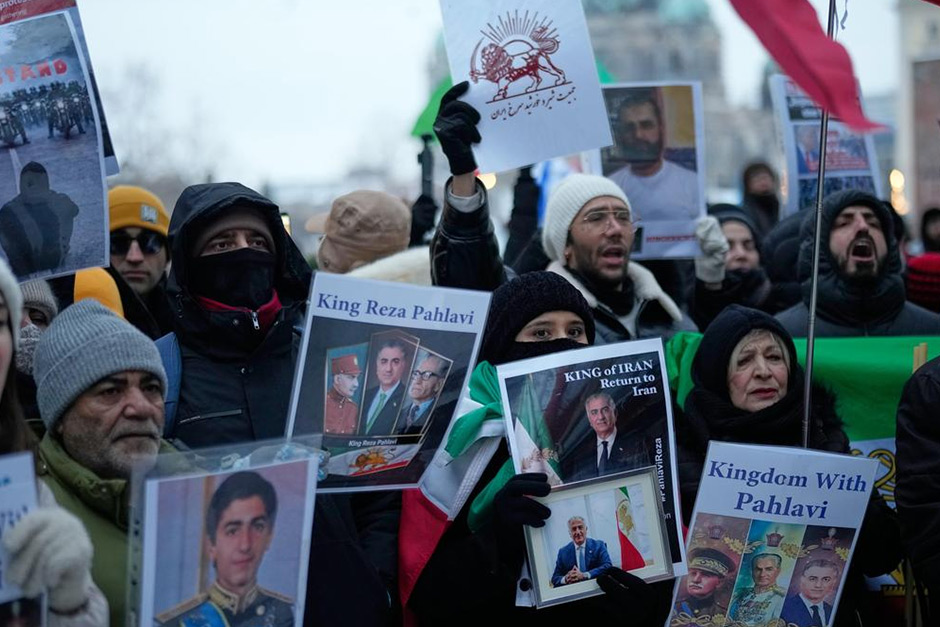
The Islamic Republic of Iran is once again at a critical juncture, gripped by a wave of nationwide protests that have persisted for weeks. What began as an outpouring of grief and anger over the death of 22-year-old Mahsa Amini in morality police custody has morphed into a broader movement demanding significant social and political change. As citizens continue to challenge the establishment, the state’s response has intensified, with the latest development being a stern vow from the Tehran Army to protect “national interests,” signaling a potentially sharper escalation in the already tense standoff.
The Roots of Resentment and Sustained Dissent
The current wave of unrest ignited on September 16, following the death of Mahsa Amini, who had been detained for allegedly violating Iran’s strict dress code. Her death quickly became a rallying cry, drawing attention to long-standing grievances related to women’s rights, personal freedoms, and the authority of the morality police. However, the protests have since evolved beyond these initial triggers, encompassing a wider array of frustrations including economic hardship, corruption, and a perceived lack of political voice.
Demonstrations have spread across provinces, from the capital city of Tehran to smaller towns, involving diverse segments of Iranian society – students, women, labour unions, and ethnic minorities. The movement has seen unprecedented levels of bravery from protesters, often young people, who have openly defied authorities, clashing with security forces and burning symbols of the establishment. The government has responded with a heavy hand, deploying riot police and paramilitary forces, resulting in numerous arrests, injuries, and fatalities. Internet services have been heavily restricted, particularly access to social media platforms, in an apparent effort to quell coordination and stifle the dissemination of information.
Tehran Army’s Vow: A New Dimension to the Crisis
Amidst this volatile environment, the Iranian Army’s recent statement has added a significant new dimension. While the Revolutionary Guard Corps (IRGC) has historically been at the forefront of suppressing dissent, the Army’s more prominent declaration underscores the state’s resolve. “The Army of the Islamic Republic of Iran, with a clear understanding of the nation’s profound sensitivity and the enemies’ conspiratorial plans, will not allow enemies to exploit the situation and will safeguard the national interests against all threats,” read a statement attributed to Iran’s ground forces, widely reported across state media.
This pronouncement signals a unified stance among Iran’s military branches and serves as a powerful warning to both domestic protesters and perceived foreign adversaries. Analysts suggest that the Army’s intervention could be interpreted in several ways: as an attempt to project strength and deter further escalation, to caution international players against interference, or as a prelude to more decisive action against the protesters. The emphasis on “national interests” frames the ongoing unrest not just as domestic dissent but as a challenge to the very fabric of the nation, potentially justifying more severe measures under the guise of national security. The statement also echoes the regime’s consistent narrative of external forces orchestrating the protests to destabilise the country.
India’s Perspective: Balancing Interests and Stability
For India, a neutral yet watchful observer in the complex geopolitical landscape of the Middle East, the developments in Iran carry significant weight. India and Iran share historical ties, and Iran remains a crucial partner for India’s energy security, despite past sanctions impacting oil imports. More critically, the Chabahar Port project in southeastern Iran is a cornerstone of India’s connectivity strategy to Afghanistan and Central Asia, offering a viable alternative trade route that bypasses Pakistan.
New Delhi generally adheres to a policy of non-interference in the internal affairs of other nations, advocating for peaceful resolutions through dialogue. However, the prolonged instability in Iran raises concerns for India, particularly regarding the potential for regional spillover, disruptions to trade routes, and the broader implications for energy markets. An unstable Iran could complicate India’s strategic calculations in West Asia, impacting its investments and diplomatic engagements. India will undoubtedly be monitoring the situation closely, hoping for a resolution that ensures regional stability and safeguards its strategic interests without overtly taking sides in Iran’s internal conflict.
As the protests in Iran continue to challenge the ruling establishment and the Tehran Army takes a more assertive public stance, the nation stands at a crossroads. The coming weeks will likely prove pivotal in determining the trajectory of this significant wave of dissent and the future course of the Islamic Republic, watched intently by both its citizens and the global community, including India.

