


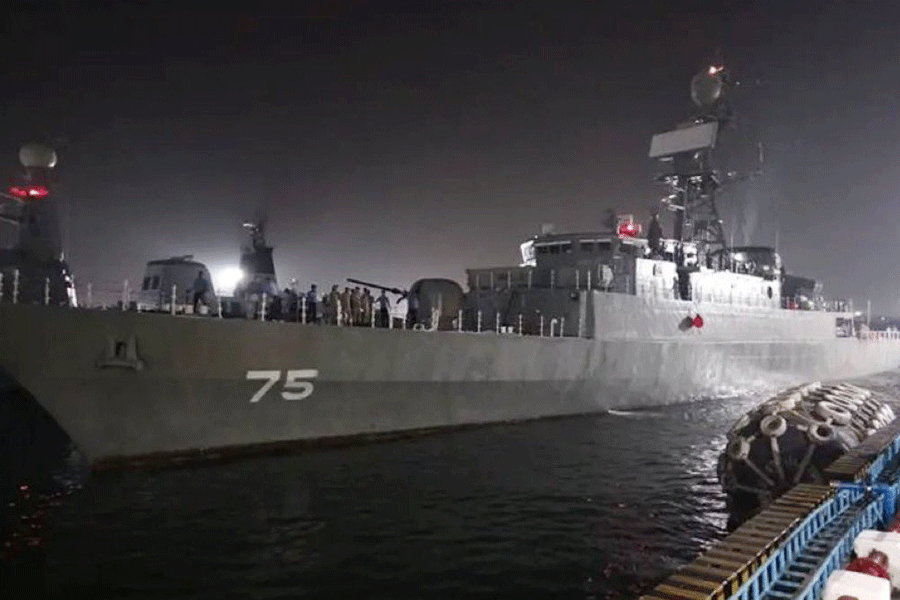
The Middle East, a region perpetually at the nexus of geopolitical tension, finds itself once again on a precipice. The recent direct military exchanges between Iran and Israel have sent shockwaves across the globe, raising fears of a broader conflagration. As the world watches with bated breath, the intricate dance of retaliation and restraint plays out, with significant implications for global stability, energy markets, and nations like India, deeply intertwined with the region’s fortunes.
The Escalation: A Dangerous New Chapter Unfolds
The latest dramatic escalation began with an Israeli airstrike on April 1, targeting Iran’s consulate in Damascus, Syria, which resulted in the deaths of several Iranian military officials, including a senior Quds Force commander. Iran, vowing retribution, responded on April 13 with an unprecedented direct drone and missile attack on Israel. While Israel, supported by allies like the US, UK, and Jordan, intercepted the vast majority of these projectiles, the act marked a significant shift in the long-standing shadow war between the two adversaries.
Israel, affirming its right to self-defense, subsequently carried out a limited retaliatory strike on Iran. These tit-for-tat actions have pushed the boundaries of conventional conflict in the region, moving past proxies and indirect confrontations. International bodies and numerous countries have since called for de-escalation, urging both sides to exercise maximum restraint. The United Nations Secretary-General has warned against the dangers of regional spillover, underscoring the delicate balance required to prevent a full-blown war.
Decoding the Regional Dynamics
The current volatility is not an isolated event but rather a culmination of decades of animosity, exacerbated by the ongoing conflict in Gaza. Iran perceives Israel as an illegitimate state and a key adversary, while Israel views Iran’s nuclear program and regional proxy network (Hezbollah, Houthis, various Iraqi militias) as existential threats. The intertwined nature of these conflicts, from the Red Sea to the Levant, means that any direct confrontation between the two major powers risks engulfing the entire Middle East in a devastating war.
India’s Stake in a Volatile Region
For India, a rapidly growing economy with deep historical and economic ties to the Middle East, the escalating tensions between Iran and Israel are a matter of profound concern. India’s energy security, trade routes, and the welfare of its vast diaspora are all directly impacted by the region’s stability.
Energy Security: India imports over 80% of its crude oil, with a significant portion traversing the Strait of Hormuz, a critical chokepoint at the mouth of the Persian Gulf. Any disruption here, whether due to direct conflict or increased shipping insurance premiums, would have immediate and severe repercussions on India’s economy, potentially leading to higher fuel prices and inflation.
Trade and Connectivity: The Middle East is a vital trade corridor for India, connecting it to Europe and Africa. Projects like the India-Middle East-Europe Economic Corridor (IMEC), envisioned to enhance trade links, could face severe setbacks amidst regional instability. Maritime trade routes, including the Suez Canal, also remain vulnerable to disruptions from ongoing Red Sea attacks, which could worsen if the Iran-Israel conflict broadens.
Indian Diaspora: An estimated 8-9 million Indians reside and work in the Gulf Cooperation Council (GCC) countries, playing crucial roles across various sectors. Their safety and well-being are paramount. Escalating hostilities could necessitate complex evacuation plans and impact remittances, a significant source of foreign exchange for India.
India’s diplomatic stance has consistently advocated for de-escalation, dialogue, and a peaceful resolution to disputes. The Ministry of External Affairs has called for “calm and restraint” and emphasized the importance of upholding international law and diplomatic immunity. As former Indian diplomat T.P. Sreenivasan noted, “India’s balancing act in the Middle East has always been crucial, but never more so than now. We have strong strategic interests with both sides, making our call for peace not just moral, but pragmatically essential for our own economic stability and the safety of our citizens.” This highlights India’s nuanced approach, maintaining robust ties with both Israel and Iran while prioritizing regional peace.
As the world holds its breath, the path ahead remains uncertain. The imperative for de-escalation is undeniable, not just for the immediate stability of the Middle East, but for the ripple effects that would undoubtedly cascade across the global economy and security landscape. For India, proactive diplomacy and a vigilant eye on regional developments will be crucial in navigating these turbulent waters.

