


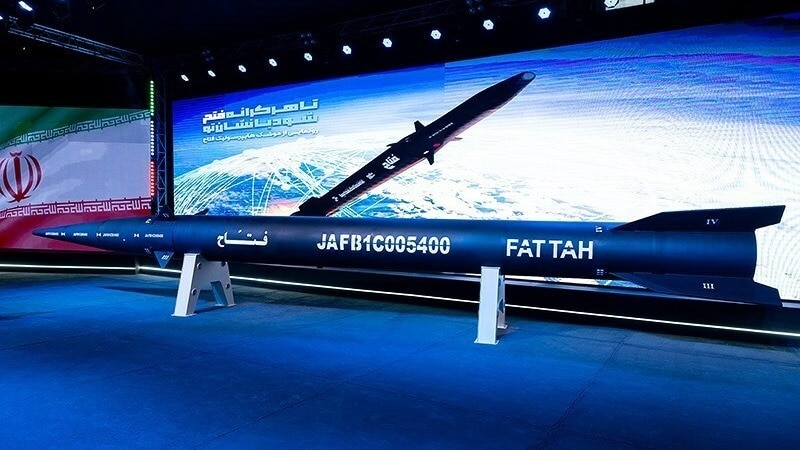
The geopolitical chessboard of the Middle East recently witnessed a potent declaration that sent ripples across strategic circles globally. Iran’s Supreme Leader, Ayatollah Ali Khamenei, asserted that the Islamic Republic possesses the capability to sink US aircraft carriers. This bold claim, made amidst escalating tensions in the Persian Gulf, immediately raises critical questions: Is this a credible threat, and if so, what unconventional weaponry could Iran deploy to challenge one of the most formidable symbols of American military might?
For India, a nation deeply invested in the stability of the Persian Gulf due to its substantial energy imports and vital trade routes, understanding the dynamics of this potential confrontation is paramount. The region is not merely a distant theatre; it directly impacts India’s economic security and broader foreign policy objectives.
The Asymmetric Warfare Doctrine: Iran’s Strategic Playbook
Iran is acutely aware that a direct conventional confrontation with the United States Navy would be disastrous. Its military strategy, therefore, is firmly rooted in asymmetric warfare – leveraging its strengths to exploit the vulnerabilities of a technologically superior adversary. This doctrine thrives in the constricted waters of the Persian Gulf and particularly the Strait of Hormuz, a narrow choke point through which a significant portion of the world’s oil transits.
Instead of matching the US in capital ships or advanced aircraft, Iran has invested heavily in a diverse array of less conventional, yet potentially highly disruptive, capabilities. This includes a vast number of fast attack craft (FACs), an extensive mine inventory, and a growing arsenal of anti-ship missiles. The aim is not necessarily to defeat the US Navy in a head-on battle, but to inflict significant damage, deny access, and create a prohibitive cost-benefit ratio for any military intervention.
Key Weapons in Iran’s Anti-Carrier Arsenal
Iran’s capabilities, while often shrouded in secrecy and propaganda, are subject to extensive analysis by global defence experts. Several weapon systems are consistently highlighted as potential threats to large naval assets:
Anti-Ship Ballistic Missiles (ASBMs)
Perhaps the most talked-about “carrier killer” in Iran’s arsenal is the Khalij Fars (Persian Gulf) anti-ship ballistic missile. First unveiled in 2011, this solid-propellant missile is reportedly a variant of the Fateh-110 short-range ballistic missile, equipped with an electro-optical guidance system for terminal targeting. Iran claims it has a range of approximately 300 km and can travel at hypersonic speeds, making it extremely challenging for conventional anti-missile defences to intercept. While its operational effectiveness against moving targets like aircraft carriers remains debated by international experts, it represents a significant and evolving threat, mirroring similar developments seen with China’s DF-21D ASBM.
Anti-Ship Cruise Missiles (ASCMs)
Iran possesses a wide array of anti-ship cruise missiles, many of which are derived from Chinese designs or indigenously produced. These include variants of the C-802 (like the Noor and Ghader), the shorter-range Nasr, and the longer-range Qadir. These missiles can be launched from shore batteries, fast attack craft, or even aircraft. Their sheer numbers, combined with their ability to fly at sea-skimming altitudes, could be used in “swarm” attacks, designed to overwhelm a carrier strike group’s sophisticated multi-layered defences.
Naval Mines
The narrow and shallow waters of the Strait of Hormuz are ideally suited for naval mine warfare. Iran is believed to possess a substantial inventory of various types of mines, including moored, bottom, and even remotely controlled varieties. The deployment of mines could effectively restrict freedom of navigation, deny access to critical waterways, and potentially damage the hull of large vessels, including aircraft carriers or their escorts. Even the threat of mining can force an adversary to commit significant resources to mine countermeasures, slowing down operations and increasing risk.
Fast Attack Craft (FACs) and Swarm Tactics
The Islamic Revolutionary Guard Corps Navy (IRGCN) operates thousands of small, fast, and agile boats, many of which are armed with missiles, torpedoes, or rockets. The Iranian doctrine envisions these vessels engaging in “swarm tactics,” attempting to overwhelm larger warships through coordinated, high-speed assaults from multiple directions. While individually these boats pose a limited threat, their combined numbers and the element of surprise in confined waters could present a formidable challenge to even the most advanced naval vessels.
Submarines
Iran’s submarine fleet, though relatively small compared to major naval powers, includes three Kilo-class conventional submarines and numerous indigenously built Ghadir-class midget submarines. These smaller, stealthier vessels are well-suited for the shallow waters of the Persian Gulf and could be used for covert mine-laying, intelligence gathering, or even launching torpedo attacks against unsuspecting targets.
“While sinking an American aircraft carrier would be an immense challenge given its multi-layered defensive capabilities, Iran’s layered approach combining ballistic missiles, swarming tactics, and mines presents a credible threat to naval operations in the confined waters of the Persian Gulf,” observes Dr. Sameer Patil, a security analyst based in Mumbai. “The objective might not be total destruction, but rather to inflict significant damage, disrupt operations, and demonstrate a capacity for retaliation that complicates any large-scale military action.”
Khamenei’s statement, therefore, while appearing grandiose, underscores Iran’s long-standing strategy of asymmetrical deterrence. While a single, decisive blow to sink an aircraft carrier would be an extraordinary feat, Iran’s arsenal and doctrine are designed to make naval operations in its vicinity exceedingly risky and costly. For India and other nations reliant on the stability of the Gulf, these declarations serve as a stark reminder of the fragile peace and the potential for rapid escalation in a region vital to global commerce and energy security.

