


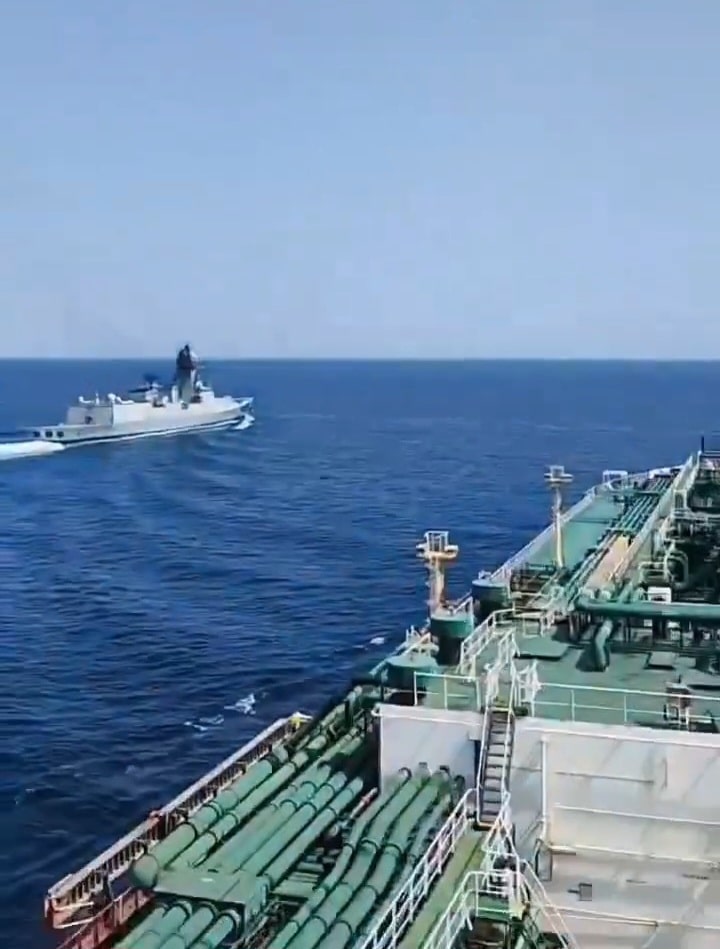
In a powerful testament to its commitment to safeguarding national interests and ensuring the uninterrupted flow of vital energy resources, the Indian Navy has significantly intensified its presence in the strategically crucial Gulf of Oman. Recent reports confirm that Indian warships are actively undertaking escort duties for Indian-flagged Liquefied Petroleum Gas (LPG) tankers navigating these often-perilous waters. This proactive measure comes amidst a backdrop of escalating maritime security concerns in the broader West Asian region, highlighting India’s growing role as a responsible net security provider in the Indian Ocean Region and beyond.
The Gulf of Oman, a critical maritime choke point connecting the Arabian Sea to the Strait of Hormuz, has long been a conduit for a significant portion of the world’s oil and gas trade. For India, a rapidly developing nation heavily reliant on energy imports, the stability and security of this route are non-negotiable. With over 80% of its crude oil and nearly 50% of its natural gas needs met through imports, the safety of tankers carrying these commodities directly impacts India’s economic stability and energy security.
A Necessary Safeguard for Energy Lifelines
The decision to deploy warships to escort LPG tankers is a direct response to the heightened volatility observed in the region, particularly following attacks on commercial shipping in the Red Sea and Gulf of Aden. While the Gulf of Oman has historically faced threats from piracy, recent geopolitical tensions have introduced new layers of complexity, including drone attacks and missile threats targeting commercial vessels. These incidents, often perpetrated by non-state actors, underscore the need for robust defensive measures to protect vulnerable merchant shipping.
LPG, a primary cooking fuel for millions of Indian households, is often transported in large, specialized tankers that can be high-value targets. Any disruption to their passage, whether due to direct attack, hijacking, or the fear of such incidents leading to higher insurance premiums and diverted routes, would have severe economic repercussions for India. The Indian Navy’s escorts provide a visible and credible deterrent, assuring shipping companies and crew members of safety and demonstrating India’s unwavering resolve to protect its economic lifelines. This deployment is a crucial extension of India’s comprehensive maritime security strategy, designed to ensure the free flow of trade through international waters.
India’s Growing Maritime Footprint and Strategic Intent
The presence of Indian warships, including advanced destroyers and frigates, in the Gulf of Oman is not merely a reactive measure but a clear articulation of India’s burgeoning maritime capabilities and its strategic vision. For years, the Indian Navy has been steadily expanding its operational reach, participating in anti-piracy operations off the coast of Somalia and conducting bilateral and multilateral exercises with navies from around the world. These escort missions represent a natural evolution of that commitment, projecting power and reassurance far from India’s territorial waters.
This initiative also reinforces India’s identity as a key player in maintaining regional stability. As global attention shifts towards securing vital trade routes, India’s proactive engagement showcases its dedication to upholding the principles of freedom of navigation and ensuring common good in the maritime domain. The ability to deploy and sustain such operations thousands of miles from its coastline underscores significant advancements in naval logistics, intelligence, and operational readiness. Furthermore, it sends a clear message to potential adversaries that India is prepared to defend its interests robustly.
Speaking on the operational significance, a senior naval official stated, “The Indian Navy’s unwavering commitment to securing our economic lifelines in volatile regions is paramount. This escort operation underscores our resolve to protect India’s maritime interests and ensure the unhindered flow of critical energy resources. We are continuously monitoring the evolving security landscape and adapting our strategies to ensure the safety of our merchant fleet.” This sentiment reflects the seriousness with which India views its maritime security responsibilities.
Conclusion
The Indian Navy’s escort operations for LPG tankers in the Gulf of Oman are a critical demonstration of India’s deepening commitment to securing its energy future and asserting its role as a responsible maritime power. At a time when global trade routes face unprecedented challenges, India’s proactive stance not only protects its immediate economic interests but also contributes significantly to regional maritime stability. As India continues its journey towards becoming a five-trillion-dollar economy, the ability to safeguard its vital sea lanes will remain a cornerstone of its national security and prosperity, ensuring that the wheels of commerce turn smoothly and energy reaches every corner of the nation.

