


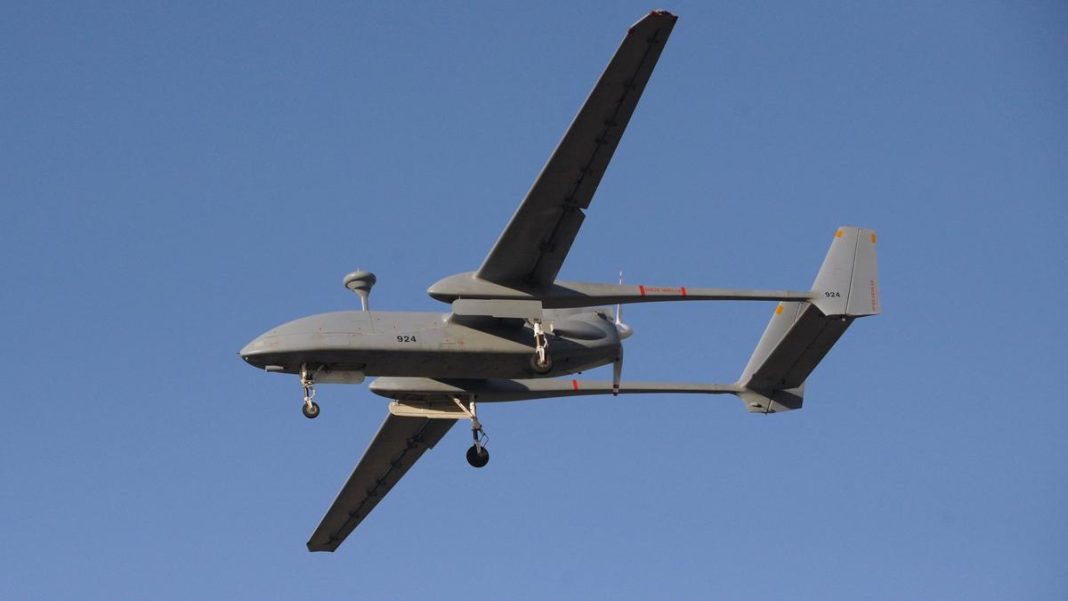
In a significant move bolstering its aerial surveillance and reconnaissance capabilities, the Indian armed forces are set to procure additional units of the advanced satellite-linked Heron Mk II Unmanned Aerial Vehicles (UAVs) through the emergency procurement route. This decision underscores India’s proactive approach to modernizing its defence infrastructure and maintaining a robust vigil along its expansive and often challenging borders. The acquisition reflects a strategic imperative to enhance real-time intelligence gathering, particularly in light of evolving geopolitical dynamics and ongoing security challenges.
Strengthening India’s High-Altitude Surveillance Prowess
The Heron Mk II, manufactured by Israel Aerospace Industries (IAI), is a Medium Altitude Long Endurance (MALE) UAV renowned for its sophisticated capabilities. The satellite-linked variant significantly extends its operational reach, allowing for beyond line-of-sight control and data transmission over vast distances. This feature is crucial for India, enabling sustained surveillance missions across diverse terrains, from the high altitudes of the Line of Actual Control (LAC) in the Himalayas to the intricate maritime zones.
Equipped with advanced multi-mission payloads, including electro-optical, infrared, and radar sensors, the Heron Mk II can perform a wide array of tasks. These include intelligence, surveillance, and reconnaissance (ISR) operations, target acquisition, border patrolling, and battle damage assessment. Its impressive endurance, often exceeding 24 hours, ensures persistent monitoring of areas of interest, providing continuous situational awareness to ground commanders.
The induction of these UAVs marks a qualitative leap in the Indian military’s ability to monitor adversaries and preempt potential threats. Their deployment is expected to further fortify India’s defensive posture, especially along sensitive sectors like eastern Ladakh, where the Indian Army has previously leveraged Heron UAVs to great effect during standoff situations. The ability to operate in adverse weather conditions and at high altitudes makes the Heron Mk II an invaluable asset for India’s mountainous frontiers.
The Urgency of Emergency Procurement and Indigenous Enhancements
The decision to opt for the emergency procurement channel highlights the critical and immediate need for these advanced platforms. This route allows the armed forces to fast-track acquisitions, bypassing the often lengthy standard defence procurement procedures. Such provisions are typically invoked to address urgent operational requirements stemming from unforeseen security challenges or to bridge critical capability gaps that demand rapid resolution.
This latest procurement builds upon previous inductions of Heron UAVs and aligns with India’s broader strategy of integrating cutting-edge technology into its defence framework. Furthermore, India has been actively engaged in indigenizing and upgrading its existing fleet of Heron UAVs under projects like ‘Project Cheetah’. These upgrades involve equipping the drones with advanced weapon systems, anti-jamming capabilities, and enhanced communication suites, transforming them into more versatile and formidable assets.
A senior defence analyst, speaking on the implications of this procurement, emphasized, “The Heron Mk II’s satellite connectivity and extended endurance provide an indispensable edge in modern warfare. This emergency acquisition is a clear signal of India’s commitment to maintaining superior intelligence-gathering capabilities and ensuring real-time operational readiness, particularly in sensitive border regions where persistent surveillance is paramount.” The focus is not merely on acquisition but also on creating a robust ecosystem for maintenance, training, and indigenous integration.
Looking Ahead: Integrating UAVs into India’s Defence Doctrine
The continued emphasis on procuring advanced UAVs like the Heron Mk II underscores a significant shift in India’s defence doctrine, mirroring global trends where unmanned systems are playing increasingly pivotal roles. These assets provide a force multiplier, reducing risks to personnel while expanding the military’s eyes and ears across challenging operational theatres.
Beyond traditional surveillance, the data gathered by these sophisticated drones can be integrated with other intelligence streams, feeding into command and control centres to facilitate faster decision-making and more coordinated responses. This holistic approach to intelligence sharing and operational planning is crucial for India’s national security interests.
The procurement of additional satellite-linked Heron Mk II UAVs is a strategic investment in India’s future defence capabilities. It reflects a proactive, technology-driven approach to safeguarding national interests and maintaining peace and stability in a complex geopolitical landscape. As India continues to modernize its armed forces, the role of advanced unmanned systems will only grow, becoming a cornerstone of its strategic readiness and operational effectiveness.

