


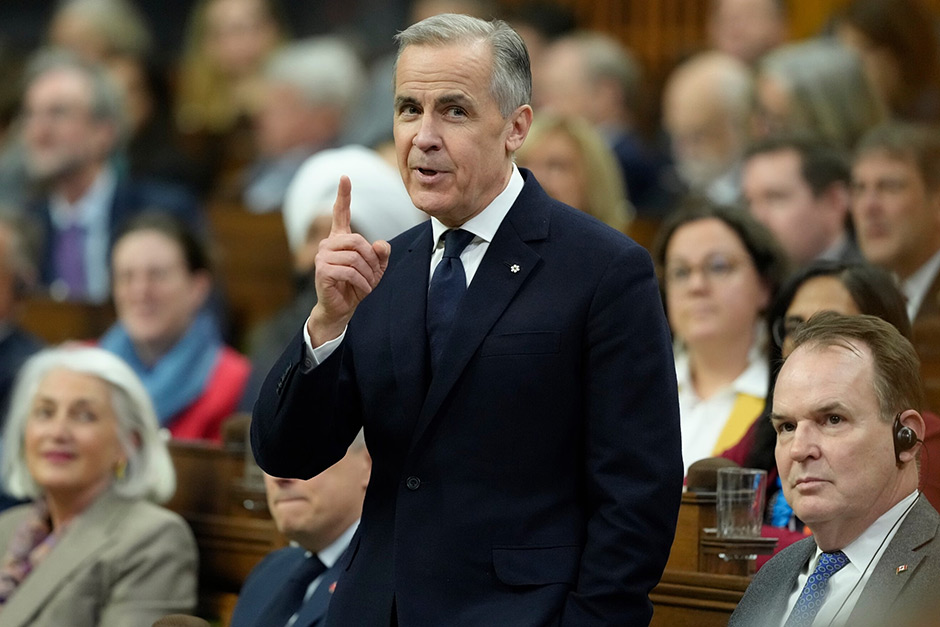
As India gears up to host Mark Carney, the former Governor of both the Bank of Canada and the Bank of England, global economic observers are keenly dissecting his recent remarks on the tumultuous state of international trade. Carney’s stark assessment – that there is ‘Nothing normal in US’ when it comes to trade policy under the spectre of former President Donald Trump’s potential return – casts a long shadow over the predictability of global commerce. For India, a rising economic powerhouse actively recalibrating its trade strategies and seeking deeper integration into global supply chains, these insights offer crucial foresight.
The Spectre of Protectionism and US Unpredictability
Carney’s observations are not merely academic; they reflect a deep understanding of the volatility that tariffs and protectionist rhetoric can unleash. His statement underscores the concern that a potential return of Trump to the White House could trigger a new wave of unilateral trade actions, including widespread tariffs, reminiscent of his previous term. Such measures, often justified under national security pretexts, bypass traditional multilateral frameworks like the World Trade Organization (WTO), which is already struggling with gridlock and relevance.
The implications of this American unpredictability are profound. Global supply chains, meticulously constructed over decades to optimise efficiency and cost, become vulnerable to sudden disruption. Businesses face increased uncertainty, impacting investment decisions and long-term planning. For economies deeply intertwined with global trade, like India, forecasting market conditions and securing export destinations becomes significantly more complex. Carney’s warning serves as a strategic alert for nations to diversify their economic partnerships and build greater resilience into their trade architecture.
India’s Strategic Pivot Amidst Global Shifts
India’s economic policy makers are no strangers to navigating complex global landscapes. The country has been proactively pursuing a multi-pronged strategy to enhance its trade footprint while mitigating external vulnerabilities. The ‘Make in India’ initiative, coupled with efforts to boost domestic manufacturing, is a clear response to global supply chain fragilities and the imperative of self-reliance. This approach aims to reduce import dependence and position India as a reliable hub for manufacturing and services, attracting foreign investment in critical sectors from electronics to pharmaceuticals.
Concurrently, India is vigorously engaging in bilateral and regional trade agreements. Free Trade Agreement (FTA) negotiations with key partners like the United Kingdom, the European Union, and the Gulf Cooperation Council (GCC) are indicative of India’s desire to secure preferential market access and diversify its export basket beyond traditional markets. These agreements are vital hedges against the potential disruption from protectionist policies elsewhere, offering stability and growth avenues. Mark Carney’s upcoming interactions in India will likely delve into how India can further leverage its demographic dividend and digital infrastructure to forge resilient economic partnerships that can withstand global headwinds.
Diversifying Partnerships and Building Resilience
The emphasis on diversification extends beyond trade agreements. India’s strategic alliances in various forums, including BRICS and the G20, underscore its commitment to fostering a more balanced and multilateral global economic order. By strengthening ties with countries across Asia, Africa, and Latin America, India aims to create a broader network of economic interdependence, reducing reliance on any single market or trading bloc. This proactive engagement is crucial for a nation aspiring to become a $5 trillion economy, as it provides both market access and a collective voice in shaping international trade norms.
The unpredictability highlighted by Carney also reinforces the importance of India’s focus on digital transformation and its burgeoning services sector. The export of IT and IT-enabled services, less susceptible to conventional tariffs, offers a degree of insulation. Furthermore, India’s push towards becoming a significant player in critical technologies and green energy sectors positions it strategically for future global demand, irrespective of shifts in traditional manufacturing trade policies.
Conclusion
Mark Carney’s impending visit and his candid assessment of the US trade environment arrive at a pivotal moment for India. His warnings about the ‘new normal’ of unpredictability serve as a timely reminder for Indian policy makers and businesses to continue fortifying domestic capabilities and diversifying international economic engagement. India’s pragmatic approach, combining domestic strength with strategic global partnerships, appears well-suited to navigate these turbulent waters. As the global economic order continues to evolve, India’s ability to adapt, innovate, and forge resilient trade relationships will be paramount to its sustained growth and increasing influence on the world stage.
Ultimately, while external factors present challenges, they also create opportunities for nations agile enough to seize them. Carney’s insights can help India fine-tune its strategies, ensuring it remains on a path of robust economic expansion and secures its position as a vital pillar of the global economy, irrespective of the political currents flowing through Washington D.C.

