


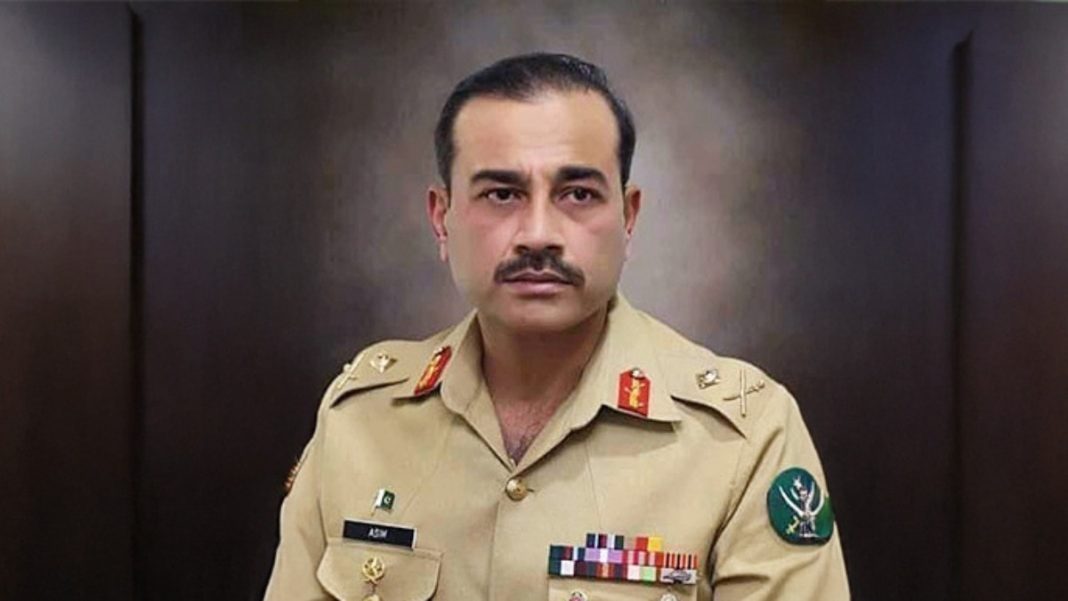
The appointment of a new military chief in Pakistan is always an event watched keenly across the border in India, given the complex and often fraught relationship between the two nuclear-armed neighbours. General Asim Munir’s ascension to the powerful post of Pakistan’s Chief of Army Staff (COAS) in late 2022 was no exception. However, it was his first public address as the tri-services chief that truly sent ripples through strategic circles, particularly in India. His assertive remarks, particularly the phrase, “India shouldn’t be in delusion,” set an early, unequivocal tone for his tenure, signaling a potential continuation, if not an escalation, of rhetoric concerning bilateral relations.
General Asim Munir’s Appointment and Initial Stance
General Asim Munir took the helm of the Pakistan Army at a time of considerable domestic political flux and ongoing economic challenges. His appointment followed a crucial selection process, culminating in him succeeding General Qamar Javed Bajwa. Munir brings a significant and varied background to the role, having previously served as the chief of Pakistan’s Military Intelligence (MI) and, notably, as the head of the Inter-Services Intelligence (ISI), Pakistan’s premier intelligence agency. This intelligence background is often viewed as indicative of a deep understanding of regional geopolitics and internal security dynamics.
In his maiden address following his elevation, General Munir chose the Line of Control (LoC), the de-facto border with India in Kashmir, as his platform. This choice of location itself was symbolic, underscoring the centrality of the Kashmir issue to Pakistan’s military doctrine. Addressing troops, he issued a stern warning that garnered significant attention:
“India should not be under any delusion. Pakistan’s armed forces are ready not only to defend our territorial integrity but also stand with our Kashmiri brethren.”
This statement, delivered with the full authority of Pakistan’s most powerful institution, was a clear declaration of intent. It reiterated Pakistan’s long-standing position on Kashmir and signaled that under his leadership, the military would maintain a robust stance on perceived threats and challenges emanating from India. For many analysts, this was a reaffirmation of continuity in Pakistan’s military posture towards India, rather than a radical departure.
India’s Interpretation and Strategic Preparedness
From an Indian perspective, General Munir’s remarks were not entirely surprising but certainly necessitated careful consideration. India has consistently maintained that Jammu & Kashmir is an integral and inalienable part of its territory, and that issues related to Pakistan-occupied Kashmir are a bilateral matter to be resolved without external interference. The reference to “Kashmiri brethren” and the emphasis on defending territorial integrity are interpreted by New Delhi as Pakistan’s continued pursuit of its Kashmir agenda and potential support for cross-border activities.
The Indian establishment views such statements through the lens of Pakistan’s historical use of state and non-state actors to destabilize the region, particularly in Kashmir. While India advocates for peaceful resolution of disputes through dialogue, its stance is firmly rooted in a policy of zero tolerance for terrorism. Past incidents, including the Pulwama attack and the subsequent Balakot airstrikes, have demonstrated India’s willingness to respond decisively to perceived threats to its security and sovereignty.
Therefore, Munir’s strong words serve as a reminder for India to maintain its strategic vigilance along the LoC and the international border. India’s multi-tiered defence strategy, encompassing robust border security, counter-insurgency operations, and diplomatic outreach, remains geared towards addressing any potential escalation. The Indian Army, Navy, and Air Force continuously monitor developments and conduct exercises to ensure readiness, reflecting a pragmatic approach to a complex and often unpredictable neighbour.
Geopolitical Implications and the Path Forward
General Munir’s inaugural address underscores the deeply entrenched nature of India-Pakistan rivalry, particularly concerning Kashmir. While periods of relative calm and back-channel communications have emerged periodically, such statements from a new military chief indicate that fundamental differences remain unresolved and prone to renewed emphasis. This rigid stance can impede efforts towards meaningful bilateral dialogue, which remains largely suspended due to India’s insistence on an end to cross-border terrorism as a prerequisite.
The geopolitical landscape of South Asia is inherently influenced by this dynamic. Any hardening of military posture or aggressive rhetoric from either side has regional ramifications, potentially drawing in other global powers concerned about stability in a nuclearized zone. For India, the challenge lies in balancing a strong defence posture with a persistent diplomatic effort to isolate Pakistan on issues of terrorism, while simultaneously focusing on its own economic growth and strategic alliances.
Ultimately, while General Munir’s words signal continuity in Pakistan’s military thinking, they also reinforce the need for India to remain pragmatic, prepared, and persistent in its pursuit of regional stability. The delusion, if any, for either nation would be to believe that peace can be achieved without addressing core issues, ceasing hostile actions, and fostering an environment of mutual respect, however distant that prospect may currently seem.
The path ahead for India-Pakistan relations under General Munir’s command remains one of careful observation and strategic adaptation. India will undoubtedly continue to prioritize its national security interests while navigating the complex realities of its western border.

