


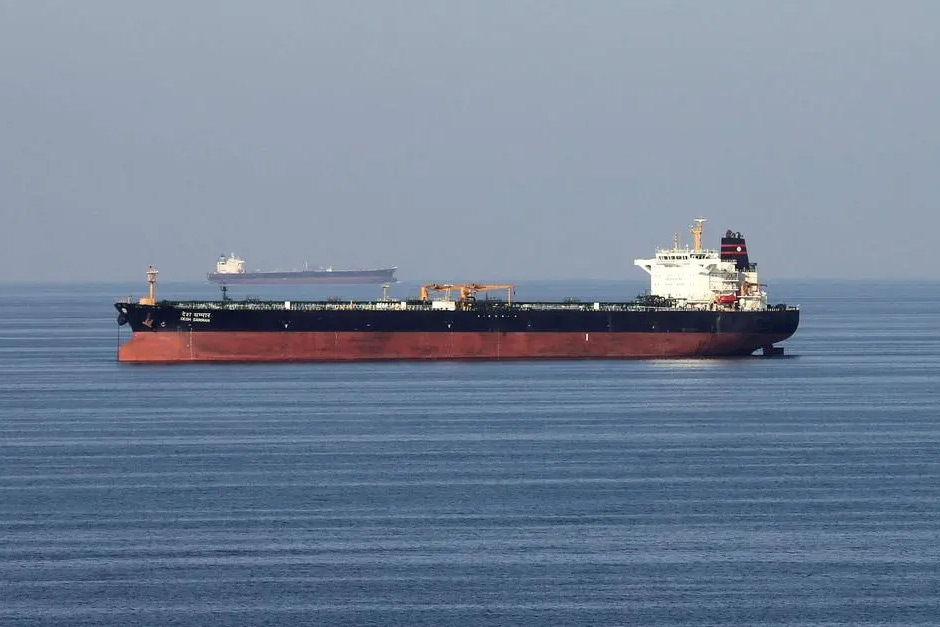
India’s maritime agencies have recently taken decisive action, seizing several tankers reportedly linked to Iran and operating in violation of US sanctions. This move signals a significant escalation in India’s efforts to uphold international regulatory frameworks while simultaneously bolstering its surveillance capabilities across the vast Indian Ocean Region (IOR). The actions underscore New Delhi’s evolving role in global maritime governance, navigating complex geopolitical currents, and safeguarding its strategic interests amidst a volatile international landscape.
Upholding International Norms: The Tanker Seizures
The recent seizures by Indian authorities, including the Coast Guard and intelligence agencies, target vessels suspected of engaging in illicit oil trade that circumvents US sanctions against Iran. While specific details of each seizure often remain under wraps for operational reasons, the underlying principle is clear: India is asserting its commitment to international law and the enforcement of established sanctions regimes. These tankers are believed to have been involved in what is known as “dark fleet” operations, employing deceptive shipping practices such as flag switching, disabling transponders, and ship-to-ship transfers in open waters to mask the origin and destination of oil.
India, historically a significant importer of Iranian crude, has had to recalibrate its energy procurement strategies following the re-imposition of US sanctions on Tehran. While New Delhi has often voiced its independent foreign policy, particularly concerning unilateral sanctions, the current actions indicate a proactive stance against illicit activities within its maritime jurisdiction. The seizures suggest that specific intelligence, potentially shared with international partners, pointed to clear violations, compelling India to act. This move not only reflects India’s adherence to global financial and maritime protocols but also its resolve to prevent its waters from becoming a conduit for illegal trade that could have broader implications for regional security and stability.
India’s Strategic Imperative: Bolstering Maritime Surveillance
The tanker seizures are not isolated incidents but rather part of a broader, more assertive push by India to enhance its maritime domain awareness and security. The Indian Ocean Region, a critical artery for global trade and energy, has witnessed increasing instability. Threats range from traditional piracy off the Horn of Africa to sophisticated drone and missile attacks on commercial shipping, particularly in the Arabian Sea and the Red Sea. For India, with its extensive coastline and crucial dependence on sea lanes of communication (SLOCs) for trade and energy security, robust maritime surveillance is an absolute imperative.
New Delhi has been systematically investing in advanced surveillance technologies and platforms. This includes expanding its network of coastal radar stations, deploying sophisticated naval assets like P-8I Poseidon maritime surveillance aircraft, and leveraging satellite imagery for real-time tracking. Collaboration with regional partners and international bodies through initiatives like the Information Fusion Centre – Indian Ocean Region (IFC-IOR) further augments India’s eyes and ears across the vast ocean. The enhanced surveillance aims to deter illegal fishing, arms and narcotics trafficking, and the movement of non-state actors, thereby creating a safer and more secure environment for legitimate maritime activities. These efforts are crucial for India to protect its blue economy, secure its trade routes, and project itself as a net security provider in the IOR.
“India’s actions demonstrate a growing maturity in its maritime policy,” says Dr. Rohan Singh, a prominent Indian defense analyst. “It’s a delicate balance of enforcing international law, protecting national interests, and projecting power responsibly. These seizures aren’t just about sanctions; they’re a clear message that India is serious about maintaining a rules-based order in its strategic backyard, even when it involves navigating complex diplomatic waters.”
Geopolitical Currents and India’s Balancing Act
The decision to seize Iran-linked, US-sanctioned tankers places India in a complex geopolitical position. India enjoys a burgeoning strategic partnership with the United States, a relationship underpinned by shared democratic values and converging interests in the Indo-Pacific. Simultaneously, India maintains historical ties with Iran, exemplified by its involvement in the Chabahar Port project, which is crucial for connectivity to Afghanistan and Central Asia, bypassing Pakistan.
By taking action against sanctions violators, India signals its commitment to international norms and its growing alignment with global efforts to curb illicit financing and destabilizing activities. This could strengthen its standing as a responsible global stakeholder and deepen its security cooperation with Western powers. However, it also requires careful diplomatic maneuvering to ensure that these actions do not unduly strain its relationship with Iran, which remains a key regional player and a potential energy partner in the long run. The balancing act reflects India’s ambition to forge an independent foreign policy while adhering to a multilateral, rules-based international order. These measures are a testament to India’s evolving approach to global governance, where national interests are increasingly intertwined with regional stability and adherence to international protocols.
In conclusion, India’s recent seizures of Iran-linked tankers and the parallel ramping up of its maritime surveillance capabilities mark a significant moment in its foreign and security policy. It underscores a nation increasingly confident in its ability to enforce international law within its area of interest, protect its strategic economic lifelines, and navigate the intricate web of global geopolitics. As the Indian Ocean continues to be a focal point of international interest, India’s decisive actions reinforce its position as a crucial pillar of stability and a committed proponent of a secure, rules-based maritime order.

