


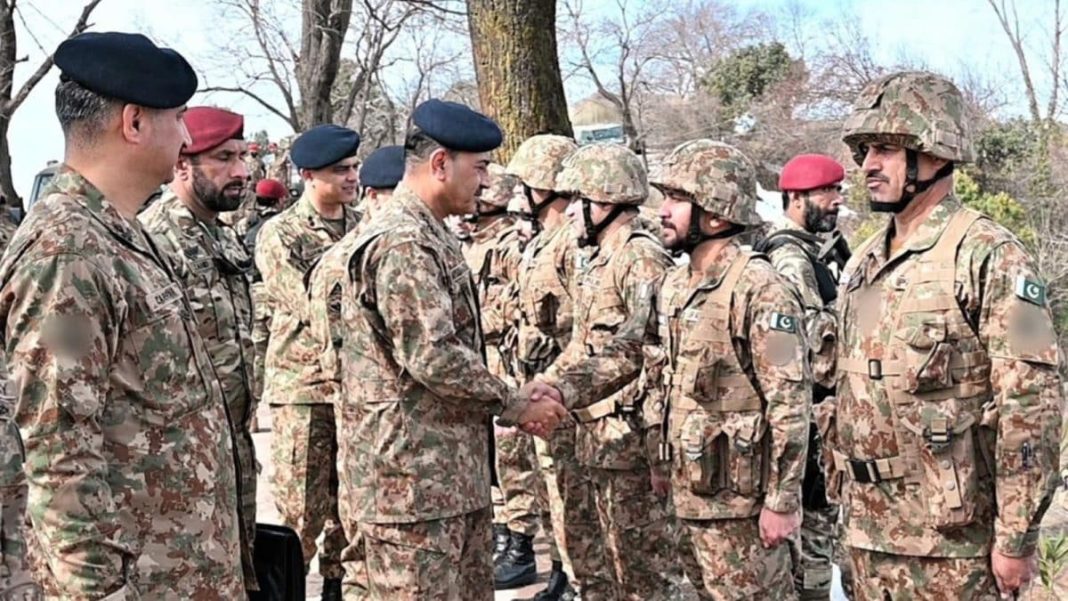
Tensions between India and Pakistan have once again surged following provocative statements from Pakistan’s top leadership regarding Pakistan-occupied Kashmir (PoK). General Asim Munir, Chief of Army Staff (COAS), and Prime Minister Shehbaz Sharif have both recently championed a narrative of “liberation” for PoK, asserting that ‘India has no option’ but to accede to their demands. This rhetoric has ignited a diplomatic firestorm and raised significant concerns about regional stability, drawing a firm response from New Delhi which views PoK as an integral part of its territory.
Islamabad’s Escalating ‘Liberation’ Narrative
The recent pronouncements from Islamabad signal a deliberate escalation in rhetoric concerning the disputed territory. General Asim Munir, during a public address, reportedly declared that the Pakistani armed forces were “fully prepared” and would “go to any extent” for the “liberation” of PoK. This was echoed by Prime Minister Shehbaz Sharif, who, in a similar vein, emphasized Pakistan’s unwavering commitment to the Kashmiri cause, stating that India has no option but to accept Pakistan’s stance on Kashmir.
This assertive posturing from Pakistan’s civil and military leadership is particularly noteworthy. It comes at a time when Pakistan faces significant internal economic challenges and political instability. Analysts suggest that such strong nationalistic rhetoric might be aimed at galvanizing domestic support and distracting from internal woes, while also attempting to reassert Pakistan’s traditional stance on Kashmir on the international stage. The term “liberation,” in this context, implies an aspiration to alter the existing status quo, potentially through means that India would deem an act of aggression.
Furthermore, these statements also follow reports of growing discontent within PoK, particularly in Gilgit-Baltistan, over resource management, taxation, and governance issues under Pakistani administration. By promoting a “liberation” narrative, Islamabad might also be attempting to project strength and deflect attention from these internal grievances within the very territories it claims to be protecting.
India’s Unwavering Stance and Strategic Imperatives
India has consistently maintained that the entirety of Jammu and Kashmir, including the areas illegally occupied by Pakistan (PoK and Gilgit-Baltistan), is an integral and inalienable part of the Indian Union. This position is not merely historical but also backed by the Instrument of Accession signed in 1947 and reinforced by a unanimous parliamentary resolution in 1994, which declared that PoK remains an integral part of India and urged Pakistan to vacate the occupied territories.
New Delhi views Pakistan’s recent statements not just as provocative but as a direct challenge to its sovereignty and territorial integrity. India’s External Affairs Minister has repeatedly reiterated India’s firm resolve on the matter, emphasizing that any discussion on Kashmir would only be about Pakistan vacating PoK. The strategic importance of PoK for India cannot be overstated; it provides crucial geographic connectivity and acts as a buffer zone, bordering Afghanistan and China.
India’s focus has been on developing its side of Jammu and Kashmir, especially since the abrogation of Article 370 in 2019, which Pakistan vehemently opposed. This internal administrative change was aimed at integrating the region more fully with the Indian mainstream, a move that Islamabad interprets as a demographic and political aggression. From India’s perspective, Pakistan’s recent rhetoric is an attempt to internationalize an internal matter and an act of bad faith, especially given its historical support for cross-border terrorism.
Geopolitical Implications and the Risk of Miscalculation
The escalating rhetoric from Pakistan carries significant geopolitical implications, threatening to destabilize an already volatile South Asian region. Both India and Pakistan are nuclear-armed states, making any direct confrontation a grave concern for the international community. While such statements are often part of a larger diplomatic and psychological warfare, their increasing intensity raises the risk of miscalculation.
Regional stability demands restraint and adherence to established diplomatic channels, rather than incendiary public pronouncements. “Such inflammatory statements not only heighten tensions but also risk miscalculation, pushing an already fragile regional dynamic closer to the brink,” remarked Dr. Rohan Singh, a geopolitical analyst specializing in South Asian security. The international community, while largely urging de-escalation, watches with apprehension as both nations stand firm on their respective claims.
Furthermore, China’s significant investments in the China-Pakistan Economic Corridor (CPEC), which traverses through PoK (Gilgit-Baltistan), add another layer of complexity. Any move to alter the status quo in the region could have wider implications for regional trade, connectivity, and the geopolitical ambitions of major powers.
In conclusion, the ‘liberation’ narrative promoted by Pakistan’s top leadership on PoK marks a dangerous escalation in cross-border rhetoric. While Pakistan seeks to reassert its claims and perhaps rally domestic support, India remains resolute in its stance that PoK is an integral part of its territory and demands its vacation. The ongoing verbal sparring underscores the deep-seated historical grievances and territorial disputes that continue to plague India-Pakistan relations, making the region a persistent flashpoint where diplomatic maturity and restraint are paramount to avert any adverse escalation.

