


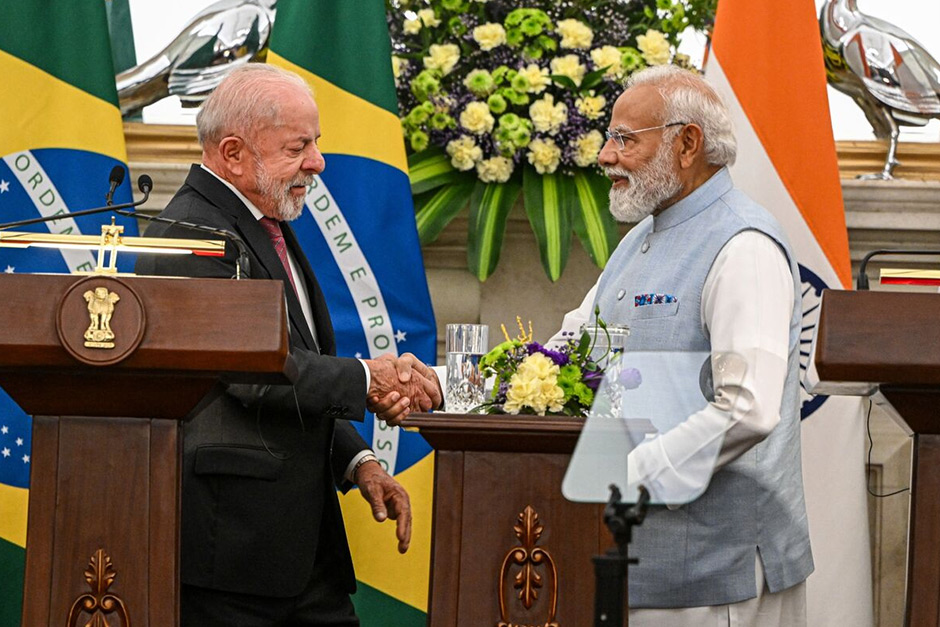
In a significant move poised to reshape the global landscape of critical minerals, India and Brazil have officially inked a pact focused on rare earths. This strategic alliance aims to foster cooperation in the exploration, processing, and development of rare earth elements, vital components for a range of advanced technologies. The agreement comes at a pivotal time, with both nations adopting a “wait and watch” approach regarding the potential fallout from a pending US Supreme Court decision on tariffs, an outcome that could send ripples through international trade and supply chains.
A Strategic Alliance for Critical Minerals
The newly signed memorandum of understanding (MoU) between India and Brazil marks a crucial step towards diversifying the global supply chain for rare earth elements. These 17 elements, including neodymium, praseodymium, dysprosium, and terbium, are indispensable for modern industries. From electric vehicle (EV) motors and wind turbines to consumer electronics, medical devices, and advanced defense systems, rare earths are the foundational building blocks of the 21st-century economy. Currently, China dominates the global rare earths market, controlling a significant portion of both mining and processing, a position that has long raised concerns about supply vulnerability and geopolitical leverage.
For India, the pact aligns perfectly with its ambitious “Make in India” initiative and its burgeoning clean energy goals. Securing a reliable and diversified source of rare earths is paramount for indigenous manufacturing of high-tech products and for transitioning to a green economy. Brazil, on the other hand, boasts substantial, largely untapped rare earth reserves, positioning it as a potentially significant global supplier. This collaboration promises joint exploration efforts, technology transfer for advanced processing, and the establishment of robust, resilient supply chains that bypass existing monopolistic structures. It represents a forward-thinking strategy to ensure long-term availability of these crucial materials, fostering self-reliance and technological sovereignty for both nations.
Navigating the Uncertainties of US Tariff Fallout
The “wait and watch” stance adopted by India and Brazil underscores the palpable uncertainty currently gripping global trade. A looming decision from the US Supreme Court concerning the legality and application of tariffs, particularly those imposed on goods from key trading partners, casts a long shadow. Should the court uphold or expand existing tariffs, the ramifications could be widespread, potentially disrupting established trade routes, increasing costs, and accelerating efforts by nations to de-risk their supply chains further. Conversely, a decision to strike down or significantly alter tariffs could bring a degree of relief, though the underlying strategic imperative to diversify remains.
This bilateral rare earths pact, therefore, serves a dual purpose. It’s a proactive measure to build long-term resilience irrespective of trade policy shifts, while simultaneously positioning both countries to adapt swiftly to the immediate consequences of the US court’s ruling. As one senior Indian trade official, who preferred to remain anonymous given the sensitivity of ongoing legal processes, commented, “Our agreement with Brazil is a strategic imperative, not merely a reaction to short-term market fluctuations. However, we are undeniably observing the US Supreme Court’s proceedings closely, as its outcome could significantly influence global commodity flows and the pace at which industries seek alternative supply routes.” This sentiment highlights the delicate balance between long-term strategic planning and immediate tactical adjustments in an unpredictable global economic climate.
Broader Implications for Global Supply Chain Resilience
Beyond the immediate concerns surrounding US tariffs, the India-Brazil rare earths agreement is a powerful testament to the broader global trend of nations seeking to strengthen their supply chain resilience. The COVID-19 pandemic, coupled with geopolitical tensions, exposed the fragility of highly concentrated supply chains. This has spurred a worldwide movement towards friend-shoring, near-shoring, and diversifying critical resource acquisition. The collaboration between two major developing economies like India and Brazil, both members of BRICS, sends a clear signal about the growing importance of South-South cooperation in securing vital resources.
For India, the pact is also about moving up the value chain. While India possesses some rare earth reserves, its processing capabilities have historically been limited. Partnering with a resource-rich nation like Brazil, potentially leveraging Brazilian raw materials with Indian processing expertise or jointly developing new processing facilities, could transform India into a more significant player in the global rare earths ecosystem. This isn’t just about securing raw materials; it’s about developing an end-to-end ecosystem that reduces external dependencies and fosters technological self-sufficiency, a critical aspect of national security and economic stability in the 21st century.
The rare earths pact between India and Brazil is more than just a commercial agreement; it’s a strategic declaration. It underscores a shared vision for robust, diversified supply chains in critical minerals, buffering against geopolitical volatilities and market concentrations. While the immediate focus remains on observing the fallout from the US Supreme Court’s tariff decision, the underlying trajectory is clear: both nations are committed to building long-term resilience and securing their technological future, irrespective of how global trade winds may shift.

