


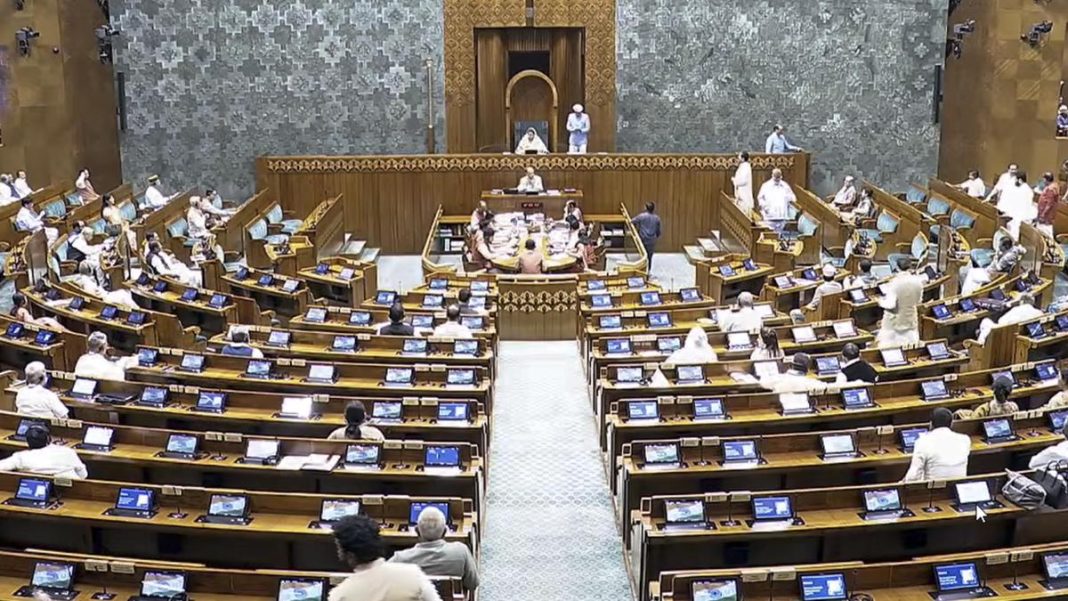
In a significant development echoing through India’s political corridors, Members of Parliament from the INDIA bloc have formally submitted a notice seeking the removal of Chief Election Commissioner (CEC) Gyanesh Kumar. The move, initiated on the first day of the 18th Lok Sabha’s inaugural session, underscores a deepening political divide over the independence and appointment process of India’s apex electoral body. At its core, the notice challenges the very legality of Kumar’s appointment, citing a controversial new law that altered the selection mechanism for election commissioners.
The Genesis of the Appointment Controversy
The roots of this parliamentary action lie in the enactment of The Chief Election Commissioner and Other Election Commissioners (Appointment, Conditions of Service and Term of Office) Act, 2023. This legislation replaced an earlier framework established by judicial pronouncements, particularly the Supreme Court’s landmark judgment in A.C. Barunma vs. Union of India (2023). That ruling had mandated a selection committee comprising the Prime Minister, the Leader of the Opposition (or the largest opposition party leader in Lok Sabha), and the Chief Justice of India (CJI), aiming to ensure impartiality in the appointment process.
However, the new 2023 Act removed the Chief Justice of India from this crucial committee, replacing the judicial member with a Union Cabinet Minister nominated by the Prime Minister. This effectively created a selection panel with a 2:1 majority for the government, consisting of the Prime Minister, a Cabinet Minister, and the Leader of the Opposition. It was under this new law that Gyanesh Kumar and Sukhbir Singh Sandhu were appointed as Election Commissioners in March 2024. The INDIA bloc and various civil society groups have consistently argued that this amendment compromises the Election Commission’s independence by giving the executive undue influence over appointments, thereby diluting the constitutional safeguards intended to protect the neutrality of the electoral watchdog.
Allegations and the Path to Removal
The notice submitted by INDIA bloc MPs, reportedly signed by over 23 parliamentarians from parties like the Trinamool Congress, Congress, CPI(M), DMK, and Samajwadi Party, lists several grounds for seeking CEC Gyanesh Kumar’s removal. The primary contention is that his appointment itself is “unconstitutional, arbitrary, and a violation of the principles of free and fair elections and judicial independence.” They argue that the 2023 Act, under which he was appointed, suffers from constitutional infirmities because it sidelines the Supreme Court’s directive for the CJI’s involvement in the selection committee.
The process for removing a Chief Election Commissioner is stringent and similar to that of a Supreme Court judge, as stipulated by Article 324(5) of the Constitution. It requires a motion passed by both Houses of Parliament with a special majority – a majority of the total membership of that House and a majority of not less than two-thirds of the members of that House present and voting. This formidable constitutional hurdle means that while the notice signifies strong opposition and intent, its success hinges on garnering significant cross-party support and a sustained parliamentary effort.
Explaining the rationale behind the move, a senior INDIA bloc MP stated, “This move is not merely political; it is about upholding the sanctity of our electoral process and ensuring the Election Commission remains an independent bulwark of democracy. We believe the appointment, made under a flawed law, undermines the fundamental constitutional structure.” The notice also reportedly alleges that the CEC has failed to act impartially in various instances during the recent Lok Sabha elections, further fuelling the opposition’s demand for his removal.
Wider Implications for Electoral Independence
This parliamentary initiative comes amidst ongoing legal challenges to the 2023 Act in the Supreme Court. The top court has already questioned the government about the urgency in making appointments under the new law, especially when the matter was sub judice. The present parliamentary notice adds another layer to this complex constitutional debate, pushing the issue from the legal realm into the legislative arena.
The outcome of this notice, whether it proceeds to a full parliamentary debate and vote, will have profound implications for the delicate balance of power between the executive, legislature, and judiciary, especially concerning the independence of constitutional bodies. For India’s vibrant democracy, the perceived neutrality of the Election Commission is paramount. This current confrontation highlights the enduring tension between governmental prerogative and the imperative for autonomous institutional functioning, ensuring that the bedrock of democratic principles remains unshaken.

