


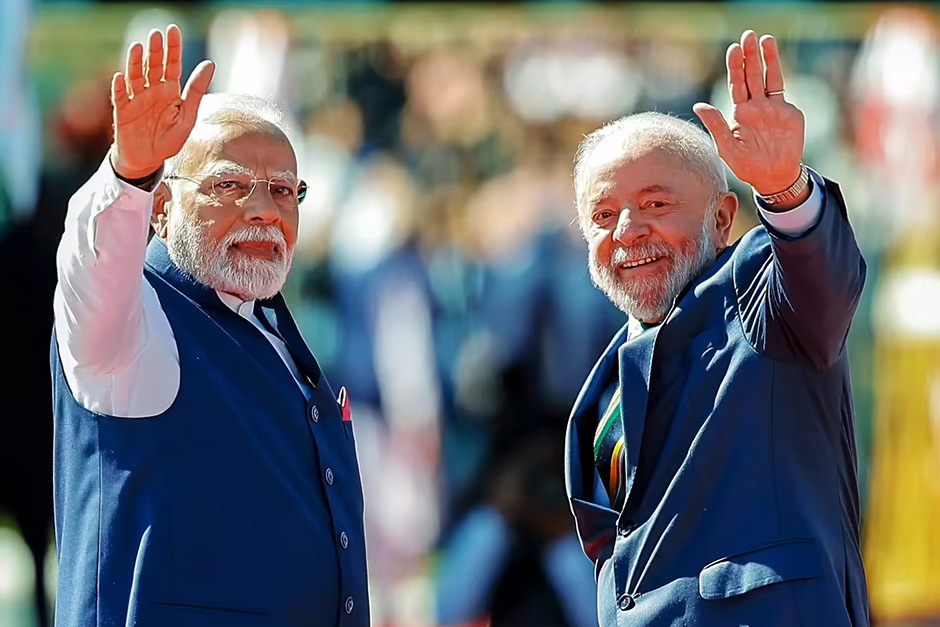
In an increasingly multipolar and often unpredictable global landscape, nations are recalibrating their foreign policies and economic strategies to navigate emerging challenges and opportunities. A notable development in this evolving scenario is the deepening strategic partnership between India and Brazil, two of the world’s largest democracies and key voices from the Global South. Their recent moves towards a comprehensive alliance focused on critical minerals and Artificial Intelligence (AI) signal a proactive approach to building resilience and fostering innovation amidst a fragile world order.
This collaboration transcends traditional trade agreements, aiming instead for technological sovereignty, diversified supply chains, and enhanced strategic autonomy. It represents a significant step for both nations in securing essential resources for their future growth and harnessing cutting-edge technologies that will define the 21st century.
The Strategic Imperative: Building Resilience in a Volatile World
The global order currently faces unprecedented fluidity, marked by geopolitical tensions, trade protectionism, and disruptions to vital supply chains. The pandemic underscored the vulnerabilities of over-reliance on single sources for critical goods, while ongoing conflicts have highlighted the imperative of secure access to strategic resources. For India, a rapidly industrialising nation with ambitious targets for green energy transition and advanced manufacturing, and Brazil, a resource-rich giant with a growing technological appetite, this alliance offers a compelling path to de-risk their economic futures.
Both countries recognise the need to move beyond being mere consumers of technology and raw materials, aspiring instead to become significant players in their development and production. This bilateral partnership, while complementing their roles in multilateral forums like BRICS and G20, focuses on specific, high-impact areas that are foundational to future economic power and national security. It reflects a shared vision of a more equitable and resilient global economic architecture, driven by south-south cooperation.
Critical Minerals: Fueling the Future Economy
Critical minerals are the bedrock of modern technology and the energy transition. Elements like lithium, cobalt, nickel, rare earths, and niobium are indispensable for electric vehicles, renewable energy infrastructure, advanced electronics, and defence technologies. The current supply chain for many of these minerals is highly concentrated, presenting significant geopolitical risks.
Brazil is exceptionally rich in several critical minerals, including niobium (a key component in high-strength steel and superalloys), rare earths, graphite, and considerable lithium deposits. India, while having some domestic reserves, is a net importer of many critical minerals and faces rapidly escalating demand as it pushes for self-reliance in manufacturing and adopts cleaner energy technologies. The alliance envisions joint exploration projects, shared processing and refining capabilities, and long-term supply agreements. This collaboration could significantly reduce dependence on existing concentrated supply chains, ensuring a stable and ethical source of these vital raw materials for both nations’ burgeoning industries.
“The future of economic independence for major developing nations like India and Brazil hinges on securing reliable access to critical minerals and mastering advanced technologies,” says Dr. Rohan Sharma, a geo-economic analyst. “This alliance is not just about trade; it’s about strategic foresight and collective resilience against potential supply shocks and technological gatekeeping.”
AI: Bridging Innovation and Ethical Development
Beyond raw materials, the alliance extends into the cutting-edge realm of Artificial Intelligence. AI is set to redefine every sector, from healthcare and agriculture to logistics and defence. India, with its vast talent pool in software development and a burgeoning AI ecosystem, stands to benefit from Brazil’s rich datasets, particularly in areas like biodiversity and agricultural intelligence. Conversely, Brazil can leverage India’s expertise in developing scalable AI solutions and ethical frameworks.
Collaboration in AI could encompass joint research and development initiatives, shared standards for ethical AI governance, and fostering open-source innovation. This partnership aims to prevent a “digital divide” by ensuring that the benefits of AI are shared broadly, rather than being concentrated among a few dominant players. By pooling resources and expertise, India and Brazil can accelerate their domestic AI capabilities, develop solutions tailored to their unique societal challenges, and contribute to a more diverse and inclusive global AI landscape. This also includes potential cooperation on AI applications for defence and cybersecurity, bolstering their respective national security postures.
Conclusion: A Blueprint for Global South Cooperation
The proposed India-Brazil critical minerals and AI alliance is more than a transactional agreement; it is a strategic alignment aimed at enhancing the self-reliance and geopolitical influence of two major emerging economies. In a world grappling with uncertainty and the rapid evolution of technology, such partnerships are crucial for building diversified capabilities, securing essential resources, and fostering innovation. This collaboration has the potential to serve as a powerful blueprint for other nations in the Global South, demonstrating how strategic bilateral engagements can contribute to a more balanced, resilient, and technologically advanced global order. As the world navigates its multipolar future, the India-Brazil alliance represents a significant step towards greater economic sovereignty and technological self-determination.

