


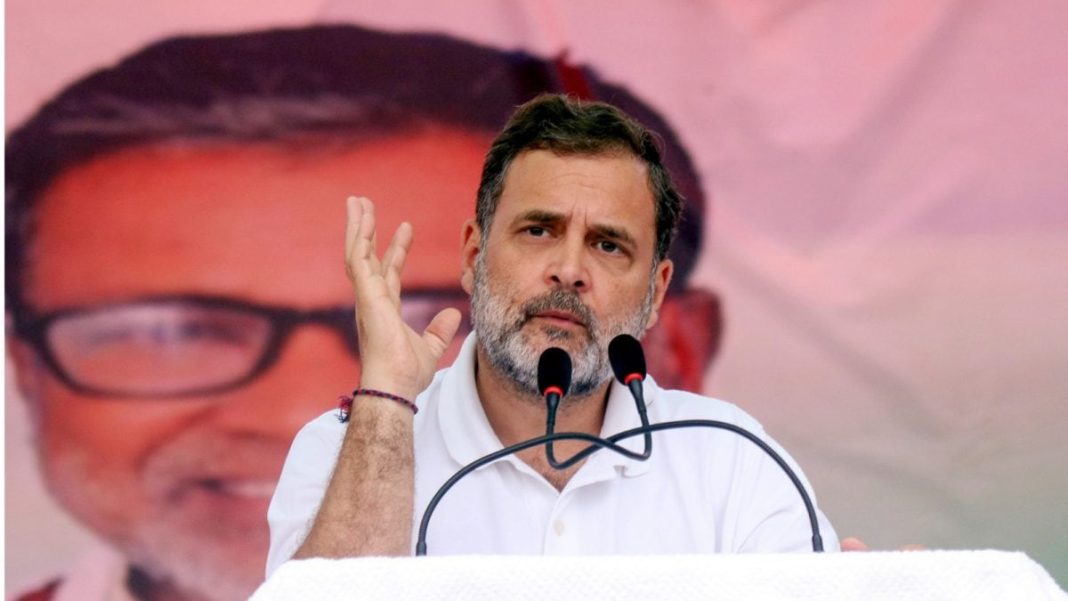
In a significant endorsement of its economic trajectory, the International Monetary Fund (IMF) recently lauded India as the ‘growth engine for the world.’ This powerful commendation, however, swiftly transcended purely economic circles, igniting a sharp political response from India’s ruling Bharatiya Janata Party (BJP), which declared it ‘terrible news for Rahul Gandhi,’ leader of the opposition Congress party. This intersection of global economic recognition and domestic political jousting highlights the current state of India’s economic narrative and its deeply intertwined political discourse.
IMF’s Assessment: India’s Economic Momentum
The IMF’s pronouncement comes amidst a period where global economic growth faces considerable headwinds, from geopolitical tensions to persistent inflation. Against this backdrop, India has consistently demonstrated robust growth, frequently outpacing many of its peers. The IMF’s latest projections often place India as the fastest-growing major economy, with forecasts hovering around 6-7% for the current fiscal year.
Several factors underpin this optimistic outlook. Strong domestic demand, buoyed by a large and young consumer base, forms the bedrock of India’s economic resilience. Significant public capital expenditure on infrastructure, including roads, railways, and digital networks, has also played a crucial role in stimulating growth and creating employment. Furthermore, government initiatives like the Production Linked Incentive (PLI) schemes are aimed at boosting domestic manufacturing across various sectors, reducing import dependence, and integrating India more deeply into global supply chains. The rapid adoption of digital public infrastructure, from UPI for payments to Aadhaar for identity, has further streamlined economic activities and fostered financial inclusion.
Dr. Priya Sharma, an independent economic policy analyst, commented, “The IMF’s recognition is a testament to India’s inherent economic resilience and the momentum built over recent years. However, translating this growth into inclusive prosperity for all citizens remains the ultimate challenge and opportunity.”
Political Repercussions: BJP’s Strategic Messaging
The BJP’s swift and pointed reaction to the IMF’s statement underscores the intense politicisation of economic narratives in India. By framing the IMF’s praise as ‘terrible news for Rahul Gandhi,’ the ruling party aimed to directly counter the opposition’s long-standing critique of the government’s economic policies.
Rahul Gandhi and the Congress party have consistently raised concerns about issues such as unemployment, particularly youth unemployment, rising inflation, and perceived income inequality, often alleging a ‘K-shaped recovery’ where the rich get richer while the poor struggle. The BJP’s riposte leverages the IMF’s positive assessment to dismiss these criticisms, portraying them as unfounded negativity that ignores India’s global standing. It also serves to bolster the government’s claim of effective economic management and policy implementation.
This strategic messaging is typical in India’s political landscape, where global endorsements are frequently weaponised in domestic debates. For the BJP, the IMF’s stamp of approval validates its economic agenda and provides a potent talking point to energise its base and discredit the opposition’s economic narrative ahead of crucial elections.
The Road Ahead: Challenges and Opportunities
While the IMF’s commendation is a significant morale booster, India’s economic journey is not without its challenges. Sustaining high growth rates demands continuous attention to critical areas. Job creation remains paramount, especially for the millions of young people entering the workforce annually. Ensuring that economic growth is inclusive and benefits all segments of society, addressing income disparities, and managing inflation are ongoing priorities.
Opportunities for India, however, are also immense. Its youthful demographic dividend, a burgeoning middle class, and rapid technological adoption present significant potential. The country’s increasing geopolitical influence and its emphasis on becoming a global manufacturing and innovation hub could further accelerate its economic ascent. Navigating global economic uncertainties, continuing structural reforms, and investing in human capital and green technologies will be key to converting the ‘growth engine’ label into long-term, sustainable, and equitable development for all Indians.
Conclusion
The IMF’s characterisation of India as the ‘growth engine for the world’ is a powerful recognition of its economic resilience and potential. While globally significant, this economic praise has, perhaps inevitably, become entangled in India’s vibrant and often fractious political discourse. The BJP’s aggressive use of the statement against the opposition highlights the high stakes involved in controlling the economic narrative. As India navigates its path towards becoming a developed nation, balancing robust growth with inclusive development and managing its complex political landscape will remain central to its journey.

