


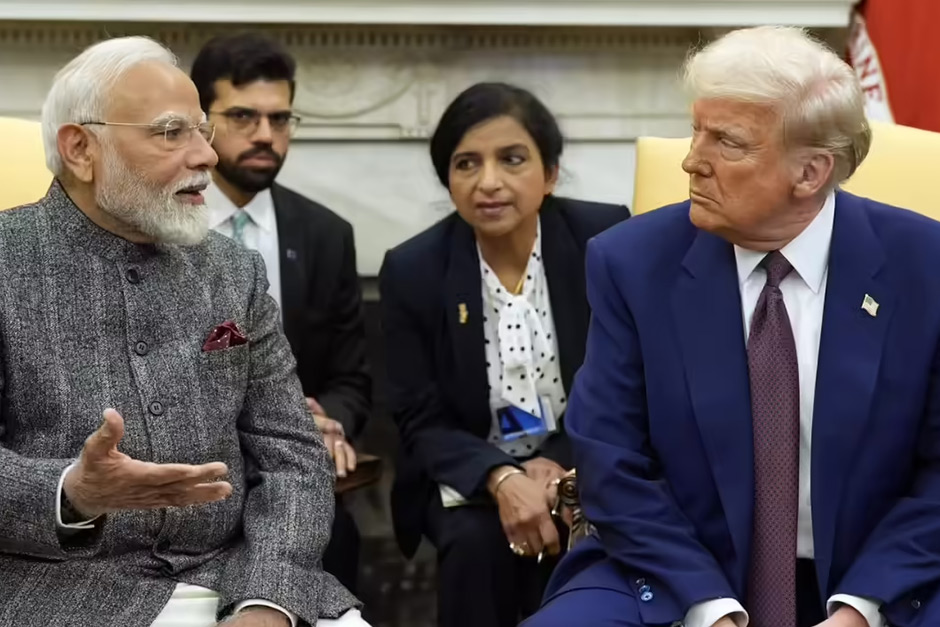
Former U.S. President Donald Trump has once again stirred the geopolitical pot, issuing a distinctive warning to India regarding its continued reliance on Russian oil imports while simultaneously lavishing praise on Prime Minister Narendra Modi. Speaking at a recent campaign event, Trump underscored a transactional approach to international relations, suggesting that a lack of cooperation on this issue could lead to punitive tariffs. His remarks highlight a persistent point of contention within the otherwise strengthening strategic partnership between Washington and New Delhi, offering a glimpse into potential foreign policy shifts if he were to return to the White House.
Trump’s Tariff Threat and the Russian Oil Conundrum
The crux of Trump’s warning revolved around India’s significant purchases of Russian crude oil following the Ukraine conflict. “If they don’t help us on the Russian oil issue, then we have to go with tariffs,” Trump stated, emphasizing his readiness to employ economic leverage. This isn’t the first time the issue of Russian oil has been a flashpoint between the U.S. and India. Since the imposition of Western sanctions on Russia, India has emerged as a major buyer of discounted Russian crude, prioritizing its energy security and national economic interests.
India’s stance has been consistently articulated: it buys oil from wherever it can get the best deal, a position vital for a developing nation heavily dependent on energy imports to fuel its economic growth. New Delhi has resisted Western pressure to reduce its trade ties with Moscow, arguing that its purchases are a minuscule fraction of global oil consumption and do not undermine sanctions designed to impact Russia’s war machine. The U.S. has largely adopted a more pragmatic approach under the current administration, acknowledging India’s unique position but keeping the issue on the diplomatic table. Trump’s direct threat, however, indicates a potentially more aggressive posture, where strategic autonomy could face direct economic consequences.
The Balancing Act: Praise for Modi Amidst Pressure
Intriguingly, Trump’s strong warning was delivered alongside effusive praise for Prime Minister Modi. He recounted his past interactions with the Indian leader, referring to him as “my friend” and acknowledging Modi’s immense popularity and perceived effectiveness. “He’s a great guy, Modi,” Trump remarked, adding, “He’s doing a good job. He’s got India in a good position.” This dual narrative – a pointed warning mixed with personal commendation – is characteristic of Trump’s diplomatic style, which often seeks to isolate specific policy disagreements while maintaining a facade of personal camaraderie.
This approach highlights the complex nature of US-India relations. Despite differences on issues like Russian oil, the broader strategic convergence between the two nations, particularly in the Indo-Pacific region as a counterbalance to China, remains robust. India is a critical partner in Washington’s strategic calculus, and its growing economic and military might makes it an indispensable ally. The challenge for any U.S. administration, therefore, is to balance its global policy objectives with the imperative of nurturing this vital partnership, without alienating India’s deeply held commitment to strategic autonomy.
Implications for India and US-India Relations
Should Donald Trump return to power, his tariff warning signals a potential shift towards a more transactional and less accommodating U.S. foreign policy toward India. For New Delhi, this could mean navigating increased pressure on issues where its national interests diverge from Washington’s, particularly concerning traditional partners like Russia. India has consistently championed a multi-aligned foreign policy, maintaining strategic relationships with various global powers without becoming exclusive to any single bloc. This principle of non-alignment has been a cornerstone of its international engagement.
The prospect of tariffs, even if currently hypothetical, would force India to re-evaluate its import strategies and potentially seek further diversification of its energy sources. While India values its partnership with the U.S., it has also demonstrated its resolve to protect its sovereign decision-making and economic imperatives. The historical context of India’s robust defence ties with Russia further complicates any immediate or drastic shift away from Moscow. Ultimately, Trump’s comments underscore the enduring complexities and points of friction within the overarching framework of a rapidly evolving US-India relationship, compelling both nations to carefully calibrate their diplomatic and economic strategies in a dynamic global landscape.
The remarks from a potential future U.S. president serve as a reminder that while the strategic partnership between the world’s two largest democracies continues to deepen, areas of divergence will persist, requiring skillful diplomacy and a clear articulation of national interests from both sides. India, with its growing global stature, is poised to navigate these challenges with an unwavering focus on its long-term strategic and economic goals.

