


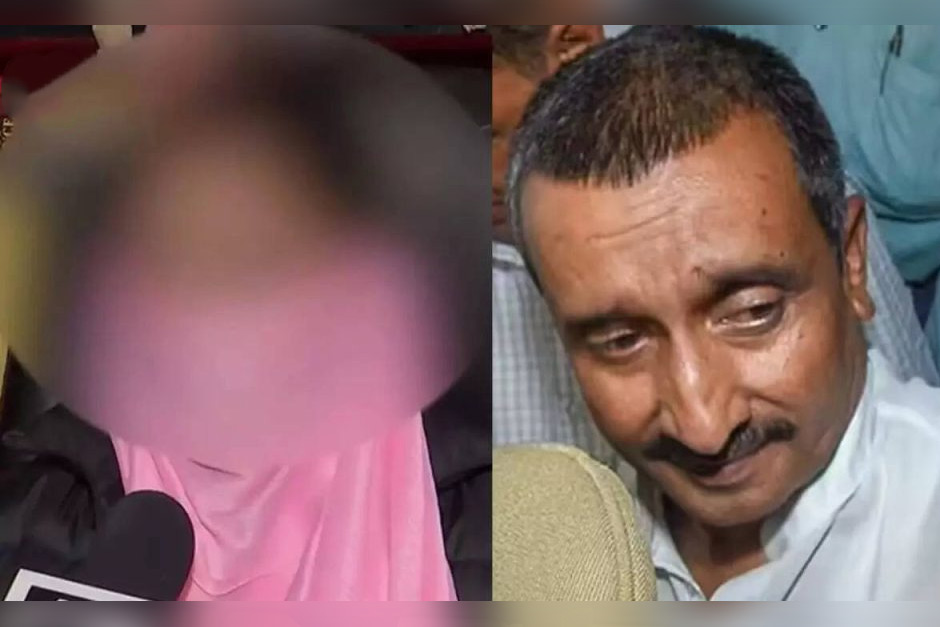
The journey for justice in India is often described as a marathon, not a sprint. For the Unnao rape survivor, it has been a harrowing odyssey marked by courage, tragedy, and an unyielding fight against powerful forces. Her recent welcome of the Supreme Court’s verdict against former BJP MLA Kuldeep Sengar marks a pivotal moment, not just for her, but for countless survivors across the nation. Her poignant statement, “‘If I had died like Nirbhaya, they would have believed me’,” underscores the profound emotional and psychological toll of a battle fought in the public eye, often against skepticism and systemic resistance.
The Long and Arduous Road to Justice
The case of the Unnao survivor, which first came to national attention in 2017, is a stark reminder of the challenges faced by victims of sexual violence, especially when the accused holds political power. The then-minor survivor accused Kuldeep Sengar, a powerful four-time MLA from Unnao, Uttar Pradesh, of rape. What followed was a series of events that shocked the nation and exposed deep flaws in the justice system.
Initially, the survivor and her family struggled to get an First Information Report (FIR) registered. Their plea for justice was met with resistance, leading them to stage a protest outside Chief Minister Yogi Adityanath’s residence in Lucknow in April 2018. This desperate act finally brought the case into the spotlight. Tragically, just days after the survivor publicly accused Sengar, her father was brutally assaulted, allegedly by Sengar’s brother Atul Singh Sengar, and subsequently died in police custody. His death, which the CBI later confirmed was due to severe injuries sustained from the assault, fueled public outrage and intensified demands for justice.
The legal battle was further complicated by a suspicious car crash in July 2019, where the survivor, her two aunts, and her lawyer were severely injured. Both her aunts succumbed to their injuries, and the lawyer remained critical. The Supreme Court intervened at this critical juncture, ordering the transfer of all cases related to the Unnao incident from Uttar Pradesh to a Delhi court, along with directing the Uttar Pradesh government to provide interim compensation to the survivor. The move was crucial in ensuring a fairer trial environment, away from the influence of the accused.
In December 2019, a Delhi trial court convicted Kuldeep Sengar for the rape of the minor girl, sentencing him to life imprisonment. This conviction was a significant victory, but the legal journey was far from over. In December 2023, the Delhi High Court upheld Sengar’s conviction, dismissing his appeal and affirming the trial court’s judgment. This crucial affirmation by the High Court, and subsequently the Supreme Court’s decision to not interfere with this upholding, brought a sense of finality to a prolonged legal battle, solidifying the survivor’s victory against a formidable adversary.
A Survivor’s Unflinching Battle and the Haunting Parallel
The survivor’s recent statement, “‘If I had died like Nirbhaya, they would have believed me’,” encapsulates the immense psychological burden she carried throughout her fight. The reference to the 2012 Delhi gang rape victim, Nirbhaya, whose brutal death led to nationwide protests and significant legal reforms, highlights a painful truth: society often rallies around victims whose suffering is complete, whose stories are sealed by death. For survivors who live, the journey is often fraught with disbelief, victim-blaming, and a constant need to prove their trauma.
Her words are a powerful commentary on the Indian societal and legal landscape, where the credibility of a living survivor is frequently questioned. She faced not only the trauma of the assault but also the ordeal of having her character scrutinized, her family destroyed, and her very existence threatened. Despite these unimaginable pressures, she persevered, becoming a symbol of resilience. Her determination to testify, to repeatedly recount her trauma, and to stand firm against a powerful politician underscores her extraordinary courage. The Supreme Court’s ultimate affirmation of the verdict serves as a validation of her truth, a long-awaited vindication that she had to fight for, often alone, against a tide of doubt.
Beyond the Verdict: A Call for Systemic Change
While the verdict against Kuldeep Sengar is a significant milestone, it also serves as a poignant reminder of the systemic reforms still needed. The Unnao case brought to light the vulnerability of victims to intimidation, the slow pace of justice, and the influence of powerful individuals over local law enforcement and political structures. The Supreme Court’s intervention and the transfer of the case were crucial in ensuring a fair trial, but such interventions should not be a prerequisite for justice.
The survivor’s journey highlights the urgent need for robust victim protection mechanisms, faster judicial processes, and a societal shift away from victim-blaming. It calls for a system where a survivor does not have to die to be believed, where their testimony is respected, and where justice is accessible without extraordinary struggles. The Unnao case, with its twists and turns, its tragedies and triumphs, will undoubtedly remain a significant reference point in India’s ongoing struggle for gender justice, serving as both a cautionary tale and a beacon of hope for future survivors.
The Unnao survivor’s courageous fight and her eventual victory against overwhelming odds represent a powerful affirmation of justice. Her voice, once drowned out by power and disbelief, now resonates with the strength of truth. It is a testament to the fact that even in the face of insurmountable challenges, justice, though delayed, can ultimately prevail.

