


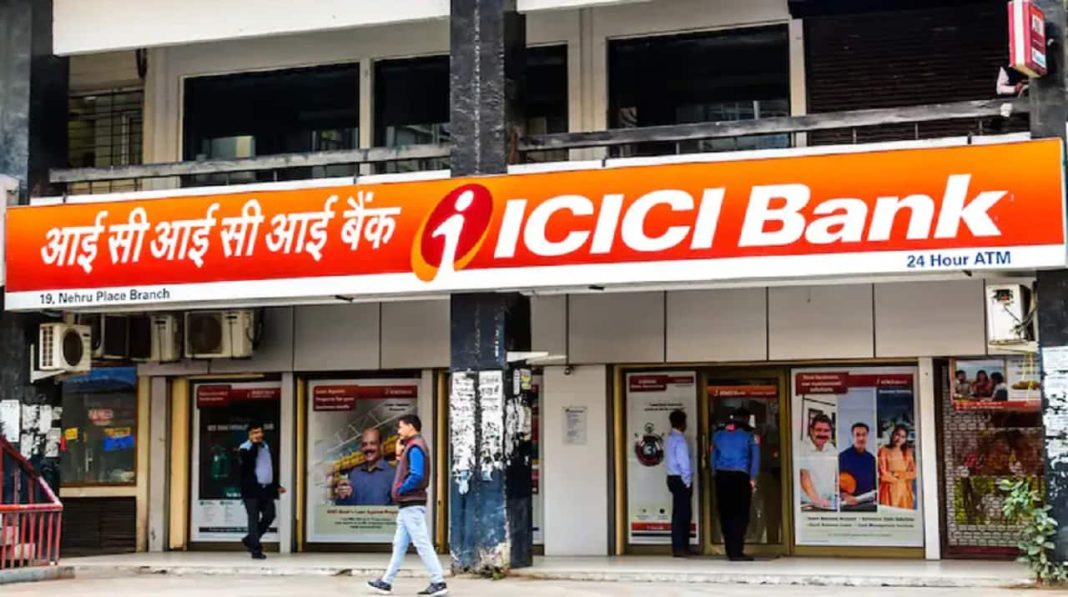
India’s leading private sector lender, ICICI Bank, recently disclosed its financial performance for the third quarter, revealing a nuanced picture for investors and market watchers. While the bank reported a robust operational performance, its net profit experienced a slight deceleration. For the quarter ending December 31, 2023, ICICI Bank’s consolidated net profit witnessed a 4 percent on-year decline, settling at Rs 11,318 crore. This marginal fall, however, comes with a significant caveat: it was primarily attributed to an increase in provisions, underscoring the bank’s prudent approach to risk management, even as its underlying asset quality remained commendably stable.
Profit Decline Driven by Proactive Provisioning
The reported net profit figure of Rs 11,318 crore, while a slight dip from the previous year’s corresponding quarter, reflects a strategic decision by the bank to bolster its financial resilience. A deeper dive into the financials indicates that the core operational metrics remained strong. The bank’s Net Interest Income (NII), a key measure of profitability for banks, continued its growth trajectory, driven by healthy credit demand and stable net interest margins (NIMs). However, the increase in provisions for contingencies acted as a significant counterweight, directly impacting the bottom line.
Provisions are essentially funds set aside by banks to cover potential future losses from bad loans or other financial obligations. While higher provisions reduce immediate profits, they are crucial for strengthening the bank’s balance sheet and safeguarding against unforeseen economic challenges. In the current quarter, ICICI Bank’s conservative approach to provisioning suggests a focus on long-term stability and resilience, aligning with regulatory expectations and global best practices in financial risk management. This proactive measure, despite temporarily dampening profit growth, signals a cautious and responsible stance in an evolving economic landscape, where global headwinds and domestic inflationary pressures continue to warrant vigilance.
Asset Quality Remains a Pillar of Strength
Perhaps the most reassuring aspect of ICICI Bank’s Q3 results is the consistent stability in its asset quality. Despite the provisioning increase, the bank demonstrated an impressive ability to maintain healthy asset quality ratios, which are critical indicators of a lender’s financial health. The bank’s Gross Non-Performing Assets (GNPA) ratio continued its downward trend, reflecting sustained efforts in recoveries and upgrades. Similarly, the Net Non-Performing Assets (NNPA) ratio also remained well-contained, underscoring the effectiveness of the bank’s credit monitoring and risk management frameworks.
This steady improvement in asset quality metrics is a testament to ICICI Bank’s robust underwriting standards and its ability to navigate various economic cycles. A stable asset quality allows the bank to deploy capital more efficiently, foster sustainable growth in its loan book, and maintain investor confidence. The provision coverage ratio (PCR) also remained healthy, further illustrating the bank’s preparedness to absorb potential shocks. This balance sheet strength positions ICICI Bank advantageously to capitalize on growth opportunities in the Indian market, where credit demand, particularly from retail and SME segments, continues to exhibit resilience.
Commenting on the bank’s performance and strategy, a senior spokesperson at ICICI Bank reportedly stated, “Our Q3 results highlight our unwavering commitment to a prudent provisioning policy, which ensures the long-term health and stability of our balance sheet. While this has an immediate impact on reported net profit, it reinforces our robust asset quality. We remain focused on sustainable growth, leveraging our strong deposit franchise and diversified loan portfolio to serve the evolving needs of our customers across India.”
Looking Ahead: Navigating Growth with Caution
ICICI Bank’s Q3 performance, therefore, presents a mixed but ultimately strong picture. While the 4 percent dip in net profit might seem concerning at first glance, understanding its root cause in elevated provisions offers a clearer perspective. It signals a management team prioritising prudence and long-term financial soundness over short-term profit maximisation. The underlying operational strength, evidenced by healthy NII growth and stable asset quality, underscores the bank’s fundamental resilience.
As the Indian economy continues its growth trajectory, ICICI Bank is well-positioned to leverage its robust balance sheet and widespread presence. Its focus on digital transformation, customer-centric offerings, and strong risk management practices are expected to drive sustained performance in the coming quarters. Investors will likely watch for continued asset quality improvements and the trajectory of core operating metrics as the bank balances growth aspirations with its cautious approach to risk.
Ultimately, ICICI Bank’s Q3 results reinforce its standing as a major player in the Indian banking landscape, demonstrating a balanced approach to growth, profitability, and risk management.

