


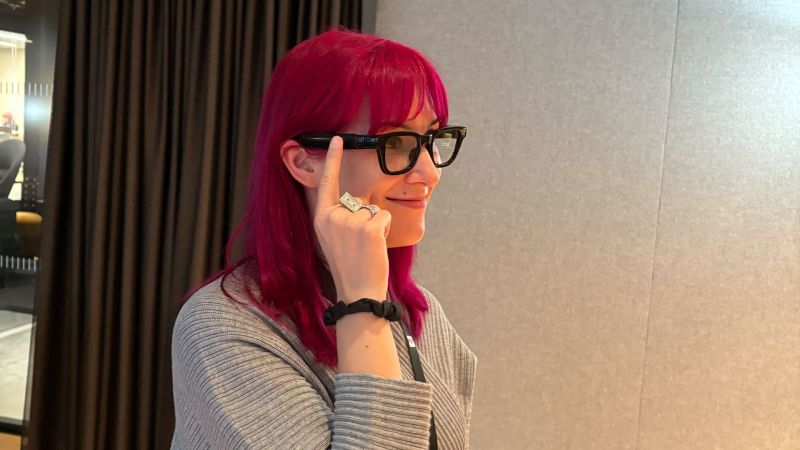
We live tethered to our phones. They’re our navigators, our information hubs, our social lifelines, often demanding our attention with a relentless digital tug. So when an opportunity arose to test Google’s latest prototype smart glasses, I walked in with a healthy dose of skepticism. Could these really offer anything more than another screen to stare at? What I discovered was a subtle, yet profound, shift in how I interacted with the world around me, and an experience that genuinely made my trusty smartphone feel… less essential.
The World, Augmented: Information Without Interruption
Slipping on the sleek, unassuming frames, my first thought wasn’t about flashy AR overlays or dystopian visions, but how remarkably normal they felt. There was no bulky headset, just stylish eyewear. The magic began when the subtle visual cues appeared – a gentle arrow for navigation, a quiet notification about a nearby coffee shop with a good rating, or the weather forecast appearing almost imperceptibly in my periphery. It wasn’t about replacing my view of the world, but enriching it.
Suddenly, checking my route didn’t mean pulling out my phone, unlocking it, opening an app, and then looking down, risking a stumble or missing a critical street sign. The directions simply existed, layered onto my path. A quick glance was all it took. This seamless integration meant my eyes stayed up, engaged with my surroundings, whether it was navigating a busy street or simply enjoying a walk in the park. My head stayed high, my posture unslumped, and my awareness of the real world remained front and center.
Beyond the Swipe: A New Paradigm of Interaction
The real revelation came with how I didn’t interact. There was no frantic swiping, no endless scrolling. The information presented was contextual and concise. If I received a message, a brief snippet appeared, allowing me to quickly decide if it needed immediate attention or could wait. This reduced the urge to dive into the phone black hole, where a quick check can easily spiral into twenty minutes of distraction.
It cultivated a different kind of digital presence, one that felt less demanding. “It felt less like looking at a screen and more like seeing the world through enhanced eyes,” one fellow tester observed, and I couldn’t agree more. The glasses weren’t screaming for my attention; they were offering assistance, gently. It’s a fundamental shift from an “always-on-your-phone” mentality to an “always-aware-with-your-world” one. My phone, still in my pocket, became a tool for deeper dives or complex tasks, rather than the default access point for every piece of information.
The Subtle Afterthought: My Phone’s Shifting Role
By the end of the testing period, I noticed a distinct change in my habits. The muscle memory to reach for my pocket had diminished. Quick questions that once necessitated pulling out my phone – “What time is it?” “Is it going to rain?” “Where’s that restaurant?” – were now answered effortlessly, almost intuitively, by the glasses. My phone transformed from an omnipresent necessity into a powerful secondary device, reserved for more intensive tasks like typing long emails, watching videos, or extended social media browsing.
It wasn’t that the phone became obsolete; rather, its role was refined. It was freed from the mundane, allowing it to excel at what it does best, while the glasses handled the ambient, context-aware information delivery. This prototype hints at a future where technology truly augments our lives without constantly pulling us away from them. It’s a glimpse into a world where our attention is less fragmented, and our digital tools feel less like demanding masters and more like silent, intelligent partners.
Stepping out of the glasses, the world felt a little less informed, a little less connected in that ambient way. It cemented my belief that smart glasses, when done right, aren’t just another gadget. They’re a fundamental reimagining of how we access information, potentially freeing us from the tyranny of the screen and bringing our eyes back up to the world around us.

