


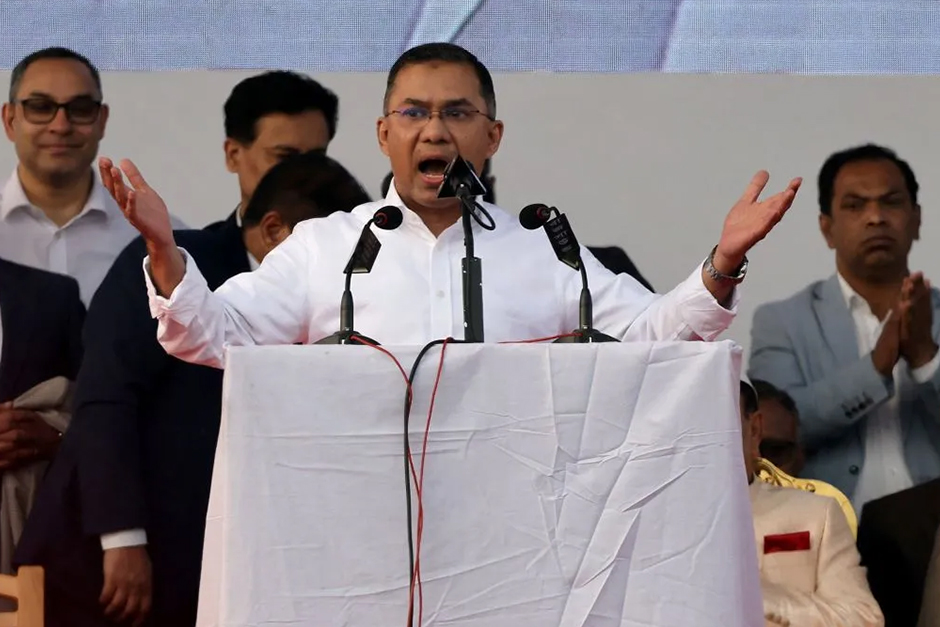
After 17 years in exile, Tarique Rahman, the acting chairman of the Bangladesh Nationalist Party (BNP) and son of former Prime Minister Khaleda Zia, has made a dramatic return to Bangladesh. Landing amidst fervent crowds and an atmosphere thick with political anticipation, Rahman invoked the spirit of American civil rights leader Martin Luther King Jr., declaring, “I have a plan.” This highly symbolic return, following his prolonged absence due to various corruption charges and convictions, injects a potent new dynamic into Bangladesh’s often-turbulent political landscape, with significant ripple effects for India.
A Son Returns: The Rhetoric and Reality
Tarique Rahman’s return is not merely the comeback of a political leader; it signifies a potential rejuvenation for the BNP, which has been largely fragmented and struggling in the absence of strong leadership. For nearly two decades, Rahman operated from London, facing multiple convictions in absentia, including for a 2004 grenade attack on an Awami League rally that targeted current Prime Minister Sheikh Hasina, and for corruption. His return, coinciding with crucial national elections on the horizon, immediately frames him as a central figure challenging the ruling Awami League’s dominance.
The invocation of Martin Luther King Jr., a global icon of non-violent resistance and change, is a powerful rhetorical choice. It seeks to position Rahman not just as a political contender but as a visionary leader aiming for a fundamental transformation of Bangladesh. When he asserted, “I have a plan,” he aimed to project an image of strategic foresight and a blueprint for a better future, contrasting with the prevailing narrative of his past controversies. This deliberate messaging could resonate with a populace yearning for stability and economic progress, yet it also invites scrutiny given his contentious history and the deep political polarisation that characterises Bangladeshi politics. The challenge for Rahman will be to translate this aspirational rhetoric into concrete actions and policies that can unite a divided nation and overcome years of legal battles and public scepticism.
Bangladesh’s Shifting Political Sands
Rahman’s arrival significantly alters the political calculus in Bangladesh. The BNP, traditionally one of the country’s two dominant parties, has been struggling against the formidable political machinery of the Awami League. With its charismatic leader Khaleda Zia under house arrest due to health issues and convictions, and the party largely out of power for over a decade, the BNP has lacked a decisive figurehead. Tarique Rahman’s return fills this void, potentially energising the party’s grassroots and offering a clearer alternative to the incumbent government.
However, his path is fraught with challenges. The multiple convictions against him mean he may face legal hurdles in contesting elections or even holding political office. The Awami League government, under Prime Minister Sheikh Hasina, is unlikely to ease its stance, viewing him as a key antagonist responsible for past violence and corruption. This sets the stage for intensified political manoeuvring, potential protests, and heightened tensions in the lead-up to the elections. The political climate could become more volatile, impacting public life and potentially leading to further social unrest. For Bangladesh, this could mean either a much-needed revitalisation of democratic discourse or a descent into further political infighting, making stability a critical concern.
Implications for India: A Neighbourhood Watch
For India, developments in Bangladesh are rarely insular. As a vital eastern neighbour with whom India shares a long, porous border and extensive cultural and economic ties, political stability and the nature of governance in Bangladesh hold direct implications. India has significant strategic and economic interests, ranging from connectivity projects under its ‘Act East’ policy to border security and counter-terrorism cooperation.
Historically, the Awami League under Sheikh Hasina has been considered a steadfast ally of India, cooperating on security issues, cracking down on insurgent groups that previously used Bangladeshi soil, and facilitating trade and transit. The BNP, on the other hand, particularly during certain periods of its rule, has been perceived with more caution in Delhi due to concerns over its perceived leanings towards Islamist groups and a less cooperative stance on cross-border security. A resurgent BNP, potentially led by Tarique Rahman, raises questions for Indian policymakers:
- Will a new BNP leadership maintain the same level of security cooperation, particularly concerning insurgent groups and radical elements?
- How might it affect ongoing infrastructure projects and connectivity initiatives that are crucial for India’s economic integration with Southeast Asia?
- Will it alter the delicate balance of regional diplomacy and potentially open doors for other regional or global powers to increase their influence in India’s neighbourhood?
India’s primary interest lies in a stable, prosperous Bangladesh that is a reliable partner. While New Delhi maintains a policy of non-interference in the internal affairs of its neighbours, it will undoubtedly be observing the unfolding political drama with keen interest, assessing how the shift might impact its own security, economic, and strategic interests in the region. The rhetoric of change, as espoused by Rahman, will be weighed against the practical realities of geopolitics and historical precedents.
Tarique Rahman’s return to Bangladesh, marked by his powerful invocation of Martin Luther King Jr., is more than a personal journey; it is a seismic event in Bangladeshi politics. As the nation braces for a potentially tumultuous election cycle, India too must carefully evaluate the ramifications. The “plan” Rahman speaks of could usher in a new era for Bangladesh, but its full scope and impact on regional dynamics, particularly for India, remain subjects of intense speculation and watchful anticipation.

