


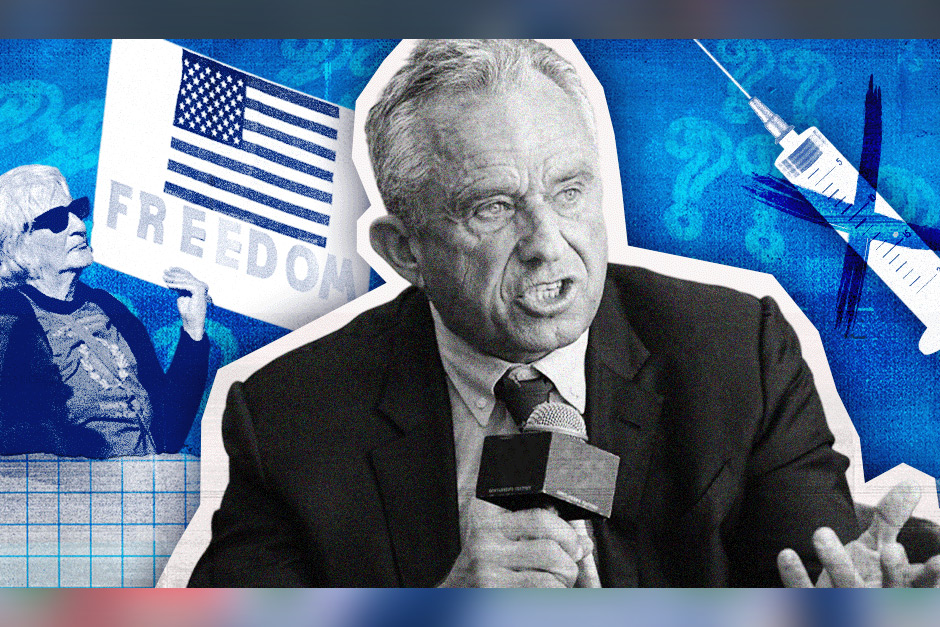
Remember when certain wellness circles, often affectionately (or sometimes derisively) dubbed ‘crunchy moms,’ held views on vaccines that felt decidedly outside the mainstream? These perspectives, rooted in natural health, holistic living, and a general distrust of institutional norms, have historically existed in the cultural periphery. Yet, in a fascinating cultural shift, these once-niche viewpoints are undeniably gaining traction, moving into broader public consciousness and political discourse. Much of this migration from the margins to the mainstream can be attributed to one unlikely figure: Robert F. Kennedy Jr.
From Niche to Notice: The Origins of a Perspective
The “crunchy mom” archetype, a term used to describe parents who often prioritize organic food, natural remedies, extended breastfeeding, home birthing, and attachment parenting, has long cultivated a distinct worldview. Central to this perspective is a deep skepticism towards conventional medicine and large pharmaceutical companies. For many within these communities, vaccine hesitancy or outright rejection wasn’t a political statement, but a deeply personal one, an extension of their commitment to what they perceived as the most natural and safest path for their children’s health.
Their concerns often revolved around ingredients, the number of vaccines administered, and a belief in the superior protective power of natural immunity. These were discussions largely confined to online forums, local parenting groups, and alternative health conferences. While occasionally surfacing in mainstream media, they were typically framed as fringe or misinformed, rather than a significant societal viewpoint. The narrative was often one of individual choice versus public health consensus, with little room for nuance in the broader conversation.
RFK Jr.’s Bridge to Broader Audiences
Enter Robert F. Kennedy Jr. For decades, RFK Jr. has been a prominent environmental lawyer and activist, carrying the weight and recognition of one of America’s most storied political families. This inherent public profile, combined with his pivot to vaccine skepticism, proved to be a potent catalyst. Unlike anonymous online personalities or niche health gurus, Kennedy offered a recognizable, articulate, and highly visible face to these previously marginalized concerns. He didn’t just echo the sentiments of the “crunchy mom” demographic; he amplified them from a massive, national platform.
His message, often presented with an air of intellectual inquiry and a challenge to established power structures, resonated deeply. He framed vaccine skepticism not as an unscientific belief, but as a fight for “health freedom,” a demand for transparency, and a questioning of corporate and governmental authority – themes that transcend traditional political divides. By running for president, Kennedy catapulted these discussions from specialized health forums into mainstream political debates, news cycles, and living rooms across the country. He transformed vaccine hesitancy from a personal parenting choice into a legitimate political talking point.
As one political strategist, who preferred not to be named, observed, “RFK Jr. didn’t create vaccine skepticism, but he gave it a gilded megaphone. He offered a palatable, public face for ideas that many people felt but were hesitant to express openly.” His family legacy provided a shield, lending an air of credibility that allowed his controversial views to be heard, even by those who might otherwise dismiss them out of hand.
The Shifting Sands of Mainstream Discourse
The impact of RFK Jr.’s platform is undeniable. What was once dismissed as the eccentric belief system of a small subset of parents is now a legitimate subject of discussion on cable news, in political polls, and even among candidates vying for the highest office. This shift has several profound implications. Firstly, it normalizes vaccine skepticism, making it less taboo to express such views in public. Secondly, it elevates the concerns of the “crunchy mom” contingent, giving them a voice and a sense of validation they previously lacked.
Furthermore, this mainstreaming challenges the very notion of a unified public health consensus. It forces institutions to engage with, rather than simply dismiss, an increasingly vocal and politically organized segment of the population. The discussion has broadened beyond efficacy and safety to encompass issues of individual liberty, corporate influence, and government overreach. Regardless of where one stands on the scientific debate, the social and political transformation brought about by RFK Jr.’s influence is a significant trend, reshaping how we understand public health and individual autonomy in modern society.
In essence, RFK Jr. acted as a powerful conduit, pulling a specific cultural viewpoint from the fringes and placing it firmly in the national spotlight. The “crunchy mom” perspective on vaccines is no longer a niche conversation; it’s an integral, and often divisive, part of mainstream dialogue, a testament to the profound influence a single public figure can wield in shaping cultural trends.

