


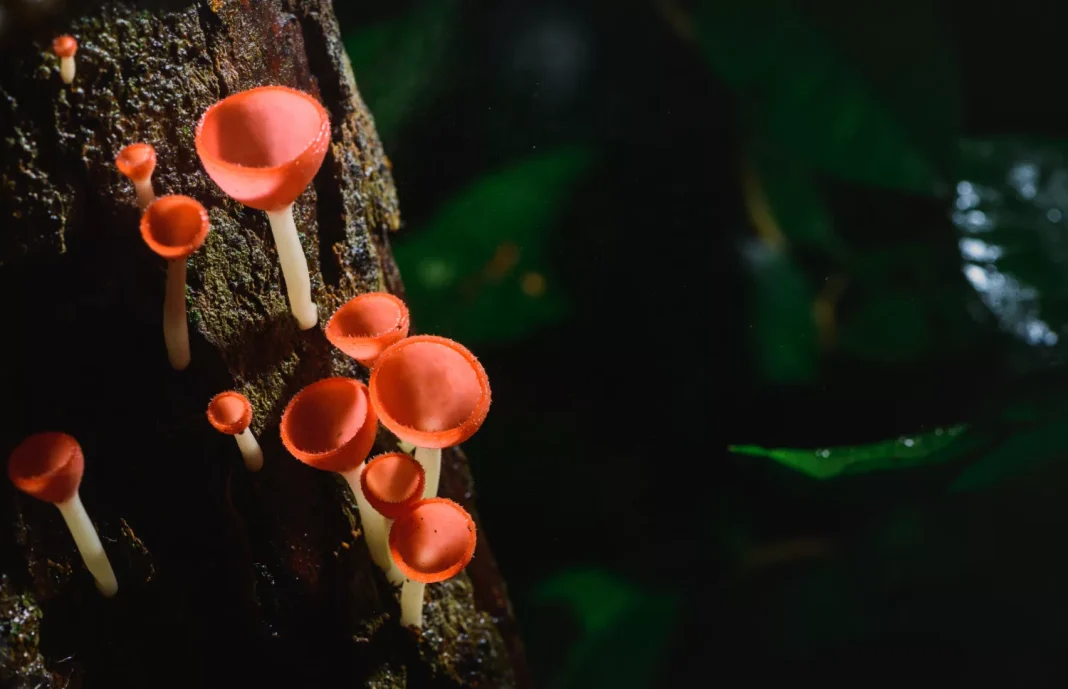
The aftermath of a forest fire paints a stark picture: blackened trees, scorched earth, and a lingering scent of smoke. While devastation often dominates our perception of such events, nature’s resilience frequently manifests in surprising ways. Among the unsung heroes of ecological recovery are certain fungi, organisms that have not only learned to survive these fiery landscapes but have astonishingly evolved the ability to digest charcoal, a substance notoriously resistant to decomposition.
For millennia, forest fires, whether natural or human-induced, have been a recurring phenomenon across the globe, including in India’s diverse ecosystems, from the Himalayan pine forests to the dry deciduous woodlands of the Deccan Plateau. Each blaze leaves behind vast quantities of charcoal – essentially recalcitrant carbon. Traditionally, this material was thought to persist in the environment for centuries, slowing down nutrient cycling and ecosystem recovery. Recent scientific revelations, however, are shedding light on a remarkable fungal adaptation that challenges this long-held belief, offering new insights into carbon dynamics and post-fire ecological succession.
The Fiery Aftermath: A New Niche Emerges
When a forest fire rages, the intense heat converts much of the organic matter – wood, leaves, and soil biomass – into charcoal. This process, known as pyrolysis, results in a carbon-rich material with a highly stable, complex aromatic structure. Unlike fresh wood, which fungi readily decompose using enzymes like cellulases and ligninases, charcoal presents a far tougher challenge. Its carbon atoms are arranged in tightly packed hexagonal rings, making it exceptionally resistant to microbial attack. Yet, after fires, certain species of fungi, often termed pyrophilous (fire-loving) or anthracophilic (charcoal-loving), are among the first organisms to appear, thriving in these seemingly barren environments.
These specialized fungi seize upon a unique ecological niche. While most other decomposers struggle with the post-fire landscape, these fungi find an abundant, uncontested food source in the charcoal. The evolutionary pressure to tap into this vast carbon reservoir, coupled with reduced competition from other microbes, likely drove the development of their extraordinary digestive capabilities. It’s a testament to natural selection’s power, where environmental catastrophes can paradoxically create opportunities for life to adapt and innovate.
Unravelling the Enzymatic Blueprint
The secret to the fungi’s charcoal-digesting prowess lies within their enzymatic machinery. Researchers have been diligently working to identify the specific enzymes and metabolic pathways that allow these organisms to break down such a recalcitrant substance. While the exact mechanisms are still being fully elucidated, current understanding suggests that these fungi have either evolved novel enzymes or significantly repurposed existing ones that typically target other complex organic polymers.
Traditional wood-rotting fungi employ an arsenal of enzymes to deconstruct cellulose and lignin. Lignin, like charcoal, is a complex aromatic polymer, and some of the enzymes involved in its breakdown, such as laccases and peroxidases, appear to play a crucial role in charcoal digestion. However, charcoal’s highly condensed and graphitized structure requires even more robust enzymatic action. Scientists hypothesise that fungi have adapted these enzymes to generate highly reactive radicals capable of cleaving the strong carbon-carbon bonds within charcoal, gradually breaking it down into simpler compounds that can be absorbed and metabolized. This biochemical ingenuity allows them to unlock the energy and nutrients trapped within the charred remains, turning devastation into sustenance.
Ecological Significance and Indian Context
The discovery of charcoal-digesting fungi holds profound implications for our understanding of global carbon cycling and post-fire ecosystem recovery, particularly relevant for countries like India, which experience significant forest fire incidents annually. These fungi act as crucial pioneer species, initiating decomposition where other organisms cannot, thereby accelerating nutrient release back into the soil and facilitating the return of plant life.
“Understanding these unique fungal adaptations is more than just academic curiosity; it’s a vital piece of the puzzle for managing our forest ecosystems, especially in regions prone to fires,” says Dr. Priya Sharma, a leading mycologist based in Bengaluru. “These fungi are nature’s bioremediators, potentially helping to cycle carbon and restore soil health in fire-affected areas across India, from the Western Ghats to the Himalayan foothills. Their potential for biotechnological applications, perhaps in developing more efficient bioremediation strategies for charcoal-contaminated sites, is immense.”
Furthermore, these fungi contribute to the overall resilience of ecosystems. By actively breaking down charcoal, they not only prevent long-term carbon sequestration in an inert form but also help in the dynamic cycling of carbon, making it available for new plant growth. This process is essential for the rapid revegetation of burned landscapes, which in turn helps prevent soil erosion and supports the return of animal life.
The remarkable evolutionary journey of fire-loving fungi, adapting to digest charcoal, underscores the incredible adaptability of life on Earth. These microscopic organisms play an oversized role in mitigating the long-term ecological impacts of fires, transforming a barren, carbon-rich legacy into a foundation for new life. As research continues to unravel their full capabilities, these charcoal-eating fungi offer not just scientific wonder but also practical hope for the restoration and sustainable management of fire-prone ecosystems around the world, including India’s invaluable forests.

