


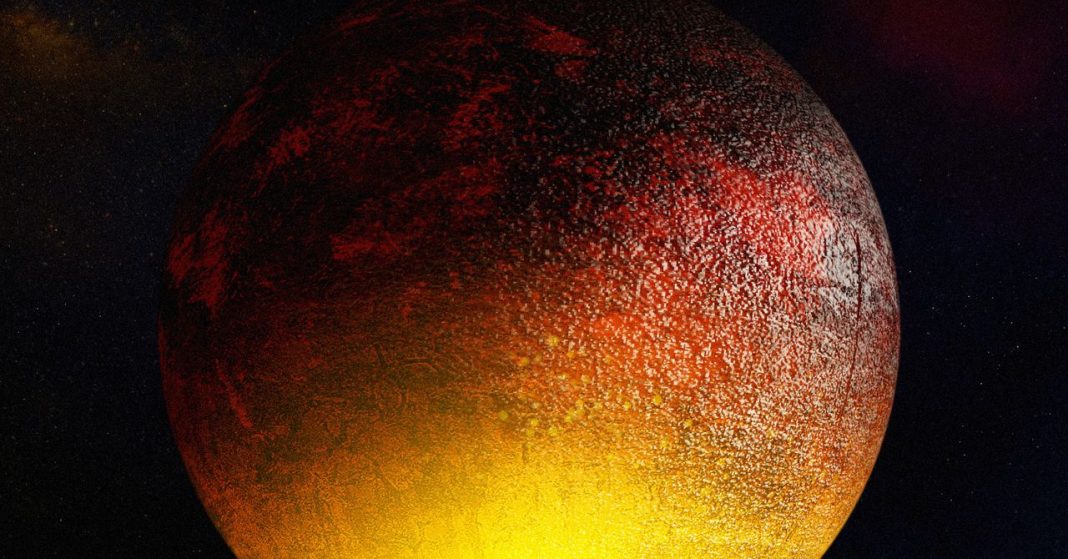
For millennia, humanity has gazed at the night sky, wondering if our Earth is truly unique. Are there other worlds orbiting distant suns, perhaps teeming with life? This ancient curiosity has, in recent decades, transformed into a scientific quest, leading to the discovery of thousands of planets beyond our own solar system – known as exoplanets. But these cosmic neighbours are often tiny, incredibly distant, and utterly dwarfed by the blinding glare of their host stars, making direct observation akin to spotting a firefly next to a lighthouse from across a continent. So, how exactly do astronomers, including the growing community of Indian space enthusiasts and researchers, manage to find these elusive worlds?
The Stellar Wobble: Detecting Gravitational Tugs
One of the earliest and most successful methods for finding exoplanets relies on the subtle gravitational dance between a star and its orbiting planet. Just as Earth orbits the Sun, the Sun itself experiences a minuscule tug from Earth, causing it to wobble slightly. For a distant observer, this wobble, though tiny, can be detected.
This technique is called Radial Velocity, or Doppler Spectroscopy. As a planet orbits its star, its gravity pulls the star first towards us, then away from us. This causes a slight shift in the star’s light spectrum – a phenomenon known as the Doppler Effect. When the star moves towards us, its light appears slightly bluer (blueshift); when it moves away, its light appears slightly redder (redshift). By meticulously measuring these tiny shifts in the star’s light over time, astronomers can infer the presence of an orbiting planet, estimate its mass, and determine its orbital period. This method is particularly effective at finding large, massive planets (like “hot Jupiters”) orbiting close to their stars, as they exert a stronger gravitational pull.
The Cosmic Blink: Observing Dimming Starlight
Perhaps the most prolific method for exoplanet discovery is Transit Photometry. Imagine a fly passing in front of a powerful light bulb. For a brief moment, the light from the bulb would dim ever so slightly. In space, if an exoplanet’s orbit is aligned just right with our line of sight, it will pass directly in front of its host star, causing a measurable dip in the star’s brightness. This periodic dimming is a “transit.”
Space telescopes like NASA’s Kepler and TESS missions have revolutionised exoplanet hunting using this method, staring intently at thousands of stars for months or even years. The depth of the dip in brightness reveals the planet’s size relative to its star, while the frequency of the dips tells us its orbital period. Multiple transits are needed to confirm a planet’s existence and rule out other stellar phenomena. Transit photometry is particularly powerful because it can also provide clues about a planet’s atmosphere if some starlight filters through it during the transit, offering hints about its composition and potential for habitability.
Dr. Aparna Singh, an Indian astrophysicist specialising in exoplanet characterisation, notes, “The ingenuity required to detect these distant worlds is a testament to human curiosity and technological advancement. Each transit event is a cosmic whisper that brings us closer to understanding our place in the universe.”
Beyond the Main Two: Other Ingenious Approaches
While radial velocity and transit photometry account for the vast majority of exoplanet discoveries, astronomers employ several other clever techniques:
Direct Imaging
This is the most straightforward method conceptually: simply taking a picture of the planet. However, it’s incredibly challenging due to the overwhelming brightness of the host star. It’s like trying to photograph a candle next to a blazing supernova. Direct imaging is primarily successful for very large, very young planets that are still hot and bright, orbiting far from their stars. Sophisticated instruments called coronagraphs are used to block out the star’s light, allowing the faint planet to be seen.
Gravitational Microlensing
This method leverages Einstein’s theory of general relativity, which states that massive objects bend spacetime. If a foreground star with an orbiting planet passes directly in front of a more distant background star, its gravity can act like a lens, temporarily magnifying the light from the background star. If the foreground star has a planet, that planet’s gravity will create a brief, secondary magnification “spike” in the light curve. Microlensing is excellent for finding planets at great distances, including those that might be free-floating or far from their stars.
Astrometry
Similar to the radial velocity method, astrometry also looks for the star’s wobble, but instead of detecting Doppler shifts, it precisely measures the tiny side-to-side shift in the star’s position on the sky. This method requires extremely precise measurements over long periods and has yielded fewer discoveries compared to others, but missions like the European Space Agency’s Gaia are paving the way for its future potential.
The quest for exoplanets is a thrilling frontier in astronomy, fuelled by technological innovation and an insatiable desire to understand the cosmos. Each newly discovered world, whether a scorching gas giant or a potentially habitable super-Earth, adds another piece to the grand puzzle of planetary formation and the prevalence of life. As telescopes grow more powerful and analytical techniques become more refined, the answers to humanity’s oldest questions about life beyond Earth draw ever closer, promising an exciting future for cosmic exploration from observatories across the globe, including those in India.

