


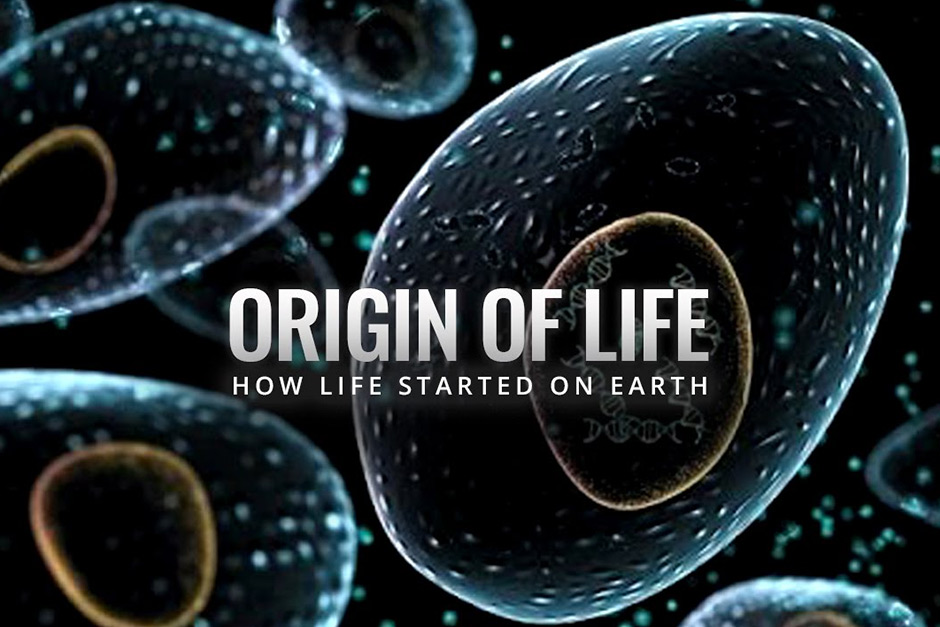
Have you ever looked up at the stars, or even just at a vibrant leaf, and wondered: how did any of this begin? The question of life’s origin on Earth is perhaps the ultimate cosmic mystery, a puzzle scientists have been tirelessly piecing together for centuries. And recently, fresh research has provided compelling new insights, strengthening a leading contender in this grand scientific detective story: the ‘RNA world’ theory.
The Chicken-and-Egg Dilemma of Early Life
To understand the elegance of the RNA world theory, we first need to grasp the challenge. Modern life, as we know it, is built on a magnificent partnership. Our genetic blueprint is stored in DNA, which acts like a master archive. To read and execute those instructions, and to perform almost every vital function in our cells, we rely on proteins – the molecular machines and catalysts that do the heavy lifting. But here’s the conundrum: DNA needs proteins to replicate itself, and proteins can only be made from instructions encoded in DNA. It’s a classic chicken-and-egg problem. Which came first?
For decades, this intricate dependency seemed to present an insurmountable hurdle for understanding how life could spontaneously arise from non-living matter. Life needed both information storage (like DNA) and catalytic activity (like proteins) right from the start. Could there be a simpler molecule, a versatile pioneer that could do both jobs?
RNA: The Multitasking Molecule That Paved the Way
Enter RNA (ribonucleic acid). While often seen as DNA’s less glamorous cousin – primarily involved in translating DNA’s messages into proteins – RNA possesses a remarkable duality. It can store genetic information, much like DNA, and critically, it can also catalyze chemical reactions, acting like an enzyme. These catalytic RNAs are known as ribozymes.
The ‘RNA world’ theory proposes a time on early Earth when RNA molecules were the dominant form of life. In this primordial era, RNA molecules performed both the information storage functions now handled by DNA and the catalytic functions now largely performed by proteins. Imagine an ancient Earth where the very first self-replicating entities were not complex cells, but simple, industrious RNA strands capable of copying themselves and carrying out basic metabolic tasks.
Recent breakthroughs have significantly bolster this theory. Researchers have demonstrated that RNA molecules can form under conditions thought to exist on early Earth, and that these primordial RNAs are capable of much more complex catalytic activities than previously imagined. They’ve shown how RNA could have self-assembled, grown, and even evolved without the need for sophisticated proteins or DNA.
“It’s like finding the ultimate multi-tool in an ancient toolbox,” says Dr. Aris Thorne, a theoretical astrobiologist. “RNA could simultaneously store the plans and build the necessary components, making it the perfect candidate for life’s first solo act before the more specialized roles of DNA and proteins evolved.” These findings suggest that the transition from a non-living chemical soup to the first forms of life might have been less of a miraculous leap and more of a gradual, chemistry-driven evolution.
From RNA’s Reign to Modern Life
So, if RNA was so great, why did DNA and proteins take over? The prevailing idea is that while RNA was a fantastic pioneer, it wasn’t perfect. DNA is far more stable, making it a better long-term archive for genetic information, less prone to mutations and degradation. Proteins, with their wider range of building blocks and complex 3D structures, are far more versatile and efficient catalysts. Over countless eons, natural selection would have favored systems that adopted these more specialized and efficient molecules, leading to the DNA-protein world we inhabit today.
The RNA world theory isn’t just a fascinating hypothesis; it’s a testament to the power of scientific inquiry to unravel the deepest mysteries. While we may never have a complete, minute-by-minute replay of life’s genesis, the ongoing research into RNA’s capabilities brings us closer than ever to understanding how the complex dance of life first began on our pale blue dot. It reminds us that sometimes, the simplest solutions hide the most profound answers.

